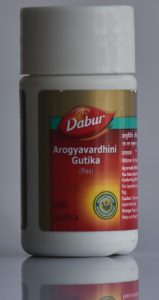
Arogyavardhini Rasam is a medicine described in visarpadi chikitsa chapter of Rasa Ratna Samucchaya. This is mainly used in the treatment of various types of skin diseases. It is a yoga described by Sree Nagarjuna who is an Indian philosopher and saint. He conducted extensive studies on the health applications of mercury and other heavy metals. This formulation as the name implies can regain the strength of a debilitated body due to diseases. By using various adjuvants like honey, neem leaf juice, water, milk, etc. can be given in many disease conditions. Its sevana kaala (time of administration) is said as mandala kaala which is 41 days. This period of intake is advisable for chronic diseases. In jwara (fever) only five days of consumption of honey can cure them. It is capable of curing various types of jwara.
The main indications include a fever of various kinds due to vata, pitta, and kapha, it possesses paachana and deepana guna ( digestant and appetizer), it is pathya means compactible to body and also hridya- may be compactible to heart and mind. It possesses cleansing action on mala and it may be extended to the thought that it can cleanse the vitiated doshas and also the waste products of metabolism. Since it is pachana and deepana it can impart appetite also.
INDICATIONS
- Hepatitis
- Liver cirrhosis
- Skin disease
- High cholesterol
- Infectious diseases
- Fevers of unknown origin
- As a liver supporting medicine
- Hypothyroidism
Arogyavardhini rasa ingredients
| Sl. No. | English name | Sanskrit name | Latin Name | Proportion |
| 1 | Mercury | Parada | Hydrargyrum | 1 part |
| 2 | Sulphur | Gandhaka | Sulphurium | 1 part |
| 3 | Iron | Loha | Ferrum | 1 part |
| 4 | Mica | Abhraka | Mica | 1 part |
| 5 | Copper | Tamra | Cuprum | 1 part |
| 6 | Amla | Dhatri | Phyllanthus emblica L. |
each 2 parts |
| 7 | Chebulic Myrobalan | Hareetaki | Terminalia chebula Retz. | |
| 8 | Baheda | Vibheetaki | Terminalia bellirica Roxb. | |
| 9 | Black asphaltum | Shilajathu | Asphaltum punjabinum | 3 parts |
| 10 | Indian bdellium | Guggulu | Commiphora mukul (Stocks)Hook. | 4 parts |
| 11 | Leadwort | Chitramoolam | Plumbago zeylanica Linn. | 4 parts |
| 12 | Picrorrhiza | Tikta/Katurohini | Picrorhiza kurroa Royle ex Benth. | 22 parts |
Method of preparation
Initially, kajjali is made by grinding together the purified Parada and Gandhaka. Then to this bhasma of Loha, Abhraka and Tamra are added and ground together to form a homogenous mixture. The to this fine powders of triphala, shilajathu, guggulu, chitramoola, and tiktha are added and ground to form a homogenous mixture adding a sufficient quantity of juice of neem leaves.
Properties & Ingredients of Arogyavardhini Ras Gutika
| Sl. No. | Ingredients | Properties |
| 1. | Parada | Yogavahi(catalyst substances to transport the medicinal properties of drugs into the body), Rasayana (rejuvenating), balya (nourishing),vrishya (aphrodisiac), etc. |
| 2. | Gandhaka | As per modern science, sulphur regulates sodium, potassium electrolyte pump of each cell, vital part of the immune system, a component of insulin, helps in tissue repair and referred to as nature’s beauty mineral as it keeps hairs, skin healthy.
In Ayurveda, it is deepana, pachana, rasayana, vrishya, and balya. |
| 3. | Loha | Lekhana, rasayana, balya, medhya, vrishya. Used to treat gastric complaints, eye diseases, liver disorders, etc. it is haematinic. Tridosha samana |
| 4. | Abhraka | Vata pittahara, reduces kshaya, strengthens the intellect, balya(nourishing), appetizer, seeta veerya (cold potency), cures all diseases. |
| 5. | Tamra | Pitta kapha hara, cures ascites, skin diseases, worm infestations cures toxicity). It is vishahara, increase appetite. Good for eyes and lekhaneeya( reduces fat). |
| 6. | Dhatri | Kapha pittahara, chakshushya (good for eyes), jwaraghna (cures fever), vrishya, vayasthapana (longevity-promoting herbs), pramehagna (cures Diabetes), rasayana (rejuvenating).rich in vitamin C, keeps skin healthy and strengthens the immune system |
| 7. | Hareetaki | Varnya (increases complexion), sara(cause purgation), medhya (nootropic), chakshushya(good for eyes), sothaghna(reduce oedema), rasayana (rejuvenating), ayushya (longevity). Rich in Vitamin C and E. |
| 8. | Vibheetaki | Rasayana (rejuvenating), chakshushya (good for eyes), keshya(aid hair growth). Vata kapha hara, helps in purgation |
| 9. | Shilajathu | Medohara (reduce obesity), pramehaghna (cures diabetes mellitus), gulma pleeha vinasana( diseases of spleen and liver), jwaragna, twak dosha hara( skin diseases). Drives away senility and death. |
| 10. | Guggulu | Rasayana (rejuvenating), balya (nourishing), wound healing, lekhana( reduces fat), medo hara (reduces fat), twak dosha hara( cures skin diseases), fracture healing, vrishya, rasayana. Balances tridosha |
| 11. | Chitramoolam | Kapha vata hara, deepana, pachana (digestant and appetiser), shoolaprasamana (cures pain), lekhaneeya (reduces medas) |
| 12. | Tikta/Katurohini | Sthanyasodhana (cleanses breast milk), kapha pitta hara, cures fever, cough, breathlessness, diabetes, liver tonic |
The majority of ingredients possess rasayana, vrishya, and lekhana properties. They are either vata kapha hara or thridoshahara. In the case of roga harana property, they are jwaraghna (cures fever), pramehaghna (cures Diabetes), kushtagna (skin diseases) and cures diseases of the liver. Since the drug katuki which is well known for its hepato-protective action makes this drug a good choice in many conditions where liver function is impaired. Above all the Yogavahi (catalyst substances to transport the medicinal properties of drugs into the body), the property of parada enhances the property of its companion drugs.
Arogyavardhini Ras Gutika Dosage
The dosage varies from 250 mg to 500 mg twice or thrice a day.
Mandala kaala that is 41 days intake is advised in skin diseases. Proper adjuvants can be adopted according to the condition.
EXERCISE AND YOGA
Since hard exercises are contraindicated in rasa sevana it is better to avoid them. But mind relaxing meditation and suitable breathing exercises can be adopted.
APATHYAS DURING THE USE OF Gutika:
Since a mercurial preparation, the incompatible things said in Rasa sevana consumption of mercurial compounds) are to be avoided,
- Fasting, excessive thoughts, sorrow, day sleep, night awakening
- Kakaradi gana- ask to avoid vegetables of cucurbitaceae family
- Butter milk, alcoholic drinks, sesame seeds, black gram
- Hot spicy foods, acrid and salt tastes
- Things which are difficult to digest
These things are better to be avoided in the long term use of the drug-like for a mandala kaala (41 days) to prevent the complications. Because, a 500 mg pill of Arogyavardhini vati, has about 2.5mg purified mercury. Though it is in the safest sulphide form of mercury (kajjali) precautions are always necessary. Since this drug contains guggulu, it is better to avoid hot spicy food and exhausting daily routines.
PATHYA AHARAS AND VIHARAS of Gutika
- Food processed with ghee, coriander, cumin seed, rock salt
- Vegetables like spinach, bottle gourd, coriander leaves
- Soup of green gram
- Wheat, rice
CONTRAINDICATED CONDITIONS
- Kidney diseases especially renal failure
- It is unsafe in pregnancy
- Safe to avoid during lactation since no safety profiles are available
Arogyavardhini Ras Gutika Side Effects
- Self-medication is not desirable.
- May cause some complications during pregnancy.
- Since this is a herbo mineral drug the systemic condition of the patient is to be assessed before and after the administration of drugs.
- In the case of lactation and children the medicine is to be administered only with the supervision of a doctor.
REFERENCE
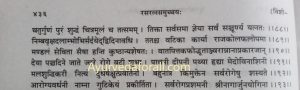
The yoga is said in Rasa Ratna Samucchaya- Visarpadi chikitsa(20/87-93)
arogyavardhini vati shloka:

BRANDS AVAILABLE
- Shree Dhootpapeswar ltd.
- Zandu pharmacy
- Dabur
- Patanjali
- Zandu pharmacy
- Baidyanath
RESEARCH ARTICLES
- Arogyavardhini Vati: A theoretical analysis
Arogyavardhini vati improves overall good health by balancing all the three Dosha. The drug does not have appreciable toxicological effects on the brain, liver, and kidney. This remedy is also known as a natural liver detoxifying and fatty liver remedy. It promotes balance and maintains the liver function as well as a healthy digestive system.
http://www.jsirjournal.com/Vol5_Issue6_05.pdf
- Hepatoprotective evaluation of Arogyavardhini Rasa against paracetamol-induced liver damage in rats
AVR produces a good hepatoprotective action as well as nephroprotective despite its metallic content, especially mercury, which suggests that formulations containing metal minerals have a potential role in classical preparation, i.e., in ayurvedic formulation like AVR.
- Screening of free radical scavenging activity of Arogyavardhini Vati
Arogyavardhini vati shows significant free radical scavenging activity and this emphasizes its anti-oxidant property. This may be the reason for its potent Rasayana property. This drug can be used to regain the strength of a person as the name implies.
- Quality Control Parameters of Arogyavardhini Rasa prepared by the classical method
Pharmaceutical process, Results of the pharmaceutical study, Physicochemical tests, Presence of functional groups, and HPTLC profile in the present study may be considered as a quality parameter in further study and also in the manufacturing process of Arogyavardhini Rasa.
http://www.ayurvedjournal.com/JAHM_201624_03.pdf
- Safety evaluation of Ayurvedic medicine, Arogyavardhini vati on brain, liver, and kidney in rats
The finding of the present study suggests that Arogyavardhini vati in the doses equivalent up to 10 times the human dose administered to rats for 28 days does not have appreciable toxicological effects on the brain, liver, and kidney.
https://pubmed.ncbi.nlm.nih.gov/22265750/

