Warning: Illegal string offset 'src' in /home/ayurvedaforall/public_html/blog/wp-content/plugins/jetpack/functions.opengraph.php on line 293

All posts by Dr Rajesh Nair

Sahacharadi kashayam – Uses, ingredients, indications, dosage, usage, side effects, brands, research papers

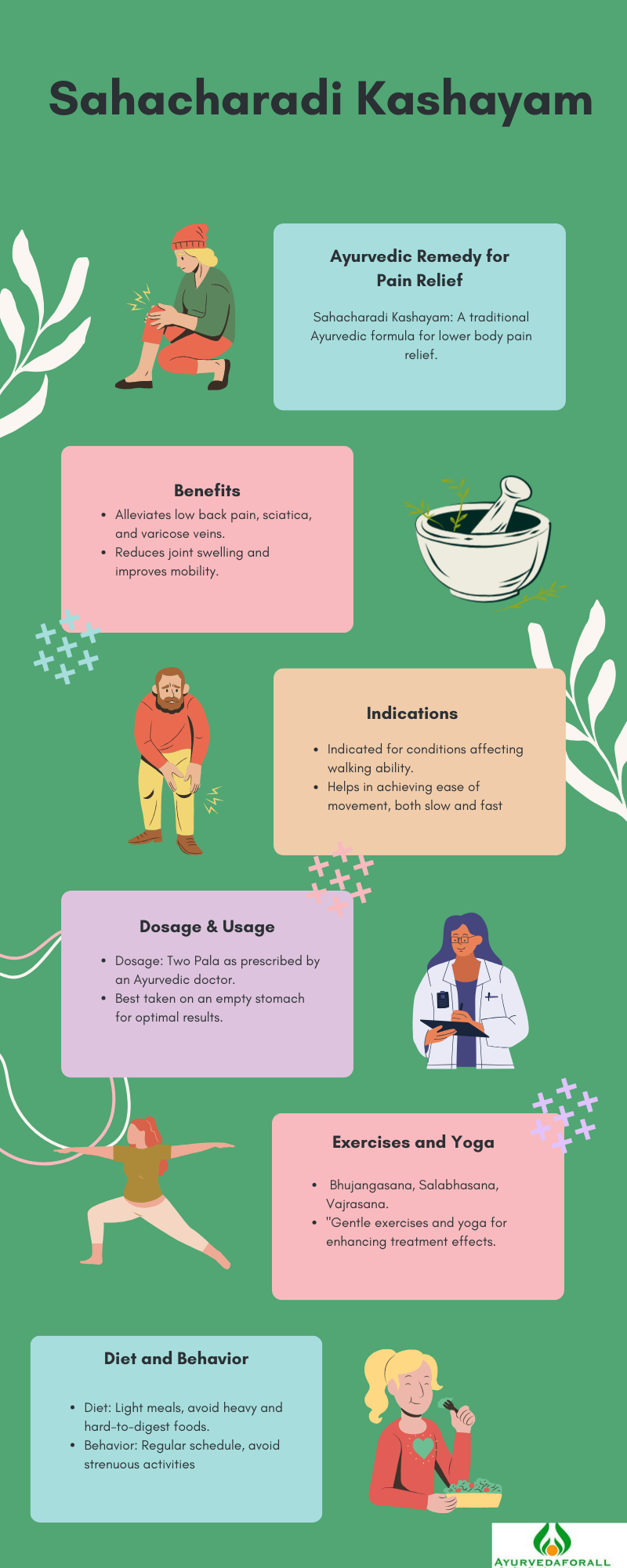
Sahacharadi kashayam tablets are an Ayurvedic medicine for Pain relief, especially in the lower part of the body. Though only three ingredients are there, it is said that this kashayam will help the person to walk slowly or fast as per the person’s choice.

sahacharadi kashayam uses

As the name suggests is like a friend who supports you while walking. It is beneficial in many painful conditions like low back ache, sciatica, disc prolapse and even varicose veins. It acts on the locomotory and nervous system.

It is very effective in reducing the swelling in joints and helps relieve the stiffness and pain while walking.

Indications

  • It is said that druthavilambitago bhavateecchayaa
  • Means the person can be able to walk as per his own wish, slowly or fast.
6592690a0e1b0-Sahacharadi-Kashayam

Sahacharadi kashayam Ingredients

1. Strobilanthes Sahachara Nilgirianthus ciliatus(Nees) Bremek /Strobilanthes ciliatus Nees.

It is used in neurological disorders, sciatica, glandular swellings and oedema.

2. Himalayan cedar devadaru Cedrus deodara

It is useful as an expectorant in cough. It relieves asthma and other respiratory diseases by clearing the airways and enhancing the movements of respiratory tract.

It has an anti-diabetic effect as it helps reduce high blood sugar levels in the blood.

It helps to calm the mind and improves sleep quality.

3.Dried ginger Naagaram Zingiberofficinalis

It is unctuous and hot in potency with pungent taste but becomes sweet after digestion. It is an aphrodisiac and balances Vata and Kapha.

It improves ability to taste and promotes digestion. Relieves cough cold and other respiratory problems. It is not a laxative, rather causes constipation.

Details of the manufacturing

It has three key ingredients. There is no explanation of the ratio in the sloka but usually Sahachara,Suradaru and naagara are taken in 6:4:2 ratio.

All these ingredients should be washed well and dried up in shade.

Take the prescribed herbs in dried & crushed form in an earthern pot. For your special attention, Naagara should be crushed and tied up separately in a white clean cotton cloth as a Potali. This is to prevent the excess dissolution of the contents and to maintain the exact consistency of the kashayam. Now add 16 times clean water into it. Make it boil and then cook in the open vessel with low fire. Reduce the quantity into one by eighth of the initial quantity. Make sure to mix it in between with a ladle without breaking the potli. Also, the fire should be kept low to make sure that all the active ingredients in the herbs needed are absorbed well into the water. Once the quantity is reduced to one by eighth of the initial amount of water, remove the vessel from the fire. Squeeze and drain through a clean white cloth. Collect the decoction in a clean vessel and discard the solid waste. Drink the mild warm decoction.

Dosha Dooshya Predominance with roga margas.

This kashayam is Vaata kapha hara.

It acts on madhyama rogamarga

Dosage and Usage :

Dosage: two Pala.

Usage:

Kashayam is advised to take in empty stomach, once the ingested food is digested well and aahaararasa is formed well.

Usage of kashayam with prescribed prakshepadravyas according to the condition of disease and the patient gives the best results mostly.

It is advised as TAILAVIMISRITAM that is, to be given with Tailam which is the best to reduce Vaata. It can be either medicated oils like balataila or sahacharadi taila or plain sesame oil itself.

https://youtu.be/CgYXL0q8OOQ

Exercises and Yoga.

This kashayam targets mainly the locomotory and nervous systems. However vigorous exercises are not allowed in painful conditions.

Only stretching, moderate walking, and mild cardio exercises are advised. Also, specific yogacharya including bhujangaasana, salabhasana, vajrasana is recommended. Caution must be there to consider the range of movement and flexibility.

Regular exercise helps improve bioavailability of the medicine and food ingested and leads to positive health.

Yoga can maintain harmony within the body and with the surrounding system.

Salabhasana

vajrasana

Bhujangasana

sciatic pain- exercises

exercises for leg pain

All the exercises and physical exertions must be decided and done under the supervision of a medical expert only.

Recommended diet and behaviour

Diet:

To be avoided

Heavy meals and difficult to digest foods – cause indigestion.

junk foods- cause disturbance in digestion and reduces the bioavailability of the medicine

carbonated drinks – makes the stomach more acidic and disturbed digestion

refrigerated and frozen foods – causes weak and sluggish digestion by weakening Agni (digestive fire)

Milk and milk products – increase kapha and cause respiratory problems

curd – causes vidaaha and thereby many other diseases

To be added

Light meals and easily digestible foods

Green gram, soups, sesame oil.

freshly cooked and warm food processed with cumin seeds, ginger, black pepper, ajwain etc

Behaviour:

Protect yourself from cold climate.

Better to avoid exposure to excessive sunlight wind rain or dust.

Avoid lifting heavy weights and other vigorous physical activities.

Maintain a regular food and sleep schedule.

Avoid holding or forcing the urges like urine, faeces, cough, sneeze etc.

Avoid climbing of stairs.

Sahacharadi kashayam Side effects

No known side effects reporte

Classical references with image of the text.

SHASRAYOGAM VAATAROGA SHLOKA 1

Equivalent medicines.

Ashtavargam kashayam in sahasrayogam

Brands Available

  • AVS Kottakal
  • Oushadhi
  • Vaidyaratnam oushadhasala
  • AVN Madurai
  • AVP Coimbatore
  • Nagarjuna Ayurveda
  • Kerala Ayurveda

Research papers

Anti-oxidant property of sahacharadi kashayam

https://www.researchgate.net/publication/317276573_Antioxidant_Studies_of_One_Ayurvedic_Medicine_Sahacharadi_Kashayam

Sahachara

Acute and chronic inflammation

https://pubmed.ncbi.nlm.nih.gov/22983841/

Suradaru

anti-inflammatory and analgesic

https://pubmed.ncbi.nlm.nih.gov/10350366/

Naagara

https://www.ncbi.nlm.nih.gov/books/NBK92775/4

Share and Enjoy

  • Facebook
  • Twitter
  • Delicious
  • LinkedIn
  • StumbleUpon
  • Add to favorites
  • Email
  • RSS
  • Pinterest
  • Reddit
  • Blogger

Bharngyadi kashayam – Benefits, Indications, Ingredients, Dose, Usage, Side effects, Research Papers

Bharangyadi Kashayam is an Ayurvedic medicine for improving respiratory health and immunity. It also helps to treat chronic and intermittent fevers.

What is Bharngyadi Kashayam used for?

1. It is very effective in asthma. It works as a good expectorant, removes the malaroopakapha and clears airways.

2.It is very effective in allergic respiratory diseases like bronchitis.

3.By boosting immunity, the severity and frequency of respiratory infections are reduced.

4.As the kaphadosha is cleared, Agni starts functioning proper. By improving digestion, this kashayam improves taste and appetite; the bioavailability of nutrients in the food is also enhanced. Hence general health improved.

The above listed are some of the main Bharngyadi kashayam benefits.

Indications:

  • Sannipata jwara – highly virulent fevers like typhoid, malaria, dengue etc
  • Hrdsoola – pain in the chest
  • Parswasoola – pain in the flanks
  • Aanaham – distension of abdomen
  • Kaasa -Cough
  • Swaasa – breathing disorders including asthma
  • Agnimandya – loss of appetite, indigestion
  • Thandra – fatigue and laziness

Bharngyadi kashayam Ingredients

Bharngi

ENGLISH NAME: Blue-flowered Glory Tree

LATIN NAME: Clerodendrum serratum (L.) MOON

OTHER VARIETIES:

Clerodendrum indicum (L.) KUNTZE

Clerodendrum siphonanthus R.BR.

Gardenia turgida ROXB.

Premna herbacea ROXB.

RASA: KATU TIKTA KASHAYA

GUNA: LAGHU RUKSHA

VIRYA: USHNA

VIPAKA: KATU

General medicinal uses:

The plant is considered to have antitoxic and antiseptic properties. Juice of leaves is used with ghee as an application in skin conditions like herpetic eruptions and pemphigus. It is given in fever and is useful in sinusitis. The drug is also useful as an expectorant in respiratory diseases like asthma and cough.

Pushkaramoola

ENGLISH NAME: Indian elecampane

LATIN NAME: Inula racemosa HOOK. F.

SYNONYMS: Inula royleana DC.

OTHER VARIETIES

Iris florentina KUNZE

Costus speciosus (KOEN. EX RETZ.) SM.

RASA: TIKTA KATU

GUNA: LAGHU RUKSHA TIKSHNA

VIRYA: USHNA

VIPAKA: KATU

General medicinal uses:

It is the drug of choice by many physicians in chronic respiratory conditions. It is an expectorant with anti-inflammatory, carminative, diuretic, and antiseptic properties. The plant is used in chronic bronchitis and rheumatism. Dried rhizomes and roots are used to cure loss of appetite and stomach problems.

Rasna

ENGLISH NAME: siamese ginger

LATIN NAME: Alpinia galanga (L.) WILLD

OTHER VARIETIES:

pluchea lanceolata OLIVER&HIERN

Acampe papillosa (LINDL.) LINDL.

Alpinia calcarata ROSCOE

Alpinia chinensis ROSCOE

Aristolochia indica L.

Blepharispermum subsessile DC.

Dodonaea viscosa (L.) JACQ.

Inula helenium L.

Inula racemose HOOK. F.

Ophiorrhiza mungos L.

Saccolabium papillosum LINDL.

Vanda roxburghii R.BR.

Vanda tessellate (ROXB.) DON

Viscum album L.

Withania coagulens DUNAL

RASA: TIKTA KATU

GUNA: GURU

VEERYA: USHNA

VIPAKA: KATU

General medicinal uses:

It is known to have anti-inflammatory and analgesic actions. It is one of the main ingredients of various formulations alleviating pain.

Vilwa

ENGLISH NAME: Bael/Bengal quince

LATIN NAME: Aegle marmelos

RASA: KASHAYA, TIKTA

GUNA: LAGHU RUKSHA

VEERYA: USHNA

VIPAKA: KATU

General medicinal uses:

It has anti-inflammatory properties and it is effective in peptic ulcer. It is anti-diarrhoeal, anti-diabetic and anti-microbial. It is a part of the main drug group in Ayurveda called Dasamoola (group of roots of Ten plants) which is famous for its anti-inflammatory and analgesic properties.

Yavaanika

ENGLISH NAME: Ajowan

LATIN NAME: Trachyspermum ammi (L.) SPRAGUE

SYNONYMS

Carum copticum BENTH.

Ptychotis ajowan DC.

Sison ammi HERB. MADR. EX WALL.

RASA: KATU

GUNA: LAGHU RUKSHA TIKSHNA

VIRYA: USHNA

VIPAKA: KATU

General medicinal uses:

The seeds of Yavani is used in the form of powder to treat worms. It acts as an appetiser, carminative and aids digestion. It is also beneficial in treatment of colic.

Naagara

ENGLISH NAME: Dried ginger

LATIN NAME: Zingiber officinalis

RASA: KATU

GUNA: LAGHU RUKSHA TIKSHNA

VIRYA: USHNA

VIPAKA: MADHURA

General medicinal uses:

It is unctuous and hot in potency with a pungent taste but becomes sweet after digestion. It is an aphrodisiac and balances Vata and Kapha.

It improves the ability to taste and promotes digestion. Relieves cough cold and other respiratory problems. It is not a laxative, rather causes constipation.

DASAMOOLA

It is a group of roots of ten herbs used as a combination in many formulations in Ayurveda.

The ten plants included in Dasamoola are,

1. Indian bael Bilwa Aegle marmelos

2. Headache tree Agnimantha Premna integrifolia

3. Indian trumpet flower Syonaka Oroxylum indicum

4. Yellow snaketree Patala Stereospermum suaveolens

5. Beechwood Gambhari Gmelina arborea

6. Indian night shade Brhati Solanum indicum

7. Yellow-berried nightshade Kantakari Solanum xanthocarpum

8. Sal leaved desmodium Shaliparni Desmodium gangeticum

9. Dabra Prishniparni Uraria picta

10. Puncture vine Gokshura Tribulus terrestris

Used together as a combination in Ayurvedic formulations, Dasamoola has Anti-inflammatory and analgesic properties. It works as a strong anti-rheumatic agent. It is useful in reducing oedema. Being mainly Vaatahara it gives strength to the body. It is useful in all diseases related to nerves and muscles.

Pippali

ENGLISH NAME: long pepper

LATIN NAME: Piper longum L.

SYNONYMS

Chavica roxburghii MIQ.

RASA: MADHURA, KATU, TIKTA

GUNA: LAGHU, TIKSHNA

VEERYA: ANUSHNASEETA

VIPAKA: ADHURA

General medicinal uses:

It has carminative action and maybe used as appetizer. The fruit and root of Pippali are used in the form of powder to treat fever, diarrhoea, piles, cough, hiccough, asthma, hoarseness of voice, flatulence, colic, vomiting, acid gastritis, oedema, diseases of mouth, eye diseases, diseases of semen, diseases of women, jaundice, and earache

Cough: Pippali mixed with honey alleviates cough, dyspnoea, fever splenomegaly and hiccough. It is particularly recommended for children.

Details of the manufacturing

As already discussed, this kashayam is prepared using eight herbs as its ingredients with a distinct ratio. (Dasamoolam, the group of ten roots becomes one ingredient, means each plant in it is taken one by eighth quantity.)

All these ingredients should be washed well and dried up in shade.

Take the prescribed herbs in dried & crushed form in an earthen pot. For your special attention, Naagara should be crushed and tied up separately in a white clean cotton cloth as a Potali. This is to prevent the excess dissolution of the contents and to maintain the exact consistency of the kashayam. Now add 16 times clean water into it. Make it boil and then cook in the open vessel with low fire. Reduce the quantity into one by eighth of the initial quantity. Make sure to mix it in between with a ladle without breaking the potli. Also, the fire should be kept low to make sure that all the active ingredients in the herbs needed are absorbed well into the water. Once the quantity is reduced to one by eighth of the initial amount of water, remove the vessel from the fire. Squeeze and drain through a clean white cloth. Collect the decoction in a clean vessel and discard the solid waste. Drink the mild warm decoction.

Dosha Dooshya Predominance with roga margas.

Bharngyadi kashayam is kapha Vaata hara.

It acts on aabhyantara rogamarga

Bharngyadi kashayam Dosage

Dosage: two Pala.

Usage:

Kashayam is advised to take in empty stomach, once the ingested food is digested well and aahaararasa is formed well.

Usage of kashayam with prescribed prakshepadravyas according to the condition of the disease and the patient gives the best results mostly.

Exercises and Yoga.

As bharngyadi kashayam/bharangiyathyQwath targets mainly the respiratory system and immunity, only mild exercises are advised. Also, specific yogacharya including naadeesuddhi pranayama, bhujangaasana, is recommended.

Regular exercise helps improve the bioavailability of the medicine and food ingested and leads to positive health.

Yoga can maintain harmony within the body and with the surrounding system.

Nadisudhi pranayama

Bhujangasana

All the exercises and physical exertions must be decided and done under the supervision of a medical expert only.

Recommended diet and behaviour

Diet:

To be avoided

  • Drinking ice-cold water – loss of appetite and increased kapha leads to respiratory problems.
  • Heavy meals and difficult-to-digest foods – cause indigestion.
  • junk foods- cause disturbance in digestion and reduce the bioavailability of the medicine.
  • carbonated drinks – make the stomach more acidic and disturb digestion
  • refrigerated and frozen foods – cause weak and sluggish digestion by weakening Agni (digestive fire).
  • Milk and milk products – increase kapha and cause respiratory problems
  • curd – causes vidaaha and thereby many other diseases.

To be added

  • Light meals and easily digestible foods
  • Green gram, soups, honey.
  • freshly cooked and warm food processed with cumin seeds, ginger, black pepper, ajwain, etc.

Behaviour:

  • Protect yourself from cold climate.
  • Better to avoid exposure to excessive sunlight, wind, rain, or dust.
  • Maintain a regular food and sleep schedule.
  • Avoid holding or forcing the urges like urine, faeces, coughing, sneeze etc.

Bharngyadi kashayam Side effects

  • No known side effects were reported.

Share and Enjoy

  • Facebook
  • Twitter
  • Delicious
  • LinkedIn
  • StumbleUpon
  • Add to favorites
  • Email
  • RSS
  • Pinterest
  • Reddit
  • Blogger

Vyaghryadi kashayam- Benefits, Ingredients, Indications, Dosage, Diet, Side effects, Research Papers

untitled-9-december-2020-09-03-411

What is the Use of Vyaghryadi kashayam?


Vyaghryadi kashayam is an Ayurvedic medicine for improving respiratory health and immunity. It also helps to treat fever associated with respiratory tract infection.

Vyaghryadi kashayam  Benefits


It is very effective in the flare ups of asthma. It works as a good expectorant, removes the malaroopakapha and clears airways.

It is used in chronic dry cough at night, especially in children.

It is found useful in treating Kapha-Vata dominant fevers like dengue when added with other formulations.

As the kaphadosha is cleared, Agni starts functioning proper.

By improving digestion, this kashayam improves taste and appetite; bio availability of nutrients in the food also enhanced. Hence general health improved.

It is also effective in sinusits and headache.

https://youtu.be/D1PdzAQhLLY

Indications 

Vaata Kapha jwara – highly virulent fevers like malaria, dengue etc

Swaasa               – breathing disorders including asthma

Kaasa                  -Cough

Peenasa              – Running nose and sinusitis

Soola                  – Headache, mostly KaphaVaataja

Vyaghryadi kashayam Ingredients

Vyaghri

ENGLISH NAME: Wild Eggplant, Yellow – Berried Nightshade

LATIN NAME: Solanum surattense BURM. F.

SYNONYMS:

Solanum jacquini WILLD.

Solanum sarmentosum NEES

Solanum xanthocarpum SCHRAD & WENDL

OTHER VARIETIES:

Solanum indicum L

Solanum anguivi LAM.

Gloriosa superba L.

RASA: KATU TIKTA

GUNA: LAGHU RUKSHA

VIRYA: USHNA

VIPAKA: KATU

General medicinal uses:

This plant has anthelmintic property. It is useful in bronchitis, asthma, fever, thirst and given in urinary concretions. This drug has good application for piles. The fruit is laxative. Fumigations with the vapour of the burning seeds of this plant are found useful for the cure of toothache.

Sunthi

ENGLISH NAME: Dried ginger

LATIN NAME: Zingiber officinalis

RASA: KATU

GUNA: LAGHU RUKSHA TIKSHNA

VIRYA: USHNA

VIPAKA: MADHURA

General medicinal uses:

It is unctuous and hot in potency with pungent taste but becomes sweet after digestion. It is an aphrodisiac and balances Vata and Kapha.

It improves ability to taste and promotes digestion. Relieves cough cold and other respiratory problems. It is not a laxative, rather causes constipation.

Guduchi

ENGLISH NAME: tinospora, heart leaved moonseed

LATIN NAME: Tinospora cordifolia (WILLD.) HOOK.F. & THOMS.

SYNONYMS:

Cocculus cordifolius (WILLD.) DC.

Menispermum cordifolium WILLD.

OTHER VARIETIES:

Tinospora sinensis (LOUR.) MERR.

RASA: TIKTA KASHAYA

GUNA: LAGHU

VEERYA: USHNA

VIPAKA: MADHURA

GENERAL MEDICINAL USES: it is anti-pyretic and anti-inflammatory. It is effective anti-ulcer in action. It works as a diuretic.

AS ANUPANA/PRAKSHEPADRAVYA-TO BE TAKEN MIXED WITH THE KASHAYA

Pippali

ENGLISH NAME: long pepper

LATIN NAME: Piper longum L.

SYNONYMS

Chavica roxburghii MIQ.

RASA: MADHURA, KATU, TIKTA

GUNA: LAGHU, TIKSHNA

VEERYA: ANUSHNASEETA

VIPAKA:MADHURA

General medicinal uses:

It has carminative action and maybe used as appetizer. The fruit and root of Pippali are used in the form of powder to treat fever, diarrhoea, piles, cough, hiccough, asthma, hoarseness of voice, flatulence, colic, vomiting, acid gastritis, oedema, diseases of mouth, eye diseases, diseases of semen, diseases of women, jaundice, and earache

Cough: Pippali mixed with honey alleviates cough, dyspnoea, fever splenomegaly and hiccough. It is particularly recommended for children.

Details of the manufacturing

 As already discussed, Vyaghryadi kashayam is prepared using Vyaghri Guduchi and Sunthi as its ingredients with 6:4:2 ratio respectively.

All these ingredients should be washed well and dried up in shade.

Take the prescribed herbs in dried & crushed form in an earthen pot. For your special attention, Sunthi should be crushed and tied up separately in a white clean cotton cloth as a Potali. This is to prevent the excess dissolution of the contents and to maintain the exact consistency of the kashayam. Now add 16 times clean water into it. Make it boil and then cook in the open vessel with low fire. Reduce the quantity into one by eighth of the initial quantity. Make sure to mix it in between with a ladle without breaking the potli. Also, the fire should be kept low to make sure that all the active ingredients in the herbs needed are absorbed well into the water. Once the quantity is reduced to one by eighth of the initial amount of water, remove the vessel from the fire. Squeeze and drain through a clean white cloth. Collect the decoction in a clean vessel and discard the solid waste. Drink the mild warm decoction.

Dosha Dooshya Predominance with roga margas.

Vyaghryadi kashayam is kaphahara.

It acts on aabhyantara rogamarga

  Vyaghryadi kashayam Dosage

Dosage: two Pala.

Usage:

Kashayam is advised to take in empty stomach, once the ingested food is digested well and aahaararasa is formed well.

Usage of kashayam with prescribed prakshepadravyas according to the condition of disease and the patient gives the best results mostly.

It is indicated in the shloka that Vyaghryadi kashayam should be taken with Pippalichoorna mixed in it.

Exercises and Yoga.

As Vyaghryadi kashayam targets mainly respiratory system and immunity, only mild exercises are advised. Also, specific yogacharya including naadeesuddhi pranayama, bhujangaasana, is recommended.

In persons with fever and respiratory infections, physical exercises are not recommended.

Regular exercise after regaining normal health helps improve bioavailability of the food ingested and leads to positive health.

Yoga can maintain harmony within the body and with the surrounding system.

Nadisudhi pranayama

Bhujangasana

Simple exercises for lungs and heart health

All the exercises and physical exertions must be decided and done under the supervision of a medical expert only.

Recommended diet and behaviour

Diet:

  • To be avoided

Drinking ice-cold water – loss of appetite and increased kapha leads to respiratory problems.

Heavy meals and difficult to digest foods – cause indigestion.

junk foods- cause disturbance in digestion and reduces the bioavailability of the medicine

carbonated drinks – makes the stomach more acidic and disturbed digestion

refrigerated and frozen foods – causes weak and sluggish digestion by weakening Agni (digestive fire)

Milk and milk products – increase kapha and cause respiratory problems

curd – causes vidaaha and thereby many other diseases

  • To be added

Light meals and easily digestible foods

Green gram, soups, honey.

freshly cooked and warm food processed with cumin seeds, ginger, black pepper, ajwain etc

 Behaviour:

Protect yourself from cold climate.

Better to avoid exposure to excessive sunlight, wind, rain or dust.

Maintain a regular food and sleep schedule.

Avoid holding or forcing the urges like urine, faeces, cough, sneeze etc.

Side effects 

No known side effects reported.

 Classical references

ASHTANGAHRUDAYAM JWARACHIKITHSA SHLOKA 61

 Equivalent medicines.

Dasamoolakaduthrayam kashayam

Brands Available

AVS Kottakal

AVP Coimbatore

AVN Madurai

Kerala ayurveda

Vyaghryadi Lehyam is also availabe

Research papers

Pippali

 The study was undertaken to evaluate the antihyperglycemic and antihyperlipidemic effects of Piper longum root aqueous extract (PlrAqe) in streptozotocin (STZ) induced diabetic rats.

During the short term study the aqueous extract at a dosage of 200 mg/kg.b.w was found to possess significant antidiabetic activity after 6 h of the treatment. The administration of aqueous extract at the same dose for 30 days in STZ induced diabetic rats resulted in a significant decrease in FBG levels with the corrections of diabetic dyslipidemia compared to untreated diabetic rats. There was a significant decrease in the activities of liver and renal functional markers in diabetic treated rats compared to untreated diabetic rats indicating the protective role of the aqueous extract against liver and kidney damage and its non-toxic property.

it was concluded that the plant extract is capable of managing hyperglycemia and complications of diabetes in STZ induced diabetic rats.

doi: 10.1186/1472-6882-13-37

To compare stress resistance increasing and analgesic activities of piperlongumine and a methanolic Piper longum fruit extract (PLE).

significant effects of piperlongumine and PLE in both the tests were observed after their 5 or more daily doses. Both of them also dose dependently suppressed daily handling and repetitive testing triggered alterations in body weights and core temperatures. Their doxycycline like antidepressant activity in tail suspension test and aspirin like analgesic effects in acetic acid writhing test were observed after their 11 daily 5 mg/kg oral dose.

Piperlongumine is another bioactive secondary metabolite of P. longum and other plants of piper species with stress response suppressing, analgesic, and anti-inflammatory activities.

doi: 10.1016/j.jtcme.2015.11.001

To compare doxycycline (DOX) such as oral efficacies of piperlongumine (PL) and a Piper longum fruits extract (PLE) as stress resistance inducers.

Efficacies of oral pretreatments with 5 mg/kg PL or PLE or of 50 mg/kg DOX for 10 consecutive days against stress resistance were compared. Mice in treated groups were subjected to a stress induced hyperthermia on the 1st, 5th, 7th, and 10thday. Treated mice were then subjected to tail suspension test on the 11thday. Alteration in body weights, core temperatures, and gastric ulcers triggered by occasional exposures to foot shocks were determined.

PL and crude PLE are DOX like long-acting desensitizers of stress triggered co-morbidities. Reported observations add further experimental evidences justifying traditionally known medicinal uses of P. longum and other plants of the Piperaceae family, and reveal that PL is also another very long acting and orally active inducer of stress resistance. Efforts to confirm stress preventive potentials of low dose plant-derived products enriched in PL or piperine like amide alkaloids in volunteers and patients can be warranted.

doi: 10.5455/jice.20150921010411

Guduchi

The objective of the present work is to study the antioxidant and anti-inflammatory effect of alcoholic and water extracts of T. cordifolia (Willd.) Miers leaves in activated human monocytic THP-1 cells.

  1. cordifolia (Willd.) Miers extracts exhibited significant amounts of total phenolic and flavonoid content, and LC-MS/MS analyses detected tinosponone, a TC-specific clerodane-derived diterpene. Both types of extracts attenuated AA-induced ROS generation via enhancing catalase enzyme activity in THP-1 cells. Real time PCR and ELISA experiments revealed that the elevated levels of LPS-induced TNF-α was remarkably attenuated in THP-1 cells pretreated with T. cordifolia (Willd.) Miers extracts. Western blot and confocal microscopy showed that the alcoholic extract’s anti-inflammatory activity by attenuating NF-κB translocation into the nucleus in LPS-activated THP-1 cells via the inhibition of IκB degradation in the cytosol.

The findings suggest that T. cordifolia (Willd.) Miers dry leaf extracts possess antioxidant and anti-inflammatory properties via upregulation of antioxidant enzymes and attenuation of NF- κB nuclear translocation in activated human monocytic (THP-1) cells.

doi: 10.1016/j.phymed.2019.152831.

Vyaghri

https://www.japsonline.com/admin/php/uploads/2882_pdf.pdf

Share and Enjoy

  • Facebook
  • Twitter
  • Delicious
  • LinkedIn
  • StumbleUpon
  • Add to favorites
  • Email
  • RSS
  • Pinterest
  • Reddit
  • Blogger

Guluchyadi kashayam- Benefits, Ingredients, Indications, Dosage, Usage, Diet, Exercises, Side Effects

What is Guluchyadi kashayam Used for?


Guluchyadi kashayam is an Ayurvedic medicine for a wide array of diseases from rheumatoid arthritis to gastric ulcers. It cures many kinds of inflammations in the body.

Guluchyadi kashayam Benefits


It is beneficial in conditions like acute pain and stiffness in the small joints with redness and swelling with fever. It cures fever associated with Pitta-kapha dominance.

In rheumatoid arthritis it is used to heal the inflammation and improve the function of the affected joints. It is beneficial even in cases of varicose veins with burning sensation and redness.

It is used to treat anemia and hepatitis. It works as a hepato-protective formulation.

It is beneficial in gastric ulcers with severe burning sensation, heartburn and sour belching. In chronic peptic ulcer, Gudoochyadi ksheerakashaya is found effective.

Guluchyadi kashayam for skin diseases like atopic dermatitis, childhood eczema, heat rash, acne, oozing pustules, blisters, nail bed infections etc where redness, swelling, and burning sensation are present.

It is used to treat hot flushes associated with menopause. It is beneficial in inflammatory vaginal diseases with redness and burning sensation.

6595305375d4c-Guluchyadi-Kashayam

Indications

Pitta-Kaphajwara – Fever with Pitta and Kapha dominance

Chardi – Vomiting

Daha – Burning sensation

Thrishna – Excess thirst and dryness of mouth

Agnikrit – Improves digestive fire

Guluchyadi kashayam Ingredients

Heart leaved moonseed	   Guluchi     Tinospora cordifolia (WILLD.) HOOK.F. & THOMS

It is an effective anti-ulcer drug in action. It is a well-known anti-oxidant and has significant anti-inflammatory properties.

Wild Himalayan cherry	                        Padmaka	                   Prunus cerasoides

It has anti-oxidants and is used to treat skin diseases and herpes. It is also used in vomiting, nausea, and gastritis.

Margosa, Neem	                             Arishta             	Azadirachta indica A. JUSS.

The important health benefits of this drug include its ability to treat dandruff, soothe irritation, protect the skin, boost the immune system, and reduce inflammation. It also speeds up wound healing, treats gastric conditions, slows the aging process, improves hair and scalp health, maintains sexual organ health, has anti-cancer potential, and helps treat diabetes.

Cilantro seeds	                              Dhanyaka	Corriandrum sativum Linn.

It is an antioxidant, anti-diabetic, diuretic, and antipyretic. It improves digestion and absorption; it is good for the heart.

Red sandalwood	Raktachandana	Pterocarpus santalinus L.

It has anti-inflammatory, antipyretic, anthelmintic, aphrodisiac, anti-hyperglycaemic, and diaphoretic properties. It is used in the treatment of fever, haemorrhage and dysentery.

Details of the manufacturing

This kashayam has five ingredients. Five of them are taken in equal quantity.

All these ingredients should be washed well and dried up in shade.

Take the prescribed herbs in dried & crushed form in an earthen pot. Now add 16 times clean water into it. Make it boil and then cook in the open vessel with low fire. Reduce the quantity into one by eighth of the initial quantity. Make sure to mix it in between with a wooden spatula. Also, the fire should be kept low to make sure that all the active ingredients in the herbs needed are absorbed well into the water. Once the quantity is reduced to one by eighth of the initial amount of water, remove the vessel from the fire. Squeeze and drain through a clean white cloth. Collect the decoction in a clean vessel and discard the solid waste. Drink the mild warm decoction.

Dosha Dooshya Predominance with roga margas.

It is Pitta-kaphahara.

It acts antar, madhyama and bahir-rogamargas.

Guluchyadi kashayam Dosage 

Dosage: two Pala.

Should Guluchyadi kwatham be taken before or after food?

Kashayam is advised to take an empty stomach, once the ingested food is digested well and aahaararasa is formed well.

Usage of kashayam with prescribed prakshepadravyas according to the condition of disease and the patient gives the best results mostly.

As guduchyadi combination is mentioned as a Gana, it can be used as any Kalpana (preparation) kashaya, choorna, ghrita or taila. Most famous and widely used formulation is guduchyadi kashayam.

In some Niraama pitta conditions, Guduchyadi paalkashayam (decoction with milk) and guduchyadi ghrita are also found beneficial.

Exercises and Yoga.

Guluchyadi kashayam tablets are used in a wide variety of diseases. Exercises should be decided considering the disease also. While it targets mainly joints, vigorous exercises are not allowed in painful conditions.

Only stretching, moderate walking, and mild cardio exercises are advised. Also, specific yogacharya including bhujangaasana, salabhasana, vajrasana is recommended. Range of movement and flexibility must be considered while doing every exercise.

Sookshma sandhi vyayama (warming up small joints) is advised.

Regular exercise helps improve bioavailability of the medicine and food ingested and leads to positive health.

Yoga can maintain harmony within the body and with the surrounding system.

Salabhasana

vajrasana

Bhujangasana

All the exercises and physical exertions must be decided and done under the supervision of a medical expert only.

Recommended diet and behaviour

Diet:

To be avoided

Heavy meals and difficult to digest foods – cause indigestion.

junk foods- cause disturbance in digestion and reduces the bioavailability of the medicine

carbonated drinks – makes the stomach more acidic and disturbed digestion

refrigerated and frozen foods – causes weak and sluggish digestion by weakening Agni (digestive fire)

curd – causes vidaaha and thereby many other diseases

Red chilly and other pungent, hot and spicy food items.

To be added

  • Light meals and easily digestible foods
  • Green gram, soups, milk and ghee.
  • freshly cooked and warm food processed with cumin seeds, ginger, ajwain etc

Behaviour:

  • Better to avoid exposure to excessive sunlight wind rain or dust.
  • Avoid sedentary lifestyle as it is one of the main causes of rheumatoid arthritis.
  • Maintain a regular food and sleep schedule.
  • Avoid holding or forcing the urges like urine, faeces, cough, sneeze etc.

Guluchyadi Kashayam Side effects

  • No known side effects reported

Classical references

ASHTANGAHRUDYA SUTRASTHANA 15/16

Equivalent medicines.

  • Amrthotharam kashayam
  • Patolakaturohinyadi kashaym

Brands Available

  • AVS Kottakal
  • AVN madurai
  • Oushadhi
  • AVP Coimbatore
  • Nagarjuna Ayurveda
  • Kerala Ayurveda

Research papers

GULUCHI

ANTI OXIDANT AND ANTI INFLAMMATORY

The objective of the present work is to study the antioxidant and anti-inflammatory effect of alcoholic and water extracts of T. cordifolia (Willd.) Miers leaves in activated human monocytic THP-1 cells.

cordifolia (Willd.) Miers extracts exhibited significant amounts of total phenolic and flavonoid content, and LC-MS/MS analyses detected tinosponone, a TC-specific clerodane-derived diterpene. Both types of extracts attenuated AA-induced ROS generation via enhancing catalase enzyme activity in THP-1 cells. Real time PCR and ELISA experiments revealed that the elevated levels of LPS-induced TNF-α was remarkably attenuated in THP-1 cells pretreated with T. cordifolia (Willd.) Miers extracts. Western blot and confocal microscopy showed that the alcoholic extract’s anti-inflammatory activity by attenuating NF-κB translocation into the nucleus in LPS-activated THP-1 cells via the inhibition of IκB degradation in the cytosol.

The findings suggest that T. cordifolia (Willd.) Miers dry leaf extracts possess antioxidant and anti-inflammatory properties via upregulation of antioxidant enzymes and attenuation of NF- κB nuclear translocation in activated human monocytic (THP-1) cells.

doi: 10.1016/j.phymed.2019.152831.

Padmaka

Anti-oxidant property

https://www.researchgate.net/profile/YOGESH_TRIPATHI/publication/305234540_Phytochemical_Screening_and_Evaluation_of_Polyphenols_Flavonoids_and_Antioxidant_Activity_of_Prunus_cerasoides_D_Don_Leaves/links/5785cb1308aec5c2e4e1237a/Phytochemical-Screening-and-Evaluation-of-Polyphenols-Flavonoids-and-Antioxidant-Activity-of-Prunus-cerasoides-D-Don-Leaves.pdf

Neem

Therapeutic roles

https://www.ncbi.nlm.nih.gov/pmc/articles/PMC4791507/

Dhanyaka

Effect on lipid metabolism

https://link.springer.com/article/10.1023/A:1007975430328

Raktachandana

Therapeutic roles

https://www.ncbi.nlm.nih.gov/pmc/articles/PMC4791987/

Share this:

Telegram Pinterest WhatsApp Facebook Pocket LinkedIn Tumblr Twitter Email Reddit

Post navigation

Previous Post Katakakhadiradi Kashayam for Diabetes and UTINext Post Vyaghryadi kashayam- Benefits, Ingredients, Indications, Dosage, Diet, Side effects, Research Papers

Leave a Reply Cancel reply

Categories

Arthritis Autoimmune Disorders Ayurvedic Cardiology Constipation Cosmetics Cough Debility Dental Dermatology Endocrinology ENT FAQ’s Fever Gastro Gastrointestinal General Medicine General Medicine>Hernia Geriatrics Gynaecology Haemorrhoids hair Hair O Max Health Hernia Indigestion Lifestyle Disorders Neem Neurology Oil Paediatrics Psychology Pulmonology Sesa Oil Sexual Disorders Shatavari skin skin care Surgery Trauma Triphala Uncategorized Urology Vaji Oil Veterinary Yoga

RSS Feed

Subscribe in a reader

Share and Enjoy

  • Facebook
  • Twitter
  • Delicious
  • LinkedIn
  • StumbleUpon
  • Add to favorites
  • Email
  • RSS
  • Pinterest
  • Reddit
  • Blogger

Katakakhadiradi Kashayam for Diabetes and UTI

Katakakhadiradi kashayam is an Ayurvedic medicine for treating diabetes mellitus and urinary tract disorders.

This yogam is specially made by traditional Kerala vaidyas.

katakakhadiradi kashayam uses


  •  It purifies the urine output from the body. It is used mainly in Diabetes mellitus where polyuria is the main symptom.
  • It is used in some types of oedema as it clears the urine formation and excretion. By this, the water retention and electrolytes are in balance and the swelling gets cured. It is useful, especially in elderly people.
  • As it has an effect on the proper management of water retention and electrolyte balancing in the body, it is used in many cases of hepatic and renal disorders.
  • It is also used effectively in diabetic complications like neuropathy, nephropathy etc.

Indications 

Prameha             – Diabetes mellitus, diabetes insipidus and urinary tract disorders within 7 nights.

 Katakakhadiradi kashayam Ingredients

Clearing nut tree Kataka Strychnos potatorum

 It improves taste & absorption, has scraping properties, used in the treatment of intestinal parasites, diseases of head & eyes, relieves abdominal pain. It clears and purify water, so it can purify the fluids in the body. It is useful in urinary tract disorders.

Cutch tree Khadira Acacia catechu

 It is the best drug for skin diseases. It is widely used to treat acute and chronic skin diseases like eczema, psoriasis, dermatitis, heat rashes etc. It is a blood purifier and is used in bleeding disorders, fever, inflammatory arthritis, diabetic wounds etc.

Amla, Indian gooseberry Dhatri Emblica officinalis GAERTN.

Amla exhibits strong antioxidant activity. It is one of the most important plants in the traditional Ayurvedic medical system as well as in other traditional health systems for immunomodulatory, anti-inflammatory, antiulcer and hepatoprotective actions. It is widely used for anti-diabetic effect.It is a part of the famous group of drugs called Thriphala.


Salacia/Kotalahimbatu Vairi Salacia reticulata Wight.

 It is a famous drug used foe type 2 diabetes. It improves insuin resistance, glucose metabolism, and reduces obesity.

Indian barberry/chutro/tree turmeric Darvi/Daruharidra


Berberis aristata

It has anti-bacterial, anti-fungal anti-diarrhoeal and anti-cancerous properties. It is used in the treatment of ophthalmic infections.


Little tree plant Samanga Biophytum sensitivum


 This plant extracts and its bioactive compounds have been known to possess antibacterial, anti-inflammatory, antioxidant, antitumor, radioprotective, chemoprotective, antimetastatic, antiangiogenetic, wound-healing, immunomodulation, anti-diabetic, and cardioprotective activity.


Indian jujube/ Ber Vidula/Badara Ziziphus jujuba

It improves digestive fire, clears Ama, and it is anulomana. It is used in the treatment of indigestion, loss of taste, loss of appetite, constipation, distension of abdomen, thirst and splenomegaly.


Turmeric


Rajani Curcuma longa L.


Turmeric is used to help with heartburn or bowel problems like diarrhoea, intestinal gas, and bloating. It is famous for its anti-cancerous and detoxification effects. It is widely used in skin diseases. Some may use it to help with memory problems or problems with the liver or gallbladder. It may also help to lessen swelling and help with signs of arthritis. It has marked anti-inflammatory and antiseptic action.


false pareira root/ velvet leaf Paatha Cissampelos pareira L.


It has anti-inflammatory and antiseptic actions. This plant is used to treat gynaecological conditions. Patha is used in the treatment of chronic non-healing ulcers and sinuses. It is also used in the treatment of chronic skin diseases and in the treatment of poisonous bites.


Seed of mango Chootabeeja Mangifera indica

  It has antidiabetic, anti-oxidant, anti-viral, cardiotonic, hypotensive, anti-inflammatory properties. Various effects like antibacterial, anti-fungal, anthelmintic, anti-parasitic, anti-tumour, anti-HIV, anti-bone resorption, antispasmodic, antipyretic, anti-diarrhoeal, anti-allergic, immunomodulation, hypolipidemic, anti-microbial, hepatoprotective, gastroprotective have also been studied.

Chebulic myrobalan Abhaya/Hareetaki Terminalia chebula RETZ. & WILLD.

It is one of the main drugs in Ayurveda, one of the Rasayana and a member of an important group, Triphala. It is used in a wide variety of diseases as it possesses anti-bacterial anti-fungal anti-viral anti-diabetic anti-mutagenic anti-oxidant anti-ulcer and wound-healing properties.

Coco grass, Nut grass, Purple nutsedge Abda Cyperus rotundus L.

 It has marked anti-inflammatory action. It also has anthelmintic, antioxidant and antifungal properties. The drug improves lactation, relieves fever, burning sensation, and excessive thirst. It is also used in treating diarrhoea, dyspepsia and skin diseases.

 Details of the manufacturing

 As already discussed, Katakakhadiradi kashayam is prepared using 8 ingredients in equal quantity.

All these ingredients should be washed well and dried up in shade.

Take the prescribed herbs in dried & crushed form in an earthen pot. Now add 16 times clean water into it. Make it boil and then cook in the open vessel with low fire. Reduce the quantity into one by eighth of the initial quantity. Make sure to mix it in between with a ladle. Also, the fire should be kept low to make sure that all the active ingredients in the herbs needed are absorbed well into the water. Once the quantity is reduced to one by eighth of the initial amount of water, remove the vessel from the fire. Squeeze and drain through a clean white cloth. Collect the decoction in a clean vessel and discard the solid waste. Drink the mild warm decoction.

 Dosha Dooshya Predominance with roga margas.

This kashayam is Kapha-Pittahara.

It acts on aabhyantara rogamarga.

 Katakakhadiradi kashayam Dosage

Dosage: two Pala.

Usage:

Kashayam is advised to take in empty stomach, once the ingested food is digested well and aahaararasa is formed well.

Usage of kashayam with prescribed prakshepadravyas according to the condition of disease and the patient gives the best results mostly.

It is advised to take it with honey. But in diabetic patients, using commercially marketed honey is not advised. If it is taken with honey, it should be completely cooled.

 Exercises and Yoga.

 As Katakakhadiradi kashayam targets mainly circulatory system and electrolyte balance, only mild exercises are advised.

In persons with fever and urinary tract infections, physical exercises are not recommended.

But in diabetic persons, regular exercises and physical activities are advised.

Also, specific yogacharya including nadisuddhi pranayama, pavanamuktasana, vajrasana, bhujangaasana etc is recommended.

Regular exercise after regaining normal health helps improve bioavailability of the food ingested and leads to positive health.

Yoga can maintain harmony within the body and with the surrounding system.

Pavanamuktasana

https://youtu.be/sUJa5YiBUOc

Vajrasana

https://youtu.be/82p0aGNJSF4

Nadisudhi pranayama

https://youtu.be/RUFzLVf5wL4

Bhujangasana

https://youtu.be/fOdrW7nf9gw

Simple exercises for lungs and heart health

https://youtu.be/j8ICrvYCVto

All the exercises and physical exertions must be decided and done under the supervision of a medical expert only.

 Recommended diet and behaviour

Diet:

  • To be avoided

Sweet food items and sweeteners.

Hot spicy and pungent food items like pickles

Heavy meals and difficult to digest foods – cause indigestion.

junk foods- cause disturbance in digestion and reduces the bioavailability of the medicine

carbonated drinks – makes the stomach more acidic and disturbed digestion

refrigerated and frozen foods – causes weak and sluggish digestion by weakening Agni (digestive fire)

Milk and milk products other than buttermilk – increase kapha and cause indigestion. It may cause obstruction in the channels also.

curd – causes vidaaha and thereby many other diseases.

  • To be added

Light meals and easily digestible foods

Green gram, soups, arrowroot, bitter gourd.

freshly cooked and warm food processed with cumin seeds, ginger, black pepper, ajwain etc

 Behaviour:

Avoid sedentary life. Be active.

Avoid stress.

Protect yourself from very hot climate.

Better to avoid exposure to excessive sunlight, wind, rain or dust.

Maintain a regular food and sleep schedule.

Avoid holding or forcing the urges like urine, faeces, cough, sneeze etc.

Katakakhadiradi kashayam  Side effects 

No known side effects reported.

 Classical references

SAHASRAYOGA PRAMEHA SHLOKA 4

 Equivalent medicines.

Katakakhadiradi kashayam

Katakadi Tablet from Vaidyaratnam Oushadhasala

Brands Available

SNA Oushadhasala

AVS Kottakal

Kashayam Tablet

Vaidyaratnam Oushadhasala

Research papers

Nisa

https://dx.doi.org/10.1155%2F2013%2F636053

Amalaki

https://dx.doi.org/10.1002%2Fjsfa.10020

 Kataka

https://pubmed.ncbi.nlm.nih.gov/23061291/

Vairi

https://pubmed.ncbi.nlm.nih.gov/26031882/

https://www.ncbi.nlm.nih.gov/pmc/articles/PMC4351933/#:~:text=In%20vitro%20studies%20demonstrate%20the,to%20inhibit%20intestinal%20alpha%20glucosidase.&text=One%20clinical%20trial%20reported%20significant,glucose%20metabolism%20and%20reduces%20obesity.

 Ekanayaka

https://pubmed.ncbi.nlm.nih.gov/22557337/

https://pubmed.ncbi.nlm.nih.gov/11824561/

https://dx.doi.org/10.1186%2Fs12937-015-0013-4

 Choothabeeja

https://www.ncbi.nlm.nih.gov/pmc/articles/PMC3249901/


Share and Enjoy

  • Facebook
  • Twitter
  • Delicious
  • LinkedIn
  • StumbleUpon
  • Add to favorites
  • Email
  • RSS
  • Pinterest
  • Reddit
  • Blogger

Nayopayam kashayam- Benefits, Ingredients, Indications, Dosage, Diet, Exercises, Side effects, Research Papers

nayopayam-kashayam

Nayopayam kashayam is an Ayurvedic medicine for controlling and regulating vaata especially in deranged Vyaana – Udaana Vaata conditions.

This yogam is specially made by traditional Kerala vaidyas. Its name bears a beautiful smiley in Sanskrit. It is worth a little explanation.

The shloka goes like Naya, Upaaya, and Ayana as the quantity of Bala, Jeeraka, and Naagara respectively.

According to the ancient Indian tradition,

Naya’s are 6 in number namely Sandhi, Vigraham, Yaanam, Aasanam, Dwaitheebhaavam, and Aasrayam.

Upaaya’s are 4 in number namely Saamam Daanam Bhedam and Dandam.

Ayana’s are 2 in number namely Uttarayana and Dakshinayana.

By comparing them to the corresponding drug, we should understand that the ratio of Bala, Jeeraka, and Naagara should be 6:4:2.

Benefits of Nayopayam kashayam

It is very effective in chronic upper respiratory tract diseases, especially when the patient is physically weak.

It cures Kaasa swaasa (Cough and breathing difficulties including asthma) without being much soshana/apatarpana.

It regulates any strong Vaata kopa in the body.

Being helpful in proper movement of Vaata, who is the controller and all movements in the body, this kashaya helps the person to gain strength and ojas.

A main kashaya used in the treatment of elderly as it is ballya (giving strength to body)

Vaatanulomyam (regulating the movements of Vaata) makes the cough and breathing difficulties get relieved.

It is also used as a supplement during pregnancy period. Cures the nausea and vomiting during pregnancy.

Indications of Nayopayam kashayam

 Sameeranabalam balaath pramathnaati – It reduces the force of uncontrolled and irregular Vaata with immediate effect.

 In another reference, the same kashaya is told as “Swaasahidhmahara: param” which means that it is the most effective medicine in Breathing difficulties and hiccups.

Ingredients of Nayopayam kashayam

1.       Country mallow Balaa Sida cordifolia

It is anti-pyretic, anti-inflammatory, contraceptive and anti-fungal activity. It is a tonic for strengthening nerves and muscles in various neuro motor diseases.

2.       Cumin Jeeraka Cuminum cyminum

It is very good in improving digestive fire and immunity. It helps in curing various kinds of ulcers, IBS, diarrhoea and other disorders of the gut. It is used in the treatment of mild digestive disorders as carminative. It is useful as an astringent in Broncho pulmonary diseases.

3.                   Dried ginger Sunthi Zingiber officinalis

It is unctuous and hot in potency with pungent taste but becomes sweet after digestion. It is an aphrodisiac and balances Vata and Kapha.

It improves ability to taste and promotes digestion. Relieves cough cold and other respiratory problems. It is not a laxative, rather causes constipation.

Details of the manufacturing

 As already discussed, Nayopayam kashayam has 3 ingredients with a distinct ratio.

All these ingredients should be washed well and dried up in shade.

Take Bala, Jeeraka and Naagara in 6:4:2 ratio in dried & crushed form in an earthern pot. For your special attention, Naagara should be crushed and tied up separately in a white clean cotton cloth as a Potali. This is to prevent the excess dissolution of the contents and to maintain the exact consistency of the kashayam. Now add 16 times clean water into it. Make it boil and then cook in the open vessel with low fire. Reduce the quantity into one by eighth of the initial quantity. Make sure to mix it in between with a ladle without breaking the potli. Also, the fire should be kept low to make sure that all the active ingredients in the herbs needed are absorbed well into the water. Once the quantity is reduced to one by eighth of the initial amount of water, remove the vessel from the fire. Squeeze and drain through a clean white cloth. Collect the decoction in a clean vessel and discard the solid waste. Drink the mild warm decoction.

Dosha Dooshya Predominance with roga margas.

Nayopayam kashayam is Vaatasaamaka, ojaskara and anulomana.

It acts on aabhyantara rogamarga

 Dosage and Usage of Nayopayam kashayam

Dosage: two Pala.

Usage:

Kashayam is advised to take in empty stomach, once the ingested food is digested well and aahaararasa is formed well.

Usage of kashayam with prescribed prakshepadravyas according to the condition of disease and the patient gives the best results mostly.

Exercises and Yoga.

As Nayopaym kashayam targets mainly respiratory system and abdomen, regular stretching and mild cardio exercises are advised. Also, specific yogacharya including naadeesuddhi pranayama, bhujangaasana, pavanamuktasana is recommended.

Regular exercise helps improve bio availability of the medicine and food ingested and leads to positive health.

Yoga can maintain harmony within the body and with the surrounding system.

Pavanamuktasana

https://youtu.be/EK1ov1cP4UE

Nadisudhi pranayama

https://youtu.be/RUFzLVf5wL4

Bhujangasana

https://youtu.be/fOdrW7nf9gw

Simple exercises for lungs and heart health

https://youtu.be/j8ICrvYCVto

All the exercises and physical exertions must be decided and done under the supervision of a medical expert only.

Recommended diet and behaviour

Diet:

  • To be avoided

Heavy meals and difficult to digest foods – cause indigestion.

junk foods- cause disturbance in digestion and reduces the bioavailability of the medicine

carbonated drinks – makes the stomach more acidic and disturbed digestion

refrigerated and frozen foods – causes weak and sluggish digestion by weakening Agni (digestive fire)

Milk and milk products – increase kapha and cause respiratory problems

curd – causes vidaaha and thereby many other diseases

  • To be added

Light meals and easily digestible foods

Green gram, soups, honey

freshly cooked and warm food processed with cumin seeds, ginger, black pepper, ajwain etc

 Behaviour:

Protect yourself from cold climate.

Better to avoid exposure to excessive sunlight wind rain or dust.

Avoid lifting heavy weights and other vigorous physical activities.

Maintain a regular food and sleep schedule.

Avoid holding or forcing the urges like urine, faeces, cough, sneeze etc.

Side effects and contraindications

No known side effects reported.

Share and Enjoy

  • Facebook
  • Twitter
  • Delicious
  • LinkedIn
  • StumbleUpon
  • Add to favorites
  • Email
  • RSS
  • Pinterest
  • Reddit
  • Blogger

Dasamoolahareethaki Leham- Benefits, Ingredients, Indications, Dosage, Usage, Side effects, Research Papers

dasamoolahareethaki-leham

It is an unparalleled and highly effective compound used in the treatment of Oedema. Act as best Rasayanas. These are some of the dasamoolahareethaki lehyam benefits that help for optimal well-being.

 Dasamoolahareethaki lehyam  Uses

  • Haritaki (Terminalia chebula) is the chief ingredient, so it acts as a good rasayana.
  • Immune Modulator
  • Rejuvenation

 INDICATIONS 

  • Swelling (Oedema)
  • Health-promoting
  • Best laxative ( Flushing off unwanted kleda in the cells which causes internal swelling).
  • Pravrudda Shvayathu (Widespread oedema)
  • Meha _ Diabetes Mellitus
  • Gulma _Abdominal tumors
  • Pandu _ Anaemia
  • Vivarnata _ Discolouration
  • Mutradosha _ Contamination of Urine

  Dasamoola Haritaki Lehyam Ingredients

   For Preparing Decoction

   Each 100 gm contains

1 Dasamoola 4 kg each

For Preparing below medicine in coarse powder form.

SERIAL NO SANSKRIT NAME BOTANICAL NAME PARTS USED QUANTITY
1 Bilwa Aegle marmelos Root 48g
2 Agnimantha Clerodendrum phlomidis Root 48g
3 Shyonaka Oroxylum indicum Root 48gm
4 Patala Stereospermum suaveolens Root 48g
5 Gambhari Gmelina arborea Fruit 48g
6 Shalaparni Desmodium  gangeticum Root 48gm
7 Prishnaparni Uraria picta Root 48gm
8 Brihati Solanum indicum Root 48g
9 Kantakari Solanum surrattense Whole plant 48g
10 Gokshura Tribulus Terrestris Flower 1000no
11 Trikatu Fruit 48gm

METHOD of Preparation

Firstly prepare Dasamoola kashayam  and kept aside after filtering. Prepare jaggery in liquid form. After filtering jaggery, it should be mixed with Dasamoola kashayam. Once it attains Avaleha lakshanas , slowly the prakshepaka choornam added and stir it well. After cooling 500 gm Honey should be added because to make the Avaleha soft.

Dasamoola Haritaki Rasayanam Dosage

Should be taken per day in a dose of Shukti pramana _ 24 gms

No specific Anupana. For better results, use under the supervision of a qualified Ayurveda doctor will deliver the best cure for different ailments.

EXERCISE AND YOGA 

The point and Flex Exercise

Ball Massage Exercise

Toe squeeze Exercise

Lizard pose

Pigeon pose

Butterfly pose

RECOMMEND DIET AND BEHAVIOR 

Avoid Sugar and high fructose food substances. Artificial trans fats

Refined carbohydrates

Excessive alcohol

 CLASSICAL REFERENCE

Yoga Ratnakara Shotha Chikitsa

Brands available 

  1. Kottakkal Aryavaidyasala
  2. Vaidyaratnam Oushadhasala
  3. AVN Madurai
  4. AVP Coimbatore
  5. Kerala Ayurveda
  6. Sitaram Pharmacy,
  7. SNA Oushadhasala
  8. Oushadhi.

Dasamoolahareethaki  Side effects

  • Large doses can cause purgation.
  • Taken under medical supervision.
  • Avoid pregnant women, lactating mothers, kids, old aged people.
  • Diabetic patient

CONCLUSIONS

Dasamoola Haritaki Lehyam  is a group of 10 roots with potent lung and kidney rejuvenating action. Lehyam means herbal jam preparation. This potent traditional Ayurvedic product is extensively used for the respiratory, vascular, and urinary systems.


Share and Enjoy

  • Facebook
  • Twitter
  • Delicious
  • LinkedIn
  • StumbleUpon
  • Add to favorites
  • Email
  • RSS
  • Pinterest
  • Reddit
  • Blogger

Balarishtam- Benefits, Ingredients, Indications, Dosage, Usage, Contraindications, Brands, Research Papers

balarishtam

Balarishtam  is an effective Ayurvedic fermented liquid medicine.  Word ‘bala’ indicates that to strengthen the body. Also, the main ingredient of this preparation is Bala _ Sida Cordifolia, so the name comes as Balarishta.

What is the use of Balarishtam?


1.Balavardhana ( Improves Strength).

2.Pushtivardhana (Improves body nourishment).

3.Agnivardhana (Improves digestion strength)

 Indications

 Neuralgia, Hemiplegia, Paraplegia, Arthritis, Spondylosis.

Excellent Anti inflammatorAnkle pain,

Ankle twitch, Slipped disc , Sprain, Back spasm, Lumbar pain, Stiffness of muscles, Coccyx pain.

Avascular necrosisSensory – Neural hearing loss hypothyroidism

Ankylosing Spondylitis

Balarishtam  Ingredients


For Preparing Decoction:

Serial No SANSKRIT NAME BOTANICAL NAME PARTS USED QUANTITY
1 Bala Sida Cordifolia Whole plant 4.8kg
2 Ashwagandha Withania somnifera Root 4.8kg


Water for decoction – 49.152 litres

Boiled and reduced _ 12.288 litres

Jaggery _ 14.400 kg


For Preparing Prakshepaka Dravyas as Coarse powder form:


1 Payasa Ipomea digitata Whole plant 96g
2 Eranda Ricinus communis Root 96g
3 Rasna Pluchea lanceolata Root 96g
4 Ela Elettaria cardamomum Seed 48g
5 Prasarini Paederia foetida Root 48g
6 Clove Usheera Vetiveria  zizanioides Root 48g
7 Gokshura Tribulus terrestris Flower 48g
8 Dhataki Woodfordia fruticosa Flower 768g

Method of Preparation 

Ashwagandha and Bala are taken in coarse powder form and decoction is prepared by boiling in 50 litres of water, till it is reduced to ¼. Then the decoction is filtered, and it is transferred into a mud vessel. Then the jaggery as we already made it as liquid form, that liquid form is filtered, and it is transferred into a mud vessel. Then add all the prakshepaka dravyas and mix it well. Dhataki flowers add at the end at the top of this preparation. It will help to initiate the fermentation process. The mud vessel is kept undisturbed for 30 days. After one month the mixture is filtered and preserved into glass jars.These formulations should be used after 1 year for better results. Each 100 ml Balarishtam contains 19 gm of micronutrients of each herbs.

fermenting-jar

The image shows the wooden barrel as the fermentation process going on 30 days. This wooden barrel we call it as Eaglewood.

Method of Storage

Stored in an airtight glass bottle. Keep away from direct sunlight and moisture.

 Points to be noted about:

DHATAKI FLOWERS

The flowers of this herb are used as a backbone of asava and arishta preparations because the flowers act as fermenting agents hence required to induce fermentation.

 Balarishtam Dosage

12 – 24 ML, one or two times a day, usually advised after food. If needed it can be mixed with an equal quantity of water. For better results, use under  the supervision of a qualified Ayurveda doctor will deliver the best cure for different ailments.

EXERCISE AND YOGA 

  • Standing hamstring stretch exercise
  • Partial curl exercise
  • Extension exercise
  • Butterfly pose yoga
  • Anjaneyasana yoga

RECOMMENDED DIET AND BEHAVIOR 

Fatty Fish, Garlic, Ginger, Walnuts, and Grapes can be included in our daily diet regimen.

Avoid lifting too much, prolonged sitting, and sleeping in an uncomfortable position.

 Research Papers 

Ayurveda Journal Publication

Int. J.Pharm.Sci.Rev.Res, 42 (1), Januvary – Februvary 2017; Article NO. 05, Pages: 29 – 34

The Antioxidant Study of an Ayurvedic Medicine Balarishtam

Balarishtam is an Ayurvedic formulation used for the treatment of diseases caused due to   Vata imbalance such as brain-related dysfunctions. The present study deals with antioxidant activities such as DPPH assay; FRAP assay and Hydrogen Peroxide Scavenging Activities of Balarishtam. The results indicated that Balarishtam has very good antioxidant properties which could be one of the mechanisms responsible for the treatment of such diseases.

PROPERTIES 

 balarishta

 Reference 

Bhaishajya Ratnavali Vata vyadhi chikitsa 26/607 – 610 (Bhaishajya Ratnavali is a Sanskrit text written by Kaviraj Govinda Das Sen in the 18th Century). This book contains formulations of Ayurveda and preparation methods.

Brands Available 

Dabur India

Baidyanath

Kottakkal Arya Vaidyasala

Vaidyaratnam Oushadhasala

Vaidyaratnam Oushadhasala for Europe

AVN Madurai

AVP Coimbatore

Kerala Ayurveda

Sitaram Pharmacy

SNA Oushadhasala

Oushadhi.

Bipha Drug Laboratories

Balarishtam side effects

Large dose taking on empty stomach cause stomach irritation and stomach upset. Diabetic patients are not indicated to take this preparation.

CONCLUSION

Balarishta is a classical Ayurvedic medicine, widely used in Ayurvedic treatment for various neurological diseases. It’s a very patient-friendly medicine and taken under the supervision of a qualified Ayurveda doctor, will deliver the best cure for different ailments.

Share and Enjoy

  • Facebook
  • Twitter
  • Delicious
  • LinkedIn
  • StumbleUpon
  • Add to favorites
  • Email
  • RSS
  • Pinterest
  • Reddit
  • Blogger

Tila Kwatha Granules- Benefits, Ingredients, Indications, Dose, Usage, Precautions, Research Papers

tila-qwath

Tila kwatha granules is an Ayurvedic medicine for menstrual disorders. It induces uterine bleeding therapeutically.

What is the use of Tila Kwatha granules?

  • It is especially used in amenorrhea associated with abdominal pain.
  • It is beneficial in conditions like colic pain, flatulence and abdominal pain.
  • It can be useful in endometriosis, Ovarian cyst, and dysmenorrhoea.
  • It can be used to eliminate Ama and treat indigestion.

It is very effective in some Vaata kapha dominant diseases. Useful in gynaecological conditions where proper bleeding is not there. It induces bleeding and uterine contractions. It can be useful in many benign and malignant tumours of abdomen.

Indications 

Asra gulma                       – Secondery Amenorrhoea

 Ingredients of Thila kwatham

Sesame/Til Tila Sesamum indicum

Sesame is a drug as well as a dietary supplement. When taken in moderate quantities, sesame helps prevent greying of hair, wrinkled skin, memory shortage, and other signs of ageing. Abundant in minerals and vitamins, it is helpful in bone health as it can prevent osteoporosis, and promote bone growth. It can regularise blood pressure and lower cholesterol levels in blood. It can be used in gastric problems like food poisoning and intestinal worms, when taken in small quantity but a large quantity may cause diarrhoea. It helps in improving quality and quantity of breast milk. It is hepato-protective and anti-cancerous.

AS ANUPANA/PRAKSHEPADRAVYA-TO BE TAKEN MIXED WITH THE KASHAYA

Guda, Vyosha, Hingukalka(paste of asafoetida), Bharngi

Details of the manufacturing

 Thilakwatham has only one ingredient.

It should be washed well and dried up in shade.

Take seeds of Thila in dried & crushed form, make it a Potli with a clean white cloth and put it in an earthen pot. Now add 16 times clean water into it. Make it boil and then cook in the open vessel with low fire. Reduce the quantity into one by eighth of the initial quantity. Make sure to mix it in between with a wooden spatula. Also, the fire should be kept low to make sure that all the active ingredients in the herbs needed are absorbed well into the water. Once the quantity is reduced to one by eighth of the initial amount of water, remove the vessel from the fire. Squeeze and drain through a clean white cloth. Collect the decoction in a clean vessel and discard the solid waste. Drink the mild warm decoction.

Dosha Dooshya Predominance with roga margas.

Tila kashayam is Kapha-Vaatahara.

It acts on abyanthara and madhyama rogamarga

Tila kwatha  granules how to use

Dosage: two Pala.

Usage:

Kashayam is advised to take in empty stomach, once the ingested food is digested well and aahaararasa is formed well.

Usage of kashayam with prescribed prakshepadravyas according to the condition of disease and the patient gives the best results mostly.

Here, it is advised to be taken with Guda, Vyosha, Hingukalka (paste of asafoetida), Bharngi as prakshepadravya.

Exercises and Yoga.

It targets mainly the female reproductive system. Exercises are not allowed in painful inflammatory conditions. In such conditions, only stretching, moderate walking, and mild cardio exercises are advised.

A specific yogacharya including Utharasana, Malasana, Baddhakonasana for better reproductive health in females is recommended. The range of movement and flexibility must be considered while doing exercise.

Sookshma sandhi vyayama (warming up small joints) is advised.

Regular exercise helps improve the bioavailability of the medicine and food ingested and leads to positive health.

Yoga can maintain harmony within the body and with the surrounding system.

Utharasana

https://youtu.be/84hg8nkQXTc

malasana

https://youtu.be/–qnzZEZ_Lc

baddha konasana

https://youtu.be/yM2WaOtNwbk

All the exercises and physical exertions must be decided and done under the supervision of a medical expert only.

Recommended diet and behaviour

Diet:

  • To be avoided

Heavy meals and difficult to digest foods – cause indigestion.

junk foods- cause disturbance in digestion and reduces the bioavailability of the medicine

carbonated drinks – makes the stomach more acidic and disturbed digestion

refrigerated and frozen foods – causes weak and sluggish digestion by weakening Agni (digestive fire)

Milk and milk products – increase kapha and cause respiratory problems

curd – causes vidaaha and thereby many other diseases

  • To be added

Light meals and easily digestible foods

Green gram, soups.

freshly cooked and warm food processed with cumin seeds, ginger, black pepper, ajwain etc

 Behaviour:

Avoid sedentary lifestyle. Be active.

Avoid stress.

Better to avoid exposure to excessive sunlight wind rain or dust.

Maintain a regular food and sleep schedule.

Avoid holding or forcing the urges like urine, faeces, cough, sneeze etc.

Tila kwatha granules Side effects

No known side effects were reported.

In case of vatha pitha predominant conditions, Thilakwatham may cause some discomforts if not recommended by a physician.

In secondary amenorrhoea, check for pregnancy before using this formulation.

Classical references with the image of the text.

SAHASRAYOGAM GULMA CHKITSA SHLOKA 7


 Equivalent medicines.

Kanaasathahwadi kashayam

Saptasaram kashayam


Brands Available

Vaidyarathnam oushadhasala


Research papers

Sesame

https://sci-hub.st/10.1017/S0007114509297194

Share and Enjoy

  • Facebook
  • Twitter
  • Delicious
  • LinkedIn
  • StumbleUpon
  • Add to favorites
  • Email
  • RSS
  • Pinterest
  • Reddit
  • Blogger

Yogendra Ras- Benefits, indications, ingredients, dosage, diet, exercises, contraindications,

YOGENDRA RAS

yogendra-ras

Yogendra ras is an Ayurvedic medicine used in the treatment of neuro-muscular diseases, Diabetes and Urinary disorders. This tablet contains more mineral ingredients and fewer herbs. This medicine should only take as per the direction by physician.

BENEFITS OF YOGENDRA RAS

  • This medicine is used in the management of vata dosha imbalance associated with pitta dosha.
  • As per Ayurvedic classics imbalance in vata dosha is the reason behind these neuro-muscular diseases. Here strength of nerves and muscles lost and paralytic conditions manifested.
  • It is popularly used in the treatment of diabetes, urinary retention, frequent urination, paralysis, hemiplegia, Epilepsy and other neuro-muscular disorders.
  • It is also effective in the management of piles, fistula, gastritis and abdominal colic.
  • This medicine possesses yogavahi (catalyst) property when consumed along with other medicaments.

INDICATIONS OF YOGENDRA RAS

  • Prameha – Diabetes
  • Bahu muthrata – frequent urination
  • Muthraghata – urinary retention
  • Apasmara – epilepsy
  • Bhagandara – fistula
  • Moorcha – fainting
  • Unmada – insanity, depression
  • Pakshaghata – hemiplegia, paralysis
  • Sula – abdominal colic
  • Amlapitta – acidity, gastritis
  • Timira – eye disorders

INGREDIENTS OF YOGENDRA RAS


SL NO SANSKRIT NAME ENGLISH QUANTITY ACTION
1 PARADA BHASMA bhasma of mercury 10gm fast relieve from symptoms
2 SWARNA BHASMA bhasma of Gold 5gm   promotes strength and vitality
3 ABHRAKA BHASMA bhasma of biotite mica 5gm balances vata-pitta dosha, reduces pain
4 LOHA BHASMA bhasma of Iron 5gm tonic and rejuvenator
5 MUKTHA BHASMA bhasma of pearl 5gm beneficiary effect on eyes,reduces burning sensation
6 VANGA BHASMA bhasma of tin 5gm effective against diabetes
7 KUMARI Aloe vera quantity sufficient

METHOD OF PREPARATION OF YOGENDRA RAS

 The fine powder of 10gm of parada bhasma (rasa sindura), 5gm each of swarna bhasma ,loha bhasma, abhraka bhasma,nmuktha bhasma and vanga bhasma ground well with aloe vera juice and tablets of 250mg (2 gunja) are prepared.

  •  Detoxification of mercury– Ground with juice of Aloevera, Triphala (Terminalia chebula, Terminalia bellerica, Emblica officinalis),root of chitraka (Plumbago zeylanica) each for 7 days.

Purified mercury then processed with gandhaka (sulphur) to prepare parada bhasma (rasasindura)

  • Purification of Abhraka – Heating and quenching in decoction of Triphala or cow’s milk for 7 times.
  • Purification of swarna, loha ,vanga- Heated and immersed in sesame oil, buttermilk, cow’s urine, gruel and decoction of kulatha (Dolichos biflorus) in that order for seven days in each liquid.
  • Muktha bhasma – purified with cow’s milk and then incinerated

DOSHA- DUSHYA PREDOMINANCE AND ROGA MARGA OF YOGENDRA RAS

  •  Dosha – This medicine is recommended for the treatment of all vata- pitta predominant diseases.
  • Dushya- useful in diseases affecting mamsa ,asthi ,majja dhatu – Neuromuscular diseases and Urinary disorders
  • Roga marga – Useful in diseases affecting Madhyama roga marga (marma asthi sandhigata) like hemiplegia, paralysis, diabetes.

DOSAGE AND USAGE OF YOGENDRA RAS

1 tablet (250 mg) once or twice a day after food along with decoction of Triphala (Terminalia chebula, Terminalia bellerica, Emblica officinalis) or cow’s milk or water mixed with small quantity of sugar ( not recommended for patients with diabetes) or as directed by an Ayurveda physician.

            EXERCISES AND YOGA FOR YOGENDRA RAS

Yoga and Pranayama are a set of breathing and stretching exercises respectively, widely practiced in the treatment of paralytic conditions including Hemiplegia, depression, anxiety.

  • Nadi Shuddi Pranayam

Patient needs to be seated in a meditative posture with the head and spine erect, with the body relaxed. Patient has to close his one nostril (e.g. left nostril if using right hand and vice versa) with the thumb and exhale completely through the other nostril. Again, he will have to breathe in deeply through the other nostril while the opposite nostril is still closed with the thumb.

  • Parvatasana – It is greatly beneficial in treating paralysis by strengthening the nervous system and the muscles. Parvatasana which translates to Mountain pose helps in restraining paralytic parts of the body by stretching the spinal cord, abdomen and muscle arms.
  • Siddhasana  – This yogic posture is said to cure Paralysis by awakening the body’s energy centers called the ‘chakras.’

 RECOMMENDED DIET AND BEHAVIOUR OF YOGENDRA RAS

  • Avoid food items which produce vata dosha imbalance like cold and dry food, hard to digest. Because vata imbalance aggravates the symptoms.
  • Avoid more acrid and sour foods which aggravate pitta dosha. pitta dosha aggravates acidity and gastritis.
  • Consume easily digestible food items, cow’s milk.
  • Avoid sugar containing diet in patients with diabetes.
  • Avoid heavy exercises which further aggravate degenerated conditions.

SIDE EFFECTS AND CONTRA INDICATIONS OF YOGENDRA RAS

  •  This medicine should only take as per the direction by the physician.
  • It is better to avoid by children, lactating women and during pregnancy
  • Improper administration and over dosage leads to side effects
  • Can this medicine be used while taking Allopathic medicines?

                     Seek your doctor’s advice if you are taking this medicine along with Allopathic medicines.

  • How long the medicine can be used?

             Duration of medicinal administration is based on your stage of disease. Before taking medicine consult an Ayurvedic physician.

                CLASSICAL REFERENCE OF YOGENDRA RAS

  • Bhaishajya Ratnavali, Vatavyadhi chikilsa

 EQUIVALENT MEDICINES OF YOGENDRA RAS

  • Ekangvir Rasa
  • Vrihat vatchinthamani rasa
  • Rasaraja ras

       AVAILABLE BRANDS OF YOGENDRA RAS

  • Dhootapapeshwar
  • Dabur
  • Baidyanath
  • Zandu
  • Uma Ayurvedics Pvt.Ltd
  • Divya yogendra ras – Divya pharmacy


RESEARCH PAPERS OF YOGENDRA RAS

  1. Toxicological studies of an ayurvedic medicine Yogendra Ras used in epilepsy

https://www.researchgate.net/publication/315787458_Toxicological_studies_of_an_ayurvedic_medicine_Yogendra_Ras_used_in_epilepsy

  1. Yogendra Ras was tested in drug-induced cardiac hypertrophy using zebrafish as a study model

https://www.mdpi.com/2218-273X/10/4/600

Share and Enjoy

  • Facebook
  • Twitter
  • Delicious
  • LinkedIn
  • StumbleUpon
  • Add to favorites
  • Email
  • RSS
  • Pinterest
  • Reddit
  • Blogger