Warning: Illegal string offset 'src' in /home/ayurvedaforall/public_html/blog/wp-content/plugins/jetpack/functions.opengraph.php on line 293

All posts by Dr Rajesh Nair

Slim body for sexual pleasure

A slim body and low waist-hip ratio are commonly considered physically attractive in females, because they are thought to indicate physical health and high fertility to a potential mate. And males are judged as being highly physically attractive for their slim waists and muscular chests.
A slim body can include various implications, such as sexual attractiveness, cuteness, and physique. Men and women when looking at a healthy partner see more possibilities; maybe working out together, dancing together, sports together, better sex together. Most dieters would rather have sex than eat, and say that exercise is the one healthy habit they find most difficult to embrace.
Obesity or a slim body can have a significant effect on how people are judged, in terms of employment or social opportunities, friendship, sexual behavior, and marriage.
Good sex requires strong muscles the abdominals, and low back is involved in sex and keeping them strong and toned, may assist in better orgasms. In many cases, obesity, especially in the abdominal area, is attributed to male hormonal imbalance too. Obese people having high cholesterol and insulin resistance effects sexual desire, mostly in men. The likely result is impotence/erectile dysfunction resulting in low sex drive. Also obese people often have an altered hormonal state, which dampens desire. Physical activity, which is more in slim people, increases blood flow to the lower body also increases circulation and sensation to the genitals.
The fatter a person gets, the less they are interested in sex, and the less sex they get the more their bodies crave satisfaction from food. The physical limitations of excess weight can make sexual activity too strenuous, and the constant feelings of lethargy, caused by obesity, tend to diminish a person’s sex drive too. A slim can adopt any positions in love making so that freshness can be bought in to all episodes. Females with low waist can perform well in the love making than obese.

Buy Ayurveda slimming medicines

Share and Enjoy

  • Facebook
  • Twitter
  • Delicious
  • LinkedIn
  • StumbleUpon
  • Add to favorites
  • Email
  • RSS
  • Pinterest
  • Reddit
  • Blogger

Ayurveda Panchkarma treatment for Psoriasis

Psoriasis is a chronic, inflammatory, non-contagious skin disorder in which abrasions tend to form on knees, elbows, chest and other parts of body. It may be triggered by viral infections, immunization or extreme stress. . In Ayurveda, Psoriasis is termed as ‘Sidhmam’ and is an imbalance of Vata and Kapha doshas.
The treatment of psoriasis is achieved by a proper routine and removal of harmful factors from the patient’s living environment. Ayurvedic treatment for psoriasis goes through several stages viz. lepanam (application of ointments), abhayangam (oil massage), snehapanam (taking medicated ghee), pizhichil (full body massage), avisnanam (medicated steam bath), sirovasti (keeping oil on head) and other bastis (enema).
Panchakarma chikitsa (treatment) is achieved by:
1) Snehapanam (consuming medicines with ghee as its base)
2) Vamanam    (taking medicines that induce vomiting)
3) Virechanam (taking medicines that act as purgatives)
The treatment purifies the entire system and stabilizes the metabolism of the patient. The body immune system is built up through intake of specially prepared herbal potions. Along with the application of medicines, the person also needs to control his diet and lifestyle to attain best results of this treatment such as; food intake to be vegetarian avoid chilies, black gram, excess salt, frozen foods.
“Panchakarma” helps in detoxification of body fluids. Initially the person is given medicated ghee for about five to seven days, followed by inducing vomiting and detoxifying the body, a process known as (Vamana and Virechana). Therafter a procedure wherein medicated buttermilk is dripped overhead called (Dahara) is done, after which the entire body is pasted with mud and other medicines. Finally medicated enemas (Basthies) are given for a week and internal medications in the form of herbal concoctions and medicated ghee has to be consumed for at least three months.
To Buy ayurveda medicines for Psoriasis click here

Share and Enjoy

  • Facebook
  • Twitter
  • Delicious
  • LinkedIn
  • StumbleUpon
  • Add to favorites
  • Email
  • RSS
  • Pinterest
  • Reddit
  • Blogger

Cure Psoriasis with Yoga asanas

Psoriasis is a chronic inflammatory skin disease seen as redness, scaling of various sizes. Ayurveda emphasizes on the effect of stress in Psoriasis and yoga goes a long way in relieving stress. For psoriasis yoga exercises should be done in the morning sun. Seven types of pranayama, the breathing and mental exercises, can be practiced towards successful treatment of psoriasis.
Pranayama Exercises
Sit cross-legged on a thin woollen or silken mattress in the open and do the following exercises in the order as below: –
Bhastrika
Close eyes and inhale deeply through both the nostrils. Follow this up with exhalation.
Kapalbharti
Breathing in series of quick exhalations accompanied by an inward drawing motion of the stomach.
Bahya
Inhale deeply to allow air to fill up lungs fully, hold for a few moments, and then exhale forcefully.
Aalom Vilom
A single-nostril breathing exercise. Pressing right nostril with thumb, inhale deeply, through the left nostril, followed by inhalation through the right nostril.
Agnisaar
Inhale deeply but slowly, pushing stomach muscles outward, filling up stomach with air. Exhale deeply, hold breath and move stomach in and out vigorously as many times as possible, before releasing it and allowing air to fill up lungs.
Bhramari
Close eyes and plug ears tightly with the thumbs of both hands. Put the forefingers on forehead, over eyebrows, and the middle fingers of the two hands right on the closed eyes. Inhale deeply and say “OM”, without opening mouth, so as to make a humming sound that travels from mouth to ears.
Udgeet
After closing eyes, place hands on knees. Take a deep breath in and then exhale, saying ”OM”, stress on the syllable “O” as long as the breath lasts, utter the syllable “M” right at the end.
Thereafter, rub hands vigorously to generate heat and place them on eyes. While doing the breathing exercises direct the energy generated towards the affected parts of the skin by thinking about its well being to get best results.

Share and Enjoy

  • Facebook
  • Twitter
  • Delicious
  • LinkedIn
  • StumbleUpon
  • Add to favorites
  • Email
  • RSS
  • Pinterest
  • Reddit
  • Blogger

Obesity

To buy ayurvedic medicines for Obesity visit here!

www.ayurvedaforall.com

Obesity is the excess amount of body fat. According to Ayurveda, there are basic elements in the human body known as the seven dhatus. These are present in human body in particular proportions and any change in their equilibrium leads to diseases. In obese persons, meda (fat) is nourished excessively, while other dhatus get malnourished and vata, kapha and pitta (doshas) in the body are out of balance as kapha is accumulated.
The causes of obesity are:
– Not exerting physically or mentally.
– Sleeping in the afternoon.
– The diet and life styles, which cause an increase in the Kapha dosha.
– Consuming sweet foods.
Obese persons are also prone to following:
–  Diabetes
–  Kidney related problems
–  Hepatitis
–  Skin problems
Numerous tips to reduce obesity have been mentioned in Ayurveda, Some are:
· Exercise like brisk walking, jogging, Yoga – asanas as well as pranayama. Physical exertion like doing housework, etc.
· Mental exertion like being involved in finding solutions to problems restricts food consumption and reduce intake of calories.
· Having sex frequently is also good physical output.
· Consumption of honey is advisable for non-diabetic patients. Consuming two teaspoons of honey with a glass of herbal tea, which includes weight-reducing herbs, helps.
· Sleeping for fewer hours, avoiding sleeping in afternoons helps to increase the burning of calories.
· Avoiding food and beverages, which increase Kapha and medha, like sweets, sweetened drinks, large quantities of carbohydrates and oily food. Consuming wheat products more than rice products helps to reduce obesity.
· Using Green gram and horse gram helps in reduction of Kapha and Meda. Moong, Masoor and Amla powder in one’s diet are a good means to treat obesity. And always try and drink warm water.

Share and Enjoy

  • Facebook
  • Twitter
  • Delicious
  • LinkedIn
  • StumbleUpon
  • Add to favorites
  • Email
  • RSS
  • Pinterest
  • Reddit
  • Blogger

Zandu Zandopa | Natural Remedy for Parkinson’s Disease

zandopa

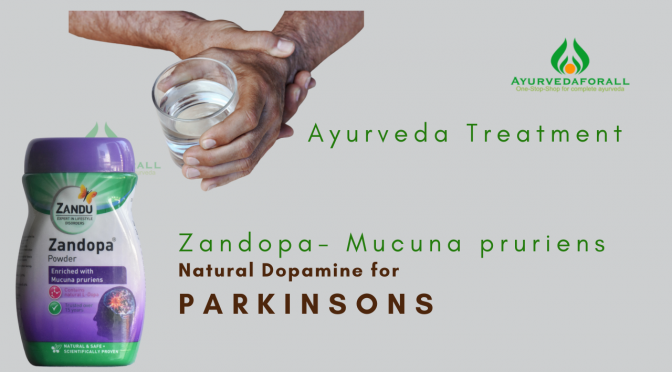
Zandopa is an herbal remedy for the treatment of Parkinson’s disease from Zandu Pharmaceuticals, India. The product is a water-soluble powder sourced from a plant called ‘Mucuna pruriens’ which contains a natural source of Levodopa. This should be taken with water and milk is contraindicated.

It is a standardized, safe, effective & economical natural source of levodopa which can effectively replace Synthetic L-dopa formulations in patients who comply with its dosage regimen. It is free from all side effects of regular synthetic L Dopa and also will improve the overall functions of the body.

Zandopa powder has been used in India for hundreds of years for several arthritic disorders, sexual weakness, and nervous disorders. The presence of natural levodopa was identified a couple of decades back.

Ayurvedic formulation derived from the seeds of Mucuna pruriens.
The long history of use in Ayurvedic Medicine for CNS disorders &also as a geriatric tonic.
Richest known source of L-dopa.
Effective in the treatment of Parkinson’s
disease.
Offers predictable efficency.
Suitable for long-term use
Readily bio-available & better tolerated.
Crosses the blood-brain barrier easily as compared
to synthetic L-dopa

Composition

Each 7.5 gm contains standardised processed seed powder of Mucuna pruriens Bak (6.525 gm in a flavored base)

Better compliance due to better tolerence or
lesser side effects.
Cost effective

What is the best medication for Parkinson’s disease?

The seed powder of the leguminous plant, Mucuna pruriens has long been used in traditional Ayurvedic Indian medicine for diseases including parkinsonism. The pharmacological action of Zandopa is due to the action of levodopa on the brain. Evidence indicates that symptoms of Parkinson’s disease are related to the depletion of stratal dopamine activity in basal ganglia.

Levodopa is the metabolic precursor of dopamine and unlike dopamine can cross the blood-brain barrier. Once in the brain, it is decarboxylated to form dopamine.

Zandopa improves all the signs and symptoms of Parkinsonism. Bradykinesia responds first followed by rigidity and tremors. Improvement of these primary neurological symptoms is accompanied by a similar improvement in overall functional ability. Secondary motor symptoms such as disturbance in posture, gait, associated movements, facial expression, speech, handwriting, swallowing, and respiration are also prominently improved.

It also favorably influences the psychic behaviors producing a sense of well-being, an increased interest in self and surroundings. After initial treatment regimen, the beneficial effects of Zandopa can be maintained for prolonged periods by smaller maintenance dose.

The clinical studies with mucuna seed powder suggests that this natural souce of L-dopa might possess advantages over conventional L-dopa preparations in the long term management of Parkinson’s disease. (J Neurol Neurosurg Psychiatry. 2004)

When should I take Zandopa powder?

As directed by the physician. In Half a glass of water (approx – 100ml) suspend the prescribed dose powder, stir, and drink immediately.

Precautions

All known precautions and contraindications as applicable to synthetic L-DOPA formulations should also be followed while prescribing Zandopa.

Is Zandopa safe?


Side effects as encountered with synthetic L-DOPA formulations have not been seen to the same severity, however the same may be observed in some patients taking large doses of Zandopa.

Safety

Long-term safety studies conducted in laboratory animals have not shown any serious toxicity with this product & in doses as high as 10% of the diet.

Caution
• Store in a cool dry place.
• Protect from light.
• Keep the continer tightly closed.
• Keep out of reach of children.
• Not to be taken with milk.


Share and Enjoy

  • Facebook
  • Twitter
  • Delicious
  • LinkedIn
  • StumbleUpon
  • Add to favorites
  • Email
  • RSS
  • Pinterest
  • Reddit
  • Blogger

Memory Ayurvedic concept

To Buy Medicine for memory disdorder click here!

Ayurveda, knowledge of life is based on the fundamental principle of Tridoshas. It states that memory is a capacity of the brain to retain information about the past thereby helps us in planning our future.  By undergoing an effective ayurvedic treatment a sluggish memory can be transformed to a quick recalling/long retention.

Our body is made up of three humors (bio energies) vatta (ether and air), pitta(water and fire) and kapha (water and earth) and they are found in every cell, tissue and organ of each one of us in different combinations and permutations. When they are balanced it is very supportive to all aspects of mental and physical activities. It is when one of these doshas get vitiated symptoms of any disorders appear.

It believed in the fact when digestive fire (agni) is disturbed by the incompatible intakes and emotional factors, it leads to ingestion thereby creating toxins(ama) which circulates throughout the body creating disorders including memory loss etc.,

If a person’s vata dosha is balanced he can be more focused and learn something new easily.  If the pitta dosha is imbalanced then it effects the intermediate memory fuction. It is kapha dosha which lubricates and nourishes the tissues of the brain is weak the long term memory suffer.Hence it is important to keep all the doshas in balance as each has its contribution to the recalling memory in its own way.

It advises one to eat fresh fruits and vegetables, to take ayurvedic herbal formulations, take enough fat, get enough sleep, do a regular exercise along with a yoga asanas along with meditation which are believed to be an excellent tone for memory retention.  Ayurveda   recommends one to keep the mind clear sharp and focused which indirectly helps in having a good memory power.

Memory Disorders- Ayurveda concept

Memory disorder is a state when a person finds it very difficult to store and retrieve the memory of any events or informations. When any person is affected with diseases like diabetes, high blood pressure, malnutrition, consumption of alcoholism or brain injury then he might be affected with this disorder.

It can be accepted that each one of us will tend to forget few things from time to time, but it is when it occurs so frequently that it affects the daily activities it can be said that we suffer from memory disorder.

There are different types of memory disorder depending upon its intensity  and it varies from a minor short term memory loss to severe Alzheimer’s disease and the  patient experience so much difficulty in communicating, learning, thinking that it will totally affect their life individually/socially. Anterograde amnesia persons cannot remember the things that had happened in distant past but can very well remember the things which happened an hour ago.

In Ayurveda these states of a patient is called as smruthi nasha, the  main reason is due to the depletion of the tissue elements and when the accumulated excess bio energies moves upward. Manovaha srotas channels is the carrier of impulses whose prime responsibility is memory. When the satva guna (pure and consciousness) is present then the channel is kindled in a positive way. On the other hand when tamaha (darkness of the person – passivity and ignorance) is present then it results in the malfunction of the mental activities including memory loss. Hence one should aim at increasing sattiv guna and get rid of tamasic guna which is the root cause of all mental disorders.

Memory disorders – Diet and Lifestyle

Ayurveda, a Science of life states that most important thing that helps in dealing with memory disorders is a proper diet that nourishes brain tissues accompanied with a healthy lifestyle. It recommends the following:

Lifestyle:

Wake up early in the morning and go for a brisk walking. Then do an abhyanga (oil massage) which removes the toxins from the body. Physical activities like playing outdoor games help a lot.

During your leisure hours always be active by involving yourself in reading, crossword puzzles etc.

It has been found that sleeping for eight hours after learning helps the brain to transfer the learnt skills to its permanent memory banks.

Peace of mind helps a lot to enhance the memory power. Hence try to cultivate it by leading a healthy and a balanced life style. Learn to handle the stressful situations in life tactfully without affecting yourself, if you cannot do it then avoid those situations.

Be regular in yogic practice as it balances mental, physical and emotional stress and its breathing exercises help a lot in improving memory power.

Diet :

Take a lot of green vegetables, fresh organic fruits, whole grains, high protein, high quality fatty foods, milk and its products in your diet as they nourishes brain tissue.

Take walnuts, sunflower seeds, turmeric, almonds, cashews, blueberries as they boost memory. Organic ghee and olive oil should be used for cooking.

Include ginger, garlic, cinnamon, clove, black pepper, basil, thyme and rosemary as they help in stimulating the Agni. (Digestive fire).

Vitamin B 12, vitamin C , vitamin E and magnesium too are found helpful in keeping the memory sharp. As they has anti-stress ingredients in it which is important for learning and retrieving ability.

Take ayurvedic herbal products like brahmi, triphala as they improve the flow of nutrients to the brain and nerve cells.

Also Ayurveda asks us to avoid working for long hours/ doing a very difficult mental work/work that does not need mind application at all, as these are also the reasons for memory loss.

Memory Disorders – Ayurvedic Medicines

Ayurvedic Medicine, a system of  traditional healing system treats Memory disorders by suggesting a modified life style, yogic practice along with its herbal formulations. The Medhya herbs that improves the co ordination between the learning process(dhi) and retention process(dhriti) and then helps in long term memory(smriti). Ayurveda largely depends on the plant kingdom for its preparation of medicine to treat any form of diseases in which phytochemicals are more concentrated which improves memory.

Brahmi improves one to overcome the negative effects of the stress and promotes the memory. It helps the student in focusing what he learns and elders in regaining their lost memory power. This improves the protein activity and synthesis in the brain cells thereby contributes to the memory power and mental clarity.

Ashwagandha – one of the herbs that promote ojas, rejuvenates the whole body. As it is a very good in treating the stress related problems it is known for increasing memory and learning capabilities.

Gotu Kola – a herb that improves the collagen  thereby the brain capillaries are protected and mental alertness is created. It acts as a calming agent and plays a significant role in enhancing the memory.

Morning Glory – a herb that is used for general nervous disorders and it has several alkaloids that have sympathomimetic properties when used as a brain tonic, thereby improves memory.

Triphala – a combination of three fruits amalaki which works on pitta dosha, haritaki which works on vata dosha and vibhitaki which works on kapha dosha resulting in strengthening it. It is a nerving tonic that treats the weak memory, anxiety and it improves the circulation in b rain and revitalizes the nervous system and enhances the memory.

Shankhapushpi – a brain tonic that improves mental functionality/has a rejuvenating property that increases the memory.
.
Below Ayurvedic medicines helps in improving the memory by stimulating the brain cells, building neutral and mental stamina, reducing the stress and brings tranquility. They also helps in destroying the toxins found in brain and nerves thereby contributing to the strong memory power.

Brahmi capsules, Brahmi ghrit, brahmi vati (with gold), Bravobol capsule, brento syrup, capsule, Chyavansakthi, Cognium , Dasamoolarishtam, Jasmin Absolute , Memocap Capsule , Mentat Tablets ,  Gotu Kola , Normeta Capsules ,  Triphala Valerian Root  and Vatkulantak Ras

Memory Disorders – Ayurveda Panchakarma

Ayurveda, an Indian medical system of natural healing believes that  memory disorders is due to the imbalance of Tridoshas (vatta, pitta, kapha) and it can be treated with Panchakarma, a unique detoxification/purification/rejuvenating therapy.
Its preparatory Processes loosen the toxins accumulated in the body.

a) Snehana – Here a whole body is massaged using medicated oils. This helps the body to liquefy excess doshas and the toxins that have been trapped in the body and  is moved towards the gastro intestinal tract.
b) Swedana – Here medicated steam is used to further loosening of the toxins and then moving it to the gastro intestinal tract.

Its main processes expel the toxins that are loosened during the preparatory phase.
a) Vamana – Here medicated decoction is administered which liquefies the toxins found in the upper digestive tract and is eliminated through vomiting.
b) Virechana – Here medicated herbs are ingested which detoxifies the lower digestive tract and accumulated toxins are expelled through anus.
c) Basti – Here the herbal concoctions are introduced in to the rectum and toxins from the large intestine is eliminated through anus.
d) Nasya – Nose is the way to the brain and consciousness. Herbal medications are administered through nose. Prana, the Life energy enters the body through nasal passage thereby governing the mental activates, memory power and all mind related activities. Hence nasal administration is very much effective for all kind of memory disorders.

Shirodhara – Here different types of medicated oil are being poured continuously on the forehead by using a specially designed copper pot. It helps to calm down the doshas in the head region thereby brings about mental rejuvenation, tranquility and promotes the memory power.

Shirovirechana – Here different types of medicated oil and nasal snuffs are being administered in the nostril which  cleans the nasal passages and opens the brain channels and eliminates the trapped toxins. This treatment is found effective for memory disorders.

Memory Disorders – Yoga

Ayurvedic medicine, a traditional way of Indian healing system   believes that all the activities are combination of both physic and physical factors and that any illness including memory disorders too involves both of these aspects. Hence it deals with both while treating the same.

Memory is the capacity to retain and then recollect the information about all the past and present situations. Ayurvedic treatment  includes regular yogic practice which helps to flush out the toxins that are blocked in channels. It also increases the circulation of blood to the brain thereby improving the concentration and memory power. It is a  discipline that includes asanas (postures), pranayama (breathing techniques) and dhyana (meditation).

Asanas – The gentle  stretches of body postures when done slowly and with a focused mind cleans the organs of the body and helps in eliminating the trapped toxins from the channels thereby increasing the memory power.  Inverted postures increases the blood supply to brain which aids in enhancing the intellectual powers and also treats the memory disorders. Vrikshasana or the tree pose and Natarajasana or the dancer’s pose helps to improve balance/concentration thereby toning up the memory power.

Pranayama – Breathing techniques helps the mind to focus on the inhale and exhale of our breath and the oxygen or prana (energy) flow is increased in the body and brain.  This leads to concentration and treats all kinds of memory disorders.

Dhyana – It strengthens one’s mind and helps one drastically reduces the unnecessary and irrelevant thoughts and thinking. It helps one to attain calm and a tension free mind. When one meditates on the third eye between the eye brows, the  brain activation and the memory power is increased.

Share and Enjoy

  • Facebook
  • Twitter
  • Delicious
  • LinkedIn
  • StumbleUpon
  • Add to favorites
  • Email
  • RSS
  • Pinterest
  • Reddit
  • Blogger

Gluten allergy – Panchkarma therapy

Ayurveda is a holistic way of healing which deals with all kind of body disorders treating one at his emotional, mental, spiritual and physical level.  Some people are allergic to gluten, a protein which is found in wheat related foods. Ayurveda aims at purifying the whole system by below mentioned panchakarma therapy.

Virechana – The pitta dominant diseases like Gluten allergy is cured by this process vitiatated pitta dosha is eliminated through the anus. Here the medicine like trivrileha and avipathy churna are given after ascertaining that the last meal has been digested and to be given after kaphakala. No food is to be given till virechana is over.  About 20 purges might be expected.

Vamana – It induces the expulsion of the stomach contents through mouth. i.e., vitiated dosha is flushed out of the body by vomiting. Previous day the patient is made to undergo sneha sweda and next day after ablutions and a hot water bath he is administered with milk followed by a paste of madana phala, yashtimadhu powder, vacha, rock sat, honey mixed with milk. In short time the patient will vomit and all the impure accumulated doshas will come out.  About 8 bouts are seen. This is followed by inhalation of the medicinal fumes.

Vasti (Enema) – Here medicinal substances like verbalized oils and decoctions in a liquid medium are introduced in to rectum thereby loosening and eliminating the vata dosha.

Thus Panchakarma helps to purify the tissues at a very deep level and it eliminates toxin left by disease. It also enhances the overall health of a person by bringing back the imbalance of aggravated doshas created by the gluten allergic symptoms.

Share and Enjoy

  • Facebook
  • Twitter
  • Delicious
  • LinkedIn
  • StumbleUpon
  • Add to favorites
  • Email
  • RSS
  • Pinterest
  • Reddit
  • Blogger

Gluten allergy – Ayurvedic concept

To Buy Anaril Ayurvedics Package for gluten allergy Click here!

Ayurveda, an ancient system of Indian medicine views that Gluten allergy occurs because of the inability of the digestive system and classifies it under gastro diseases.

Some individuals are intolerant to the intake of gluten which is a complex protein that is present in the wheat/related grains/ large variety of foods like salad dressings/processed foods causing the said allergic symptoms.

It believes that each individual body constitution is made up to vata, pita and kapha doshas.  It classifies this allergy under gastro diseases. When the pitta dosha is weak or when vata dosha is vitiated it results in the imbalance in agni, the (digestive fire) resulting in gluten allergy.

Ayurveda firmly believes that when the food we take is not digested properly it creates toxins (ama) and these gets deposited in the respiratory tracts, skins and other tissues that are much more prone to the allergic reactions. It is said that these accumulated wastes and the toxins will block the channels and traps the toxins present in the tissues thereby affecting the immunity of the body.

If it affects the skin we can experience rashes, itching, burning sensation or discoloration. If respiratory tract is affected then one sneezes, inflammation occurs in the mucous membrane. If digestive tract is being involved then it leads to symptoms like diarrhea.

Ayurveda determines the vitiated dosha which causes the Gluten allergy and tailors a specific individual treatment by reinforcing the digestive fire by determining a modified diet according to one’s body constitution detoxifies and then restores the strength of the immune system.

Gluten allergy – Diet and Lifestyle

Gluten allergy is a malabsorption syndrome which is caused by the ingestion of the gluten protein found in the wheat products. If the patient’s sticks on to the gluten free diet then there is a drastic improvement in his condition. Ayurveda suggests the following modified diet and lifestyle:

Wheat, rye, barley, oats and other related grains contain gluten and it better to avoid it totally. Avoid taking beer, cereal beverages, cakes, biscuits, ice-cream, processed soups, crackers, processed cheese/meats, candy bars.

Instead one may substitute rice, potato, corn, tapioca, chickpea, soya beans, arrowroot, carob, buckwheat, millet, amaranth and quinoa and gluten free flour. Few of the gluten-free foods and beverages are tea, coffee, rum, wine, jelly babies, chocolate, fresh fruits/ vegetables/fish/meat/poultry/eggs, popcorn, jam, honey and sugar. Take a lot of leafy green vegetables by cooking them in an appropriate manner and it has a lot of minerals which improves metabolism.

One may start with eating his favorite naturally gluten-free foods and then later add his unfavorite ones. To mention few : Wines and brandies without any preservatives and dyes in it. Gluten-free breads which has an easily digestible base ingredients like rice flours etc., All hard cheeses like cheddar, swiss, edam, and parmesan. Fresh brewed coffee, chocolate made with cocoa, fruit juices etc., Regarding snacks  one may take rice wafers, potato or corn starch based chips, popcorn etc. In Sweets one may include sugar, honey, maple syrup, jellies, jams etc.,

One has to take care while buying bakery products and packed/processed food by inspecting the labels and avoid the products if it has gluten as its ingredient. Sometimes alternative names such as cereal products or emulsifiers, stabilizers, are also used in labels.
Always try to eat home made preparations where you will know the ingredients of your intake. Also note that if you have to avoid all the foods with gluten, it is definitely going to be so stressful which can be managed by yoga which comprises of postures, meditation and breathing techniques.

Gluten allergy – Ayurvedic medicines

Ayurvedic medicine which is an Indian origin enables one to lead a graceful, harmonious and vigorous life free of any disorders including gluten allergy. It is a condition of the digestive system resulting in the poor absorption of certain nutrients. Individuals who are intolerant to gluten, a protein, which is mostly found in wheat related products are mostly affected by this allergy. It believes that pitta dosha vitiation is also one of the main reason and hence provides herbal medicines for pacifying it. Some of the suggested medicines are as below :

Commonly used medicines are Chiruvilwadi qwath, Chithragrandyadi qwath, Chitrakadi qwath, Kalyana gulam, Agasthaya rasayan, Kooshmanda rasayan etc.,

Tripala acts as an alkalyzer and if taken regularly helps to balance the vitiated pitta which is an acid base disorder. But it has to be accompanied by the gluten free diet and lifestyle. Best detoxifying ayurvedic medicine is a balanced infusion of organic herbs and spice like rosemary, ginger, oregano, turmeric, aloe vera and lime.

Panchakola when added with the gluten free soups along with black pepper is excellent remedy. It also recommends parpati kalpa which along with a strict gluten free diet is very helpful. Buttermilk is the best appetizer and can be taken in any quantity aids in fast recovery of the disease. In order to make the digestive agni stronger one has to take a dose of ghee mixed with appetizing ayurvedic herbal formulations.

Ayurvedic medicine recommends focusing on good gluten free eating habits, stress reduction and do detoxification according to one’s body constitution and lead an easy life free of tension.

Gluten allergy – Yoga

Ayurveda, the ancient Indian medical system can be said as a healing and therapeutic branch of yoga. Yogic practice consists of dhyana (meditation), Pranayama(breathing techniques) and asanas (postures) which heals both the mental and physical diseases including gluten allergy.

Initially do a complete diagnosis with an ayurvedic practitioner about the condition of the gluten allergy you are suffering from and this will help you to know exactly what you have to deal with. Next step is acceptance of the same which leads to many solutions for this disease. And it is now opt time for one to start yoga.

By doing a systematic yoga, the mind is opened up and the proper elements in the body flows naturally, thereby blockages in the body are cleared off. This automatically leads to increase in the flexibility in the body.

Gluten allergy aggravates when one leads a stress filled and a scattered life. Yoga helps on to have a balance between mind and body and a regularity in eating/sleeping/working/ exercising at the same time and same place everyday. This naturally results in a routine and unstressed life which stabilizes the immune system thereby reducing the gluten allergic symptoms

Ayurveda believes that our body is made up of vata, pitta and kapha doshas. It depicts that vitiation in the pitta and vata doshas to be a reason of aggravation of gluten allergy. Following asanas are recommended to pacify the same thereby treating gluten allergy.

Persons with vata dosha has a tendency to rush hence the asanas like sitting poses, slow salutation of the sun, standing poses, inverted
poses, simple back bends, corpse poses are to be practiced which increases the calmness.

Persons with pitta dosha has an internal heat and blood that needs detoxification and hence asanas like moon salutation, forward bends with legs open, shoulder stand, fetal pose, bow pose, yoga mudra and corpse pose are recommended.

Share and Enjoy

  • Facebook
  • Twitter
  • Delicious
  • LinkedIn
  • StumbleUpon
  • Add to favorites
  • Email
  • RSS
  • Pinterest
  • Reddit
  • Blogger

Psoriasis- Ayurvedic concept

What is Psoriasis?
The name Psoriasis comes from the Greek word ‘Psora’ meaning ‘itch’, it is an inflammatory, skin disorder due to which, roughness and redness appears on affected areas, with fine silvery scales. It is not a contagious or an infectious disease but a life style induced disease.
Causes; Symptoms; Remedies: –
According to ayurveda , impurities in the blood along with emotional factors are the main cause of the disease, it is also accepted that it has a genetic component. The disease appears first round the back of the elbow and the front of the knees as small pimples, each covered with a white cap of scales, which enlarge till they form patches. It occurs due to imbalance of vata and kapha dosha. Irregular food habits, consumption of incompatible foodstuff, salted items; alcohol, tobacco etc may also activate the disease. Ayurvedic treatment of psoriasis uses tri- pronged approach targeting the ahara (diet), vihara (lifestyle) and aushada (medicines).
Ayurveda suggests certain dos and don’ts for Psoriasis: –
1) Reduce stress levels and maintain levels of calmness. Practice Pranayama, the breathing and mental exercises have proven time and again successful for treatment of almost all kinds of chronic skin disorders.
2) Do not prick, peel, scratch or rub towel vigorously on skin. Avoid soap or other irritating cleansing measures; apply herbal balm liberally on affected areas after drying the skin.
3) Wear cotton clothes. Never tend to control natural urges like urination, bowel, belching, farting etc.
4) Avoid cold-water bath immediately after a heavy work out, brisk walk etc.
5) Consume foods, which are easily digested. Diet should be strictly vegetarian and yogurt; chilies, black gram and excess salt intake should be avoided. Refrigerated and cold foods should also be avoided.

Psoriasis- Diet and lifestyle suggested by Ayurveda

Psoriasis is a chronic skin disease, in which skin is covered with dark red scaly patches. It is not contagious or infectious but a life style induced disease. Ayurveda treatment of psoriasis takes into account the ahara (diet), vihara (lifestyle) and aushada (medicines). Psoriasis can be considered as the imbalance of Vata and Kapha. (Two basic energies, maintaining our body equilibrium)  Irregular food habits, eating of foodstuffs that cannot be taken together (E.g.: diary products with fish), excessive intake of yogurt, black gram, seafood, salt, alcohol and tobacco may activate the disease.
Few points to be kept in mind regarding Diet and Lifestyle in Psoriasis are: –
1) Diet rich in green vegetables like cucumber, carrot, and grapes is very good.
2) Balanced diet, avoiding the following; cheese, caffeine, milk products, egg, spices, oil, chocolates, sugar is very effective.
3) Taking bath in sea water, Epsom salt or oatmeal containing water is good without using chemical based soaps.
4) Gentle massage over infected area using avocado/cashew nut oil is recommended; also can use green leafy cabbage for covering infected area.
5) Give body enough sunlight, vitamen D and E. Drinking buttermilk, Karela (bitter gourd) juice; taking lethicin, sesame, sunflower and pumpkin seed are very helpful.
6) Neem is one of the best blood purifier and detoxifier ,it enhances immune system, oil is an antiseptic, and neem leaf extracts are used in antiseptics for psoriasis. Guggulu is a resin from a small tree; it has anti-inflammatory and lipid-lowering actions, an effective Kapha- and Vata-pacifying supplement.
7) Ayurveda does emphasize on effect of stress in Psoriasis, Having psoriasis is, stressful for the patient, as lesions are visible, people may stare and not want to come near. Yoga especially pranayama greatly relieves stress and speeds the process of healing.

Ayurvedic Treatment for Psoriasis

Psoriasis is a chronic skin disorder in which lesions tend to form on your knees, elbows, chest and other parts of your body.The exact cause still remains a mystery; some cases may be triggered by viral infections, immunization or a period of extreme stress. Psoriasis can be considered as the vitiation of Vata and Kapha.
Ayurvedic psoriasis treatment is a process of purification and rejuvenation, which aims at the detoxification of the body or elimination of toxins from the body fluids. It is achieved by “Panchkarma” treatment, which lasts for 21 to 28 days with internal and external medications purely of plant origin.

The Treatment Schedule is 

    I.         Consumption of medicated ghee, considering the Dosha type of the Psoriasis and the person, for 5 to 7 days. 

  II.        Detoxifying, by inducing vomiting (Vamana) and purgation (Virechana). 

III.        Application of medicated oil on the head. 

IV.        Application of medicated pack on the head.  

V.        Pouring of medicated fluid/other liquids on the head in slow unbroken stream for a specified time (Dhara).

 VI.        Therapeutic Yoga, Meditation, Reiki and Pranic healing sessions.

The net result of the treatment is    

I.        Blood Purification by Snehapanam.  

 II.        Stimulation of hypothalamus by Dhara resulting in temperature regulation of the body.

 III.        Stabilizing the blood chemistry by ensuring balanced nutritious food, which are more alkaline than acidic. 

IV.        Immunization of the body.  

V.        Achieve a psychological state of mental well-being by application of Yoga, Meditation, Reiki; Pranic healing etc.

Apart from keeping a state of mental calmness, psoriatic has to follow a strict diet regime during the entire treatment period and it is better to continue as vegetarian. Yogurt, black gram, chilies and salted thing are to be restricted. If it is in the initial stage it can be cured with out much delay. Other wise regular treatment continuing for months will be needed it is better to avoid refrigerated/chilled foods. It encourages attention to balance in one’s life through diet, herbs, lifestyle and “right thinking”


Psoriasis: Ayurvedic medicines

Psoriasis is an inflammatory, noncontiguous skin disorder due to which, roughness and redness appears with fine silvery scales. Psoriasis can be considered as a imbalance of Vata and Kapha doshas. Irregular food habits, consumption of foodstuffs that cannot be eaten together (E.g.: milk products with fish), excessive intake of yogurt, black gram, seafood, salted items, alcohol and tobacco are few things, which may enhance this disease.
Few Ayurvedic Medicines and remedies are: –
1) Guggul is an Ayurvedic herb from a resin of a small tree, which grows in northwestern India, its useful in treating psoriasis. It has anti-inflammatory and lipid-lowering actions, helps remove fat, excess fluids from the body and penetrates deep into the tissues. An effective Kapha- and Vata-pacifying supplement.
2) Psoraban an ayurvedic product is a liquid mixture manufactured from herbs and plants having unique properties to overcome all types of Psoriasis.
3) Neem is one among the best blood purifier and detoxifier known to Ayurveda. It enhances immune system and neem oil is an antiseptic in itself. Leaf extracts are used in antiseptics and can be effectively used in treating psoriasis. It destroys fungus and bacteria and is best for almost all kinds of skin diseases including redness of skin and itching.
4) An extract of Margosa leaves with extract of cow dung and cow urine may feel repulsive, owing to the ingredients and also the stench but the bottom line is that it works quite effectively.
5) To mention a few daily use items as recommended by ayurveda are: green leafy cabbage, bitter gourd juice, sesame seeds, lecithin seeds, vitamin E rich foods.
Apart from medicines, diet control, a controlled lifestyle and yoga go long way to attain best results from ayurveda for treatment of psoriasis.

Psoriasis- Yoga management

Psoriasis is a chronic inflammatory skin disease seen as redness, scaling of various sizes. Ayurveda emphasizes on the effect of stress in Psoriasis and yoga goes a long way in relieving stress. For psoriasis yoga exercises should be done in the morning sun. Seven types of pranayama, the breathing and mental exercises, can be practiced towards successful treatment of psoriasis.
Pranayama Exercises
Sit cross-legged on a thin woollen or silken mattress in the open and do the following exercises in the order as below: –
Bhastrika
Close eyes and inhale deeply through both the nostrils. Follow this up with exhalation.
Kapalbharti
Breathing in series of quick exhalations accompanied by an inward drawing motion of the stomach.
Bahya
Inhale deeply to allow air to fill up lungs fully, hold for a few moments, and then exhale forcefully.
Aalom Vilom
A single-nostril breathing exercise. Pressing right nostril with thumb, inhale deeply, through the left nostril, followed by inhalation through the right nostril.
Agnisaar
Inhale deeply but slowly, pushing stomach muscles outward, filling up stomach with air. Exhale deeply, hold breath and move stomach in and out vigorously as many times as possible, before releasing it and allowing air to fill up lungs.
Bhramari
Close eyes and plug ears tightly with the thumbs of both hands. Put the forefingers on forehead, over eyebrows, and the middle fingers of the two hands right on the closed eyes. Inhale deeply and say “OM”, without opening mouth, so as to make a humming sound that travels from mouth to ears.
Udgeet
After closing eyes, place hands on knees. Take a deep breath in and then exhale, saying ”OM”, stress on the syllable “O” as long as the breath lasts, utter the syllable “M” right at the end.
Thereafter, rub hands vigorously to generate heat and place them on eyes. While doing the breathing exercises direct the energy generated towards the affected parts of the skin by thinking about its well being to get best results.

Share and Enjoy

  • Facebook
  • Twitter
  • Delicious
  • LinkedIn
  • StumbleUpon
  • Add to favorites
  • Email
  • RSS
  • Pinterest
  • Reddit
  • Blogger

Panchkarma treatment for Psoriasis

PSORIASIS – AYURVEDA PANCHKARMA

Psoriasis is a chronic, inflammatory, non-contagious skin disorder in which abrasions tend to form on knees, elbows, chest and other parts of body. It may be triggered by viral infections, immunization or extreme stress. . In Ayurveda, Psoriasis is termed as ‘Sidhmam’ and is an imbalance of Vata and Kapha doshas.
The treatment of psoriasis is achieved by a proper routine and removal of harmful factors from the patient’s living environment. Ayurvedic treatment for psoriasis goes through several stages viz. lepanam (application of ointments), abhayangam (oil massage), snehapanam (taking medicated ghee), pizhichil (full body massage), avisnanam (medicated steam bath), sirovasti (keeping oil on head) and other bastis (enema).
Panchakarma chikitsa (treatment) is achieved by:
1) Snehapanam (consuming medicines with ghee as its base)
2) Vamanam    (taking medicines that induce vomiting)
3) Virechanam (taking medicines that act as purgatives)
The treatment purifies the entire system and stabilizes the metabolism of the patient. The body immune system is built up through intake of specially prepared herbal potions. Along with the application of medicines, the person also needs to control his diet and lifestyle to attain best results of this treatment such as; food intake to be vegetarian avoid chilies, black gram, excess salt, frozen foods.
“Panchakarma” helps in detoxification of body fluids. Initially the person is given medicated ghee for about five to seven days, followed by inducing vomiting and detoxifying the body, a process known as (Vamana and Virechana). Therafter a procedure wherein medicated buttermilk is dripped overhead called (Dahara) is done, after which the entire body is pasted with mud and other medicines. Finally medicated enemas (Basthies) are given for a week and internal medications in the form of herbal concoctions and medicated ghee has to be consumed for at least three months.

To Buy ayurvedic medicines for Psoriasis click here

Share and Enjoy

  • Facebook
  • Twitter
  • Delicious
  • LinkedIn
  • StumbleUpon
  • Add to favorites
  • Email
  • RSS
  • Pinterest
  • Reddit
  • Blogger