Warning: Illegal string offset 'src' in /home/ayurvedaforall/public_html/blog/wp-content/plugins/jetpack/functions.opengraph.php on line 293

All posts by Dr Rajesh Nair

ABHRAGARBHA POTTALI- Respiratory Care


abhragarbha-pottaliAbhragarbha pottali is an Ayurvedic medicine used in the treatment of respiratory diseases and fever. This medicine contains mineral ingredients only. This medicine should only take as per the direction by a physician.

BENEFITS OF ABHRAGARBHA POTTALI

  • This medicine is used in the treatment of respiratory diseases.
  • As per Ayurveda classics, it balances vata, pitta and kapha dosha.
  • This medicine is also good for diseases of the digestive system.

INDICATIONS OF ABHRAGARBHA POTTALI

  •  Kshaya – Emaciation
  • Agnisadanam – Indigestion
  • Kasa – cough
  • Swasa – breathing difficulty
  • Jwara – fever

INGREDIENTS OF ABHRAGARBHA POTTALI


SL NO SANSKRIT NAME ENGLISH ACTION
1 PARADA Purified mercury fast relieve from symptoms
2 GANDHAKA Purified sulphur


rejuvenator
3 SWARNA Purified gold provide immunity, rejuvenator
4 ABHRAKA Purified biotite mica Balances vata, pitta dosha , analgesic action

 METHOD OF PREPARATION

At first purified mercury and gold leaves triturated well. To this purified gandhaka added and triturated well to obtain a homogenous mixture known as kajjali. Bhasma of abhraka and kajjali is to be triturated with the juice of aloe vera and conical shaped structure should be prepared. After drying it is tied up in a silk cloth, known as pottali. This pottali hung from a rod to be suspended in a pot with molten sulphur. The whole setup is then placed in the heating apparatus known as valukayantra and subjected to mild intensity of heat. The product obtained from this is known as abhragarbha pottali.

  • Detoxification of mercury– Ground with the juice of Aloe vera, Triphala(Terminalia chebula, Terminalia bellerica, Emblica officinalis), the root of chitraka (Plumbago zeylanica) each for 7 days.
  • Detoxification of Gandhaka – fried in ghee and dipped in cow’s milk repeated for 7 times.
  • Purification of gold- Heated and immersed in sesame oil, buttermilk, cow’s urine, gruel and decoction of kulatha (Dolichos biflorus) in that order for seven days in each liquid.
  • Purification of Abhraka – Heating and quenching in the decoction of Triphala or cow’s milk for 7 times.

DOSHA- DUSHYA PREDOMINANCE AND ROGA MARGA

  •  Dosha – This medicine is recommended for the treatment of vata, pitta and kapha predominant diseases.
  • Dushya- useful in diseases affecting rasa, rakta dhatu –  indigestion
  • Roga marga – Useful in diseases affecting abhyanthara roga marga – diseases affecting the respiratory system

 DOSAGE AND USAGE

  •  Take 62.5 mg after food once or twice daily or as directed by an Ayurvedic doctor.

 EXERCISES AND YOGA

 Yoga and Pranayama are a set of breathing and stretching exercises respectively, widely practised in the treatment of different diseases.

Nadi Shuddi Pranayam    – Effective in respiratory diseases, cleans the respiratory passage, calms mind (mental stress aggravates the digestive problems)

 The patient needs to be seated in a meditative posture with the head and spine erect, with the body relaxed. The patient has to close his one nostril (e.g. left nostril if using the right hand and vice versa) with the thumb and exhale completely through the other nostril. Again, he will have to breathe in deeply through the other nostril while the opposite nostril is still closed with the thumb.

RECOMMENDED DIET AND BEHAVIOUR

  • Avoid food items that produce dosha imbalance like cold, more acrid, sour and dry food, hard to digest. Because dosha imbalance aggravates the symptoms.
  • Consume easily digestible food items
  • Avoid smoking, carbonated drinks, alcohol

SIDE EFFECTS AND CONTRAINDICATIONS

  •  This medicine should only take as per the direction of the physician.
  • It is better to avoid by children, lactating women and during pregnancy
  • Improper administration and overdosage leads to side effects
  • Can this medicine be used while taking Allopathic medicines?

                     Seek your doctor’s advice if you are taking this medicine along with Allopathic medicines.

  • How long the medicine can be used?

             The duration of medicinal administration is based on your stage of the disease. Before taking medicine consult a physician.

  • Is this medicine habit forming?

     This medicine is not habit-forming. After using for a prescribed period gradually decrease the dose and eventually stop it.

 EQUIVALENT MEDICINES

  • Swasa kutar ras
  • Kasa kutar ras
  • Vyoshadi vataka
  • Agastya rasayan

    AVAILABLE BRANDS

  • Shree dhootapapeshwar

RESEARCH PAPERS

1.     Blood compatibility studies of Swarna bhasma (gold bhasma), an Ayurvedic drug

https://www.ncbi.nlm.nih.gov/pmc/articles/PMC3157103/

2.     Comparative study on cellular entry of incinerated ancient gold particles (Swarna Bhasma) and chemically synthesized gold particles.

https://www.nature.com/articles/s41598-017-10872-3

3.     Swarna Bhasma and gold compounds: An innovation of pharmaceutics for illumination of therapeutics.

https://www.researchgate.net/publication/287178311_Swarna_Bhasma_and_gold_compounds_An_innovation_of_pharmaceutics_for_illumination_of_therapeutics

4.     Chemical characterization of incinerated gold (Swarna Bhasma)

https://www.imedpub.com/articles/chemical-characterization-of-incinerated-gold-swarna-bhasma.pdf

  1. To study the general characteristics of abhrak bhasma: a wonder drug

https://www.wjpps.com/Wjpps_controller/abstract_id/9302#:~:text=TO%20STUDY%20THE%20GENERAL%20CHARACTERISTICS%20OF%20ABHRAK%20BHASMA%3A%20A%20WONDER%20DRUG&text=There%20has%20been%20a%20constant,decoction%20of%20various%20medicinal%20herbs.

  1. Effect of abhrak bhasma on the physiology and behaviour of drosophila melanogaster.

https://www.researchgate.net/publication/316836328_EFFECT_OF_ABHRAK_BHASMA_ON_THE_PHYSIOLOGY_AND_BEHAVIOUR_OF_DROSOPHILA_MELANOGASTER

7.     Effect of Puta on in vitro anticancer activity of Shataputi Abhrak Bhasma on lung, leukemia and prostate cancer cell lines.

https://www.sciencedirect.com/science/article/pii/S097594761730102X

8.     Analytical Evaluation of an Ayurvedic Formulation – Abhraka Bhasma

http://globalresearchonline.net/journalcontents/v23-1/04.pdf

9.     Modulation of oxidative stress by abhrak bhasma in drosophila melanogaster.

https://innovareacademics.in/journals/index.php/ajpcr/article/view/24472

Share and Enjoy

  • Facebook
  • Twitter
  • Delicious
  • LinkedIn
  • StumbleUpon
  • Add to favorites
  • Email
  • RSS
  • Pinterest
  • Reddit
  • Blogger

Amla Pitta- Acid Reflux- Ayurveda Medicines and Diet

gerd-ayurveda

Ayurvedic Concept of Acid Reflux and its Management

Acidity or hyper-acidity (Amlapitta)  is a condition that almost every one of us would have suffered through at least once in our lifetimes. However frequent incidence of hyper-acidity will affect the stomach and related body parts like the oesophagus and duodenum that are part of the digestive system and will lead to the ulceration of the epithelium, the inner lining of these parts. This will cause improper digestion and other related dysfunctions leading to symptoms like burning sensation in the stomach, fermentation, indigestion, etc., and will ultimately lead to GERD (Gastro-oesophageal Reflux Disorder), which is a condition which will cause the weakening of the oesophagus valve and disorders caused due to it like nausea, vomiting, fermentation, bloating of the stomach, anorexia, bad breath odour, wounds in the mouth, diarrhoea, etc.

This disease can be managed in the initial stages without any difficulty by adopting the correct treatment and by avoiding the consumption of food that causes the disease.

Acid Reflux in Ayurveda

The condition that is similar to Gastritis or GERD can be seen described in many instances in Ayurveda. To a great extent, GERD/Gastritis corresponds to the disease that is described as Amlapittam in Ayurveda science. And, in certain situations, these would bear similarities also with Vataja Chardi and Pithaja Chardi conditions.

Reasons for the Disease

Amlapitta is caused by the malfunctioning or excess production of the hydrochloric acid that is produced in the stomach and required for the digestion of food. Amlam means acid. Its uncontrolled flow to the upper or lower parts of the body is the reason for the patient exhibiting the symptoms of the disease. However, when we explore the reasons for this, it can be found that irregular food habits, mental stress, excessive use of painkillers, H pylori infection, etc. are all reasons for causing the disease.

Some of the reasons for the cause of the disease are:

  • Regular consumption of food that is excessively sour and hot (spicy)
  • Excessive consumption of fast food, fermented dosa and idli, and bakery items
  • Excessive consumption of fatty foods, pickles, tea, coffee, and other bottled drinks
  • Irregular food habits, consuming food again before the food has been digested, consuming food extremely late in the night
  • Busy lifestyle and not finding enough time to take rest
  • Sleeplessness and sleeping immediately after having food
  • Speed (Vegadharanam)
  • Work stress, anxiety, anger, fear, mental stress, tiredness, etc.
  • Staying at a place that is always unclean (Klinnarayulla) and where there is water stagnation, i.e. living in low lying areas (Aanthapadeshavasam) – e.g. living in Bengal, Assam, Kuttanad, Alappuzha, etc.
  • Alcoholism, smoking and chewing tobacco
  • Excessive consumption of painkillers (NSAIDS)
  • H Pylori infection
  • Fasting for a long time

Rogha Samprapthi (Disease Maturation)

The reasons mentioned above causes the incidence of imbalanced digestive fire ( Jataragni Vaishamyam) which negatively affects the functioning of the digestive juices. The disease symptoms are exhibited because of this. The reasons will mainly cause inflammation of Pachaka Pitta and harm the digestive process. The Ama (a mixture of improperly digested food and digestive juices) travels from the stomach to the upper and lower parts of the body and exhibits the symptoms of the disease. Accordingly, two types of Amlapitta are caused – High (Urdhwagtham) Amlapitta and Depressing (Adhogatham) Amlapitta.

Apana Vayu vitiation also happens along with Pachaka Pitta because of the reasons mentioned above, the functioning of the Vyana Vayu and Udana Vayu also becomes abnormal. This causes the weakening of the gastro-oesophageal valve at the start of the stomach and will cause the entry to the upper side of the stomach juices that has to otherwise flow only to the bottom side. This causes a condition called GERD.

Lakshanangal (Symptoms)

  • Burning sensation in the chest
  • Fermented or bitter-tasting burp
  • Burning sensation in the throat
  • Nausea and Vomiting
  • Bulging of the stomach
  • Indigestion
  • Tastelessness
  • Pain in the stomach
  • Bad breath odour
  • Burning (Pukachil) sensation in the hands and legs
  • Ulcer in the mouth
  • Tiredness, fatigue, losing weight
  • Diarrhoea

Diagnosis

Diagnosis is made after a detailed examination of the patient and the disease conditions. Modern diagnostic techniques could be employed for this.

  • Stool/urine examination
  • Barium meal X-ray
  • Gastrin levels in the blood
  • Gastroscopy
  • Oesophageal pH monitoring

Chikithsa (Treatment)

  1. Finding out the symptoms of the disease and eliminating those.
  2. Shamana Chikithsa

Give medicines that will cause the healing of the Pitta (Pitta Shamana) but help in the enhancement of Ama (Ama Pachanam). Care should be given to ensure that medicines given for Ama Pachanam do not create an imbalance in the Pachaka Pitta.

Medicines that could be usually given:

  • Single Herb Remedies (Ottamooli )
    • Glycyrrhiza glabra (Irattimadhuram) – 3g twice a day with milk
    • Dry Ginger Powder (Shunti Churna- Chukkupodi) – 1-3g twice a day with water
    • Shathavari ( Asparagus racemosus) – 3g twice a day with water
    • Amalaki Powder -Nellikka choornam ( Phyllanthus emblica) – 3g twice a day with water
  • Kashayam
  • Rasaushadhi
    • Sutashekhara Rasam – 125mg mixed in honey, to be taken twice a day
    • Pravala Pishti – 125mg in Nellikkaswarasam
    • Pravala Panchamruta Rasam – 250mg, twice a day
    • Dhatri Lauham – 1g twice daily in Ghee
    • Shankha Bhasmam – 250mg mixed in honey, to be taken twice a day
    • Swarna Makshika Bhasmam – 125mg twice daily
    • Mukta Pishti
  • Nalikera Lavanam – 1g in water
  • Nalikera Khandam – 6g, twice a day
  • Ghritam
    • Shatavari Ghritam – 10g twice daily
    • Sukumara Ghritam – 10g twice daily
    • Dadimadi Ghritam – 10g twice daily
  • Choornam
    • Avipati Choornam – 6g dipped in honey
    • Hingwashtaka Choornam – 6g dipped in honey
    • Mahadhanwantaram Gulika – 2 twice daily
  1. Shodhana Chikithsa

If the disease has been persisting for a long time, Shodhana Chikithsa can be done along with or before consuming Shamana Aushada (medicines).

  • Vamanam

Vamanam (medicated emesis) is the best (Uthama) Shodhanam in Urdhavagatha Amlapitta condition. Snehapanam (consumption of medicated ghee) should be done with the suitable Ghritam from the ones mentioned above and after that full-body (Sarvangam) oil massage (Ennaidal) and sweating (Viyarpikkal) should be induced. Medicine for Vamanam can be given after this. Vamanam is ideal for the elimination of Urdhavagatha Dosham and Srothoshudhi. Along with this, the correct functioning of the pulse and hormones also takes place due to the excitation (Udheepanam) of the areas around the vomiting center of the brain. This paves the way for proper digestion and destressing of the mind.

  • Virechanam

Virechanam is the best Shodhana treatment technique for Adhogatha Amlapitta. For doing this, firstly internal Snehapanam should be done with any of the suitable Ghritam mentioned in the group of Sneha medicines (Aushadam). After this, Virechanam should be done by giving external Snehapanam and Swedanam. 20 to 25g Avipathi Choornam dipped in Honey can be given for Virechanam.

Vasti

This is ideal for the digestion/processing / excretion (Anulomanam) of the Apana Vayu (the Vayu or force active in the pelvis and lower abdomen area and governs the eliminative functions – excretion, urination, menstruation, etc. – and the downward and outward flow of energy in the body). Apana Vaigunyam is the root cause of GERD. Vasti can be performed to heal this and for the suppression of illnesses related to the large intestine (Pakwashayagatha) like the bloating of the stomach/abdomen (Vayaru Perukkam).  Vasti can be given in doses (Kramam) of Kala Vasti and Yoga Vasti.

Home Remedies for Amlapitta

  • Add some sugar in water boiled with coriander and have a glass each three time a day
  • Regularly consume tender coconut
  • Take water boiled with gooseberry powder
  • Chew cumin seeds after food

Dietary Control – What to eat and what to avoid

  • Completely avoid all foods mentioned as reasons for causing the disease
  • Make a habit of consuming food only as per the hunger level
  • Follow a schedule for eating food
  • Include large quantities of vegetables like pumpkin, snake gourd, bitter gourd, ash gourd, etc. and leafy vegetables in the diet
  • Include rice, wheat, mung bean, jaggery, etc. that is at least one year old in the daily diet
  • Consume gooseberry, raisin, pomegranate, fig (Athipazham), etc.
  • Use for drinking, lukewarm water, water boiled with Coriander, water mixed with Vetiver, water cooked with flower (Malar)
  • Drink/use milk daily

(it may cause some difficulties during the initial days, but later it will help in reducing the symptoms of the disease)

  • 1 teaspoon ghee could be added in the daily diet
  • Ensure proper sleep, rest, and exercise
  • Avoid food that are sour and spicy (hot)
  • Smoking, drinking alcohol, tea, coffee, bottled drinks, carbonated drinks, etc. should be avoided
  • Avoid mental stress

Yoga

  • The influence of mental stress as a reason for the disease have been made clear. Hence, to reduce the impact of this, light Asana, Pranayama, Meditation, etc. should be made a regular practice.
  • Asana will help in reducing mental stress and ensuring the proper functioning of the digestive system.
  • Asana that can be practiced regularly
    • Bhujagasanam
    • Vrikshasanam
    • Ardhamatsyendhrasanam
    • Pavanamukthasanam
    • Kurmmasanam
    • Vajrasanam

Conclusion

When all the processes in the body function properly as set by nature, the factors that enable the occurrence of the symptoms and the diseases are eliminated. This in turn helps in the healthy development of the body. By following an Ayurveda based lifestyle strictly, one can overcome acid reflux disease conditions and live a healthy life.


Share and Enjoy

  • Facebook
  • Twitter
  • Delicious
  • LinkedIn
  • StumbleUpon
  • Add to favorites
  • Email
  • RSS
  • Pinterest
  • Reddit
  • Blogger

Chitrakadi Gutika- Benefits, Indications, Dosage, Ingredients, Warnings, Diet, Exercises, Research Papers, Preparation

chitrakadi

CHITRAKADI GUTIKA

Chitrakadi gulika is an Ayurvedic medicine used in the treatment of gastrointestinal disorders. This tablet contains herbal ingredients and salts. This medicine should only take as per the direction by a physician.

 CHITRAKADI GULIKA  Benefits

1. This medicine is mainly used in the management of diseases of the digestive system.

2. It is more effective in indigestion-related complaints like abdominal colic, and abdominal fullness.

3. It is specially administrated in the disease called grahani ( malabsorption)

INDICATIONS 

  •  Indigestion
  • Abdominal colic
  • Abdominal fullness
  • Bloating
  • malabsorption

 CHITRAKADI GULIKA  Ingredients


SL NO SANSKRIT NAME ENGLISH LATIN QUANTITY ACTION
1 CHITRAKAM The root of lead wort Plumbago zeylanica 1part Carminative
2 PIPPALI Long pepper Piper longum 1part carminative
3 MARICHA Black pepper Piper nigrum 1part carminative
4 SUNDI Ginger (dried) Zingiber officinalis 1part carminative
5 YAVA KSHARA Kshara of barley Hordeum vulgare 1part Relieves complications associated with constipation, bloating, abdominal fullness
6 PIPPALI MULA Long pepper (Root) Piper longum 1part Carminative
7 SAUVARCHALA LAVANA Sochal salt   1part Carminative, balances vata
8 SAINDHAVA LAVANA Rock salt   1part Carminative, balances vata, pitta, kapha
9 VIDA LAVANA Black salt   1part Balances kapha and vata
10 SAMUDRA LAVANA Common salt   1part Carminative, balances vata
11 ROMAKA LAVANA Sambhar salt   1part Carminative, balances vata
12 HINGU Asafoetida Ferula asafoetida 1part Carminative
13 SWARJIKA KSHARA Sodium bicarbonate 1part Carminative
14 AJAMODA ajowan Trachyspermum ammi 1part carminative
15 CAVYA Long pepper Piper chaba 1part carminative


METHOD OF PREPARATION 

 Above mentioned drugs are taken in equal quantity and finely powdered. Then it grounded with the juice of dadima (pomegranate) are tablets are made.

DOSHA- DUSHYA PREDOMINANCE AND ROGA MARGA 

 Dosha – This medicine is recommended for the treatment of vata, pitta, and kapha dosha imbalance.

  • Dushya- useful in diseases affecting rasa dhatu – indigestion
  • Roga marga – This medicine can be administered in diseases affecting Abhyanthara roga marga – diseases of the digestive system

  CHITRAKADI GULIKA Dosage

 1 to 2 tablets after food twice daily along with lukewarm water or as directed by an Ayurvedic doctor.

 EXERCISES AND YOGA 

 Yoga and Pranayama are a set of breathing and stretching exercises respectively, widely practised in the treatment of different diseases.

Nadi Shuddi Pranayam    – cleans the respiratory passage, calms mind (mental stress aggravates digestive problems)

 The patient needs to be seated in a meditative posture with the head and spine erect, with the body relaxed. The patient has to close his one nostril (e.g. left nostril if using the right hand and vice versa) with the thumb and exhale completely through the other nostril. Again, he will have to breathe in deeply through the other nostril while the opposite nostril is still closed with the thumb.

RECOMMENDED DIET AND BEHAVIOUR 

  • Avoid food items that produce dosha imbalance like cold and dry food, hard to digest. Because dosha imbalance aggravates the symptoms.
  • Consume easily digestible food items, lukewarm water, gruel
  • Avoid smoking, carbonated drinks, alcohol
  • Avoid consumption of heavy diet at bedtime.
SIDE EFFECTS OF CHITRAKADI GULIKA


 This medicine should only be taken as per the direction of the physician.

Improper administration and overdosage leads to side effects

Taken by children, lactating women, and during pregnancy only after consulting an Ayurveda doctor.

  • Can this medicine be used while taking Allopathic medicines?

 Seek your doctor’s advice if you are taking this medicine along with Allopathic medicines.

  • How long the medicine can be used?

 The duration of medicinal administration is based on your stage of the disease. Before taking medicine consult a physician.

  • Is this medicine habit forming?

This medicine is not habit-forming. After using for a prescribed period gradually decrease the dose and eventually stop it.

        CLASSICAL REFERENCE 

  • Caraka samhita – Grahani chikitsa

chitrakadi-gutika

  EQUIVALENT MEDICINES 

       AVAILABLE BRANDS 

  • Dabur
  • Kottakkal Aryavaidya sala
  • Baidyanath
  • Divya pharmacy

RESEARCH PAPERS 

  1. Evaluation of the role of Chitrakadi Vatiin the management of Bandhyatvas.r to anovulation (as a consequence of unruptured follicle)

http://www.ayujournal.org/article.asp?issn=0974-8520;year=2009;volume=30;issue=4;spage=392;epage=396;aulast=Shukla;type=0

  1. Evaluation of the laxative activity of Chitrakadi Vati, An ayurvedic Formulation in rats

https://www.researchgate.net/publication/267755985_Evaluation_of_laxative_activity_of_Chitrakadi_Vati_An_ayurvedic_Formulation_in_rats

3.     Standardization of chitrakadi vati: an ayurvedic polyherbal formulation

http://ijpsdr.com/index.php/ijpsdr/article/view/359

  1. Invitro antibacterial activity of chitrakadi vati.

https://www.ayurpharm.com/index.php/archives/category/27-volume-2-issue-12?download=83:research-article-in-vitro-antibacterial-activity-of-chitrakadi-vati-a-herbo-mineral-ayurvedic-formulation-against-e-coli-shubhangi-kamble-dwivedi-rr


Share and Enjoy

  • Facebook
  • Twitter
  • Delicious
  • LinkedIn
  • StumbleUpon
  • Add to favorites
  • Email
  • RSS
  • Pinterest
  • Reddit
  • Blogger

What You Know About ATTENTION DEFICIT HYPERACTIVITY DISORDER -ADHD Ayurveda Treatment?

attention-deficit-hyperactivity-disorder1

Attention deficit hyperactivity disorder (ADHD) is a neurological disorder that impacts the parts of the brain that help us plan, focus on, and execute tasks. It is a chronic condition that affects millions of children and often continues into adulthood. ADHD includes a combination of persistent problems, such as difficulty sustaining attention, hyperactivity and impulsive behavior. They have trouble with impulse-control, focusing, and organization.

Children with ADHD may also struggle with low self-esteem, troubled relationships and poor performance in school. Symptoms sometimes lessen with age. However, some people never completely outgrow their ADHD symptoms. But they can learn strategies to be successful. ADHD is not a behavior disorder or mental illness or a specific learning disability, instead, a developmental impairment of the brain’s self-management system.

It is the most prevalent mental disorder in children, with a worldwide-pooled prevalence of 5.3%. In India, the prevalence of ADHD has been reported to be 1.6–17.9%. ADHD occurs more often in males than in females, and behaviors can be different in boys and girls. Boys may be more hyperactive and girls may tend to be quietly inattentive.

Causes of ADHD

While the exact cause of ADHD is not clear, research efforts continue. Factors that may be involved in the development of ADHD include genetics, heredity, the environment or problems with the central nervous system at key moments in development. Investigations related to certain genes, especially ones linked to the neurotransmitter dopamine are progressing. Risk factors

Risk factors for ADHD

  • Blood relatives, such as a parent or sibling, with ADHD or another mental health disorder
  • Exposure to environmental toxins — such as lead, found mainly in paint and pipes in older buildings
  • Maternal drug use, alcohol use or smoking during pregnancy
  • Premature birth

Sub-types of ADHD

The Diagnostic and Statistical Manual of Mental Disorders (DSM) previously identified three subtypes of ADHD

  • Primarily hyperactive-impulsive type
  • Primarily inattentive type
  • Primarily combined type

The subtypes were primarily based on overt behavioral symptoms, and ignored less visible symptoms like emotional dysregulation, cognitive patterns, and sleep difficulties. Researchers determined that people often move from one subtype to another. For example, a child may present as primarily hyperactive-impulsive in preschool, and lose much of the hyper-arousal in adolescence to fit the primarily inattentive presentation. In college and adulthood, the same individual may transition to combined presentation.

Symptoms of ADHD

The primary features of ADHD include inattention and hyperactive-impulsive behavior. ADHD symptoms start before age 12, and in some children, they’re noticeable as early as 3 years of age. ADHD symptoms can be mild, moderate or severe, and they may continue into adulthood.

Symptoms in three subtypes of ADHD

The symptoms of ADHD are spelled out in the fifth edition of the Diagnostic and Statistical Manual of Mental Disorders (DSM-V), which lists nine symptoms that suggest ADHD–Primarily Inattentive and nine that suggest ADHD–Primarily Hyperactive/Impulsive. A child may be diagnosed with ADHD only if he or she exhibits at least six of nine symptoms from one of the lists below, and if the symptoms have been noticeable for at least six months in two or more settings — for example, at home and at school. Older teens and adults may need to consistently demonstrate just five of these symptoms in multiple settings.

Symptoms in subtypes

Predominantly inattentive. The majority of symptoms fall under inattention.

Predominantly hyperactive/impulsive. The majority of symptoms are hyperactive and impulsive.

Combined. This is a mix of inattentive symptoms and hyperactive/impulsive symptoms.

9 symptoms of inattention

  • Fail to pay close attention to details or make careless mistakes in schoolwork
  • Have trouble staying focused in tasks or play
  • Appear not to listen, even when spoken to directly
  • Have difficulty following through on instructions and fail to finish schoolwork or chores
  • Have trouble organizing tasks and activities
  • Avoid or dislike tasks that require focused mental effort, such as homework
  • Lose items needed for tasks or activities, for example, toys, school assignments, pencils
  • Be easily distracted
  • Forget to do some daily activities, such as forgetting to do chores

9 symptoms Hyperactivity and impulsivity

  • Fidget with or tap his or her hands or feet, or wriggle in the seat
  • Have difficulty staying seated in the classroom or in other situations
  • Be on the go, in constant motion
  • Run around or climb in situations when it’s not appropriate
  • Have trouble playing or doing an activity quietly
  • Talk too much
  • Blurt out answers, interrupting the questioner
  • Have difficulty waiting for his or her turn
  • Interrupt or intrude on others’ conversations, games or activities

Complications of ADHD

ADHD can make life difficult for children. Children with ADHD:

Often struggle in the classroom, which can lead to academic failure and judgment by other children and adults

Tend to have more accidents and injuries of all kinds than do children who don’t have ADHD

Tend to have poor self-esteem

Are more likely to have trouble interacting with and being accepted by peers and adults

Are at increased risk of alcohol and drug abuse and other delinquent behavior

Treatment of ADHD

Types of treatment for ADHD include

Behavior therapy, including training for parents

Medications.

Treatment recommendations for ADHD

For children with ADHD younger than 6 years of age

The American Academy of Pediatrics (AAP) recommends parent training in behavior management as the first line of treatment, before medication is tried.

Behavior therapy of ADHD

The goals of behavior therapy are to learn or strengthen positive behaviors and eliminate unwanted or problem behaviors. Behavior therapy for ADHD can include

Parent training in behavior management

Behavior therapy with children

Behavioral interventions in the classroom

For children 6 years of age and older

The recommendations include medication and behavior therapy together- parent training in behavior management for children up to age 12 and other types of behavior therapy and training for adolescents.  Schools can be part of the treatment as well. AAP recommendations also include adding behavioral classroom intervention and school supports.

Parent training in behavior management;

Behavioral interventions in the classroom;

Peer interventions that focus on behavior; and

Organizational skills training.

These approaches are often most effective if they are used together, depending on the needs of the individual child and the family.

Medications of ADHD

Medication can help children manage their ADHD symptoms in their everyday life and can help them control the behaviors that cause difficulties with family, friends, and at school.

Different types of medication approved by FDA are

Stimulants are the best-known and most widely used ADHD medications. Between 70-80% of children with ADHD have fewer ADHD symptoms when taking these fast-acting medications.

Nonstimulants were approved for the treatment of ADHD. They do not work as quickly as stimulants, but their effect can last up to 24 hours.

Medications can affect children differently and can have side effects such as decreased appetite or sleep problems. One child may respond well to one medication, but not to another.

Healthcare providers who prescribe medication may need to try different medications and doses. The AAP recommends that healthcare providers observe and adjust the dose of medication to find the right balance between benefits and side effects. It is important for parents to work with their child’s healthcare providers to find the medication that works best for their child.

Complications of ADHD

ADHD can make life difficult for children. Children with ADHD:

Often struggle in the classroom, which can lead to academic failure and judgment by other children and adults

Tend to have more accidents and injuries of all kinds

Tend to have poor self-esteem

Are more likely to have trouble interacting with and being accepted by peers and adults

Are at increased risk of alcohol and drug abuse and other delinquent behavior

Ayurveda and ADHD


ADHD is a condition that cannot be treated and cured only with medication alone. Modern medicine relies more on behavioural therapy and cognitive therapy than on medication in treating the condition. However, those who have this condition can be cured of the complications related to this if treated early according to Ayurvedic principles.

Physical well-being occurs when the Tri-Dosha – Vata, Pitta, and Kapha – are in equilibrium. However, the uncontrollable increase in the Vata Dosha can lead to an increase in severity, bodyweight loss, chill, rigidity (Khara Swabhavam), immobility, and other subtle effects (Sukshma Vyapanam).  In this, when immobility, which is the vitiation of the primary function of Vata Dosha goes out of control, it results in the distorted and excessive manifestations of the malfunctioning of the body. This aggravated air (Kupitha Vayu) in turn impairs the equilibrium of the Sattva – Rajas – Tamas, the three unique mental qualities (Gunas). In particular, the aggravated air disproportionately increases the Rajas resulting in the manifestation of the various conditions of ADHD.

Reasons for the Disease & Maturation

Genetic disorders and the many harmful vitiations in nature can all be reasons for the incidence of the disease.

However, as per Ayurveda scriptures, a child can get ADHD if any undesirable or prohibited events or acts occur during the time the child is in the womb. In addition to this, the wrong diet and physical routines that a mother follows during pregnancy and while breastfeeding her child can lead to the creation of a toxin that causes a harmful effect in the body of the child.

When toxic ingredients that are present in the food and the water enter the bodies of such children who are born with weak physical and mental conditions, the Dosha that is in equilibrium in their bodies gets into a vitiated condition. This leads to the source of wrath/disease (Srothorodham). The correct formation and development of tissues (Dhatu Pushti) do not happen leading to the production of defective and degraded life essence (Ojas). The nature, behaviour, and thinking abilities of the children are affected especially by the impairment of the mental condition.

Ayurveda Treatment for ADHD

In Ayurveda, the effectiveness of the treatment is dependent on how early the treatment is started.

The treatment goes through primarily four stages:

Management of ADHD through Diet

Some foods, especially sugar, wheat, milk products, etc. are known to cause hyperactivity in children with ADHD. The treatment will be effective only if such foods are completely avoided. Accordingly, as a first step, the consumption of such foods should be stopped. Visible changes are observed in children when this routine is followed even for a month. The parents should make every effort to ensure that the prescribed diet is followed. A strict diet ensures the proper functioning of the digestive system (Agni).

  1. Toxin Removal (Aama Pachana)

The toxic elements that are present in the body should be expelled for the proper functioning of the bodily functions. The medicines that can be given to removing toxins from the body are listed below:

  1. i) Vilwadi Gulika –            ½ tablet daily

(½ tablet can be given daily to a child below 5years and one tablet to child above that age)

  1. ii) Dooshivishari Gulika –            ½ tablet daily

(½ tablet can be given daily to a child below 5years and one tablet to child above that age)

iii)          Nirgundyadi Kashayam  –

5ml Kashayam mixed in 45ml boiled and cooled water to be given twice daily

  1. iv) Krimighna Vati –            One each twice daily
  2. v) Vilangasaaradi Kashayam –            5ml Kashayam mixed in 45ml boiled and cooled water to be given twice daily.
  3. vi) Makkippoovadi Kashayam –            5ml Kashayam mixed in 45ml boiled and cooled water to be given twice daily.

vii)         Vizhalveradi Kashayam                –            5ml Kashayam mixed in 45ml boiled and cooled water to be given twice daily.

  1. Agni Deepana Chikitsa (Metabolic Correction / Rekindling of Digestive Fire)

The deficiency of Agni is the reason for all diseases. Due to this, medicines that enhance the digestive fire (Agni) should be given after the completion of toxin removal therapy (Aama Pachana).

  1. i) Vaishwanara Choornam –            2g mixed in honey
  2. ii) Ashta Choornam –            2g mixed in honey

iii)          Rajanyadi Choornam                    –            2g mixed in honey and ghee

  1. iv) Vaishwanara Choornam –            2g mixed in honey
  2. v) Gandharvahasthadi Kashayam
  3. vi) Guluchyadi Kashayam

vii)         Chiruvilwadi Kashayam

viii)        Abhayarishtam – 10ml Arishtam mixed in 20ml of boiled and cooled water

  1. ix) Hinguvachadi Choornam
  2. In-patient Treatment for ADHD

Some Vata-inhibiting external procedures can be performed at the time of in-patient treatment.

  1. i) Abhyangam (Body Massage)

Ksheerabala Tailam, Bala Thailam, Chinchadi Thailam, etc. can be massaged on to the body. The body should be given a mild dose of heat after this. This is an ideal treatment for inhibiting Vata.

  1. ii) Shirodhara (Application of Oils on the forehead)

When oils (Thaila Dhara) are applied on the forehead, it helps in inhibiting Vata and while also stimulating and ensuring the proper functioning of the central nervous system which is the main functional part of Vata Dosha.

The following can be used for Shirodhara:

–             Balaa Thailam

–             Madhuyashtyadi Thailam

–             Ksheerabalaa Thailam

iii)          Karnapooranam (Cleansing of the Ears)

Performing ear cleansing (Karnapooranam) with Vata-inhibiting oils (Thailam) is said to be effective in some conditions as ears are one of the main locations of Vata Dosha.

Oils that can be used for cleaning include:

–             Kshara Thailam

–             Murivenna Thailam

–             Ksheerabalaa Thailam

  1. iv) Shirovasti (Application of Oil on the head)

Even though this cannot be done on small children, Shirovasti with Vata-inhibiting oils (Thailam) can be done on older children and adults. Though, it would be a bit difficult to do Shirovasti on patients who have hyperactivity, if carried out, can prove to be an effective method for inhibiting  Vata Dosha and ensuring the proper functioning of the central nervous system.

Medicines that can be used for Shirovasti:

–             Ksheerabalaa Thailam

–             Dhanwantaram Thailam

  1. v) Shiropichu (Placing of Medicated Cotton Pad on the head)

Shiropichu with the same oils (Thailam) mentioned above can be done on patients who cannot undergo Shirovasti treatment.

  1. vi) Thalam (Retaining Medicinal Oils on the pate of the head)

Thalam (retaining medicinal oil on the pate of the head using a suitable cap) procedure is performed on the pate of the head.

–             Kachooradi Choornam mixed with Ksheerabalaa Thailam / Sudhabala Thailam

–             Rasnadi Choornam mixed with Ksheerabalaa Thailam / Sudhabala Thailam

vii)         Shirolepam (Application of Medicinal Paste on Scalp)

Vata-inhibiting medicines can be mixed into a paste with buttermilk or other substances and applied on the skull scalp. The head should be shaved or closely trimmed before the application of the paste (Lepanam).

–             Mix Panchagandha Choornam with buttermilk and apply

–             Mix Amla Choornam with buttermilk and apply

–             Choornam of Gooseberry (Nellikka), Cyprus rotundus (Muthanga), etc. can be mixed in buttermilk and applied

viii)        Shodhana Chikitsa (Waste Elimination Therapy) for ADHD

Purification Therapy (Shodhanam) together with Sneha (Medicated oils internally and externally) and Sweda (sweating) cannot be carried out on children who are affected with ADHD. However, for adults with ADHD, Intake of medicated oils (Snehapanam) should be done with Ghritham and other things described in Unmada Chikitsa. This is to be followed by induced sweating (Swedanam). Vasti / Virechanam / Vamanam, etc. can be done after this. Kashaya Vasti will be helpful if the main objective is to bring down hyperactivity levels. However, doing Vamanam or Virechanam is ideal if the objective is toxin removal. The most suitable treatment can be chosen based on the condition of the disease.

If the patients are children with ADHD, then medicines that have Virechana properties should be given and Vata-inhibition should be ensured.

  1. ix) Mathra Vasti (Therapeutic Enema)

Considerable reduction in the disease condition is observed when Matra Vasti is judiciously applied to children with ADHD. Vata pacification (Shamanam) and a small amount of nourishing (Bruhanam) are possible with this treatment.

Oils (Thailam) that can be used:

–             Pippalyadi Anuvasana Thailam

–             Murivenna

–             Balaa Thailam (Avarthi)

–             Dhanwantharam Thailam (Avarthi)

  1. x) Nasyam (Application of Medicines through the Nostrils)

Nasya Prayogam can be performed as Marsha Nasyam (high dose) in adults and Prati Marsham (low dose) in children. By performing this method, it is possible to obtain relief from the disease and ensure the smooth functioning of the brain functions.

Medicines that can be used:

–             Ksheera Bala Aavarthi (7/14/21/41/101)

–             Anu Thailam

–             Dhanwanthara Thailam

Ojavardhakam (Invigorating the Body and Mind) for ADHD

Medicines that stimulate the brain and mind should be given in the last stage of the treatment. Consumption of medicines that has rejuvenating properties (Rasayana Swabhavam) will result in the correct regeneration of the tissues (Dhatu Parinamam) and hence result in the invigoration of the body and mind (Ojovridhdhi).

Medicines that can be given to ADHD:

–             Swarna Bhasmam

–             Brahmee Swarasam

–             Shankhupushpee Swarasam / Choornam

–             Kalyanavaleham

–             Saraswatharishtam

–             Vachadi Choornam

–             Chyavanaprasham

–             Yashtimadhu Choornam

–             Mandukaparni Swarasam

Yoga for ADHD

Regularly doing light exercises and Yoga will help in the development and evolution of the body and mind. However, it is usually not possible to make ADHD patients sit in place to perform yoga. Due to this inability, the Yoga Asanas should be converted into small games and presented to the children to engage and maintain their interest.

The patients should be made to perform the following Asana in this manner:

–             Surya Namaskaram

–             Vrikshasanam

–             Dandasanam

–             Sarvangasanam

–             Dhanurasanam

–             Pavanamukthasanam

Pranayama for ADHD

It would be a difficult task to make ADHD patients sit still in place and perform Pranayama. However, as they progress with performing the Yoga Asanas, breathing exercises should also be slowly included in the Asana routines. The following Pranayama could be performed if possible:

–             Nadi Shodhana Pranayamam

–             Chandrabhedana Pranayamam

–             Sheethkari

–             Sheethali

Things to be taken care of / Dietary Controls

–             This should be treated as a disease condition and parents and the society should behave with the children accordingly. The parents should be given the necessary training to take care of the children.

–             Proper interventions should be made to divert the attention of the children towards games and entertainments that are relaxing.

–             Other avenues that help in reducing the severity of the disease should be utilized:

o            Music Therapy

o            Behavioural Therapy

o            Cognitive Therapy

o            Parent Counselling

o            Occupational Therapy

Things to avoid in the diet for ADHD

–             Avoid wheat, maida, and rava

–             Avoid all types of bakery items, chocolate, and ice cream

–             Avoid apple, Nenthran banana, oats, soya bean, corn flakes, corn, soya milk, milk, and milk products

–             Avoid food in which yeast or baking soda is added

–             Avoid excessive use of tamarind as also groundnuts, cashew nuts, and sugar in foods

Food items that can be consumed for ADHD

–             Gluten-free and caffeine-free food that is prepared at home

–             Food that is fermented using coconut water instead of yeast and baking soda

–             Pure honey and sugar

–             Rice and millets (Ragi, Baajra, Chama, Cholam, Varagu, etc.)

–             Local eggs

–             Seasonal and ripe fruits

Conclusion

The problems encountered by ADHD affected children can be solved if they are made to promptly undergo scientific Ayurveda and related treatments even if the reasons for the disease are beyond control. There is a high chance that they could become anti-social elements or people who indulge in criminal activities in the future if they are not given proper and timely treatment. For this very reason, it is also the responsibility of society to ensure that such people get proper treatment. In addition to this, practicing proper pregnancy care and new mother/new-born care will help to a certain extent in preventing this sort of condition to develop.

Share and Enjoy
  • Facebook
  • Twitter
  • Delicious
  • LinkedIn
  • StumbleUpon
  • Add to favorites
  • Email
  • RSS
  • Pinterest
  • Reddit
  • Blogger

Rajapravartini vati – Benefits, Dosage, Ingredients, Warnings, Diet, Exercises, Research Papers

Rajapravartini vati is an Ayurvedic medicine used in the management of amenorrhoea. This tablet contains mineral ingredients along with herbs. This medicine should only be taken as per the direction of a physician.

What is Rajapravartini Vati used for?


1. This medicine is particularly administered in the management of amenorrhoea.

2.This medicine is also effective in difficulties associated with menstruation.

INDICATIONS

  • Primary and secondary Amenorrhoea
  • Oligomenorrhoea
  • Hypomenorrhoea
  • Dysmenorrhoea

65926035d2ae0-Rajahpravartini-Vati

RAJAPRAVARTINI VATI INGREDIENTS

SL      SANSKRIT NAME	ENGLISH/ LATIN	 QUANTITY ACTION
1	TANKANA	     borax	         1 part	The beneficiary effect in vaginal itching, irritations
2	HINGU	     Ferula asafoetida	 1part	Carminative
3	KASEESA	     Blue vitriol	 1 part	Haematinic action
4	KANYASARA    Aloe vera           1 part

METHOD OF PREPARATION

1 part of each of the above-mentioned drugs triturated to obtain a homogenous mixture. This mixture further grounded well using the juice of aloe vera and tablets are made.

  • Purification of tankana – by heating water losses and become powder form
  • Purification of kaseesa – by grounded with the fresh juice of the lemon

DOSHA- DUSHYA PREDOMINANCE

  • Dosha – This medicine is recommended for the treatment of vata and pitta dosha imbalance.
  • Dushya- useful in diseases affecting rasa and rakta dhatus – irregular bleeding, amenorrhoea
  • Roga marga – Useful in diseases affecting abhyanthara roga marga – diseases affecting the reproductive system.

Rajapravartini vati  DOSAGE 

  • 1 to 2 tablets before or after food once or twice daily or as directed by an Ayurvedic doctor.

EXERCISES AND YOGA

Yoga and Pranayama are a set of breathing and stretching exercises respectively, widely practiced in the treatment of many diseases.

Nadi Shuddi Pranayam – for getting calmness to the mind and providing overall health

The patient needs to be seated in a meditative posture with the head and spine erect, with the body relaxed. The patient has to close his one nostril (e.g. left nostril if using the right hand and vice versa) with the thumb and exhale completely through the other nostril. Again, he will have to breathe in deeply through the other nostril while the opposite nostril is still closed with the thumb.

  • Dhanurasana (Bow pose) – Dhanurasana is one of the best poses for your reproductive system.
  • Ustrasana (Camel pose) – Ustrasana is a great exercise to regulate your periods and relieve menstrual pain.
  • Bhujangasana (Cobra pose) – Bhujangasana is an excellent yoga asana for your reproductive organs.

RECOMMENDED DIET AND BEHAVIOUR

  • Avoid food items that produce vata , pitta and kapha dosha imbalance like cold, more acrid, sour and dry food, hard to digest. Because dosha imbalance aggravates the symptoms.
  • Consume easily digestible food items
  • Consume wholesome diet

Rajahpravartani vati  sideeffects

This medicine should only be taken as per the direction of the physician.

Improper administration and overdosage lead to side effects.

Can this medicine be used while taking Allopathic medicines?

Seek your doctor’s advice if you are taking this medicine along with Allopathic medicines.

How long the medicine can be used?

Duration of medicinal administration is based on the stage of the disease. Before taking medicine consult an Ayurvedic physician.

Is this medicine habit forming?

This medicine is not habit-forming. After using it for a prescribed period gradually decrease the dose and eventually stop it.

CLASSICAL REFERENCE

Bhaishajya ratnavali – streeroga chikilsa

rajahpravartini-vati rajapravardhini-vati

EQUIVALENT MEDICINES

  • Nashta pushpantak ras
  • Saptasaram kashayam

AVAILABLE BRANDS

  • Dabur
  • Baidyanath

    RESEARCH PAPERS

A clinical study to evaluate the efficacy of “rajah pravartini vati” on kashtartava w.s.r to primary dysmenorrhoea

https://wjpr.net/download/article/1441012665.pdf

Share and Enjoy

  • Facebook
  • Twitter
  • Delicious
  • LinkedIn
  • StumbleUpon
  • Add to favorites
  • Email
  • RSS
  • Pinterest
  • Reddit
  • Blogger

AMARSUNDARI GULIKA- Benefits, Indications, Dosage, Ingredients, Warnings, Diet, Exercises, Research Papers, Preparation

amarsundari-gulika

AMARSUNDARI GULIKA

Amarsundari gulika is an Ayurvedic medicine used in the treatment of a broad spectrum of diseases including respiratory disorders and gastrointestinal disorders. This tablet contains mineral ingredients along with herbs. This medicine should only take as per the direction by a physician.

BENEFITS OF AMARSUNDARI GULIKA

  • This medicine is mainly used in the management of diseases of the respiratory system.
  • It is also effective in hemorrhoids.

INDICATIONS OF AMARSUNDARI GULIKA

  • Sula – Abdominal colic
  • Kasa – cough
  • Swasa – breathing difficulty
  • Pratisyaya – rhinitis
  • Apasmaram – epilepsy
  • Mandagni – indigestion
  • Arsas – hemorrhoids
  • Anaha – abdominal fullness

INGREDIENTS OF AMARSUNDARI GULIKA

SL NO SANSKRIT NAME ENGLISH LATIN QUANTITY ACTION
1 PARADA Purified Mercury   1part fast relieve from symptoms
2 GANDHAKA Purified sulphur


  1part rejuvenator
3 SHUNDI Ginger Zingiber officinale 1part Carminative
4 MARICHA Black pepper Piper nigrum 1part Carminative
5 PIPPALI Long pepper Piper longum 1part carminative
6 HARITHAKI Chebulic myrobalan Terminalia chebula 1part rejuvenator
7 VIBHITHAKI Belliric myrobalan Terminalia bellerica 1part rejuvenator
8 AMALAKI Indian gooseberry Emblica officinalis 1part rejuvenator
9 ELA cardamom Elettaria cardamomum 1part Balances vata and kapha
10 CHITRAKAM The root of lead wort Plumbago zeylanica 1part Carminative
11 LOHA BHASMA bhasma of Iron   1part tonic and rejuvenator
12 PIPPALI MULA Long pepper (Root) Piper longum 1part Carminative
13 VIDANGA   Embelia ribes 1part Effective in worm infestation
14 MUSTA Cyperus rotundus   1  part carminative
15 VATSANABHA   Aconitum ferox 1  part Antipyretic action
16 PATRA   Cinnamomum tamala 1  part Effective in cough
17 TWAK   Cinnamomum zeylanicum 1  part The beneficiary effect on respiratory diseases
18 NAGAKESARA   Mesua ferrea 1  part carminative
19 AKARAKARABHA   Anacyclus pyrethrum 1  part Balances kapha and vata
20 GUDA Jaggery   40 part  
21 NIRGUNDI   Vitex negundo 1  part Balances kapha and vata

METHOD OF PREPARATION OF AMARSUNDARI GULIKA

Purified mercury and sulphur triturated first to prepare a black coloured mixture known as kajjali. Kajjali grounded with the rest of the drugs and tablets are made.

  • Detoxification of Parada – Ground with the juice of Aloe vera, Triphala(Terminalia chebula, Terminalia bellerica,Emblica officinalis), root of chitraka (Plumbago zeylanica) each for 7 days.
  • Detoxification of Gandhaka – fried in ghee and dipped in cow’s milk repeated 7 times.
  • Purification of loha – Heated and immersed in sesame oil, buttermilk, cow’s urine, gruel, and the decoction of kulatha (Dolichos biflorus) in that order for seven days in each liquid.
  • Purification of vatsanabha – by using cow’s urine

DOSHA- DUSHYA PREDOMINANCE AND ROGA MARGA OF AMARSUNDARI GULIKA

  •  Dosha – This medicine is recommended for the treatment of vata, pitta , kapha dosha imbalance.
  • Dushya- useful in diseases affecting rasa, raktha dhatu –digestive problems.
  • Roga marga – This medicine can be administered in diseases affecting

Abhyanthara roga marga – respiratory diseases, abdominal colic, and madhyama roga marga – epilepsy

DOSAGE AND USAGE OF AMARSUNDARI GULIKA

 Take 1 to 3 tablets after food once or twice daily along with water or as directed by an Ayurvedic doctor

 EXERCISES AND YOGA OF AMARSUNDARI GULIKA

Yoga and Pranayama are a set of breathing and stretching exercises respectively, widely practiced in the treatment of different diseases.

Nadi Shuddi Pranayam    – Effective in respiratory diseases, cleans the respiratory passage, calms the mind.

 The patient needs to be seated in a meditative posture with the head and spine erect, with the body relaxed. The patient has to close his one nostril (e.g. left nostril if using the right hand and vice versa) with the thumb and exhale completely through the other nostril. Again, he will have to breathe in deeply through the other nostril while the opposite nostril is still closed with the thumb.

RECOMMENDED DIET AND BEHAVIOUR OF AMARSUNDARI GULIKA

  • Avoid food items that produce dosha imbalance like cold, more acrid, sour and dry food, hard to digest. Because dosha imbalance aggravates the symptoms.
  • Consume easily digestible food items.
  • Avoid smoking, carbonated drinks, alcohol

SIDE EFFECTS AND CONTRAINDICATIONS OF AMARSUNDARI GULIKA

 This medicine should only take as per the direction of the physician.

  • It is better to avoid by children, lactating women and during pregnancy
  • Improper administration and overdosage leads to side effects
  • Can this medicine be used while taking Allopathic medicines?

                     Seek your doctor’s advice if you are taking this medicine along with Allopathic medicines.

  • How long the medicine can be used?

             The duration of medicinal administration is based on your stage of the disease. Before taking medicine consult a physician.

  • Is this medicine habit forming?

     This medicine is not habit-forming. After using for a prescribed period gradually decrease the dose and eventually stop it.

  CLASSICAL REFERENCE OF AMARSUNDARI GULIKA

  • Rasatantra sara va sidhaprayoga sangraha

EQUIVALENT MEDICINES OF AMARSUNDARI GULIKA

  • Swasa kutar ras
  • Kasa kutar ras
  • Vyoshadi vataka
  • Agastya rasayan

       AVAILABLE BRANDS OF AMARSUNDARI GULIKA

  • Shree dhootapapeshwar
  • Baidyanath
  • Dabur

RESEARCH PAPERS OF AMARSUNDARI GULIKA

  1. Evaluation of the Efficacy of Amarsundari Vati (Tablet) and Caroverine hydrochloride capsule in the Management of Cochlear Synaptic Tinnitus

https://juniperpublishers.com/gjo/pdf/GJO.MS.ID.555693.pdf

  1. Antimicrobial activity of water extracts of trikatu churna and its ingredient

https://ijpsr.com/bft-article/antimicrobial-activity-of-water-extracts-of-trikatu-churna-and-its-individual-ingredient/?view=fulltext

3.       An experimental study on the antidote effect of maricha (Piper nigrum Linn) kashaya in vatsanabha (Aconitum ferox) induced toxicity

http://www.thepharmajournal.com/archives/?year=2018&vol=7&issue=7&ArticleId=2363

4.      Evaluation of toxicity of ‘Vatsanabha’ (Aconitum ferox, Ranunculaceae) Before and After Shodhana

https://www.ncbi.nlm.nih.gov/pmc/articles/PMC3758080/


  1. Pharmaceutical study of Lauha Bhasma


https://www.ncbi.nlm.nih.gov/pmc/articles/PMC3221077/

6.     Toxicity study of Lauha Bhasma (calcined iron) in albino rats

      https://www.ncbi.nlm.nih.gov/pmc/articles/PMC4850776/

Share and Enjoy

  • Facebook
  • Twitter
  • Delicious
  • LinkedIn
  • StumbleUpon
  • Add to favorites
  • Email
  • RSS
  • Pinterest
  • Reddit
  • Blogger

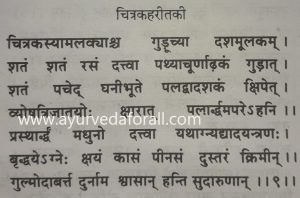
Chitrak Haritaki- Benefits, Indications, Dosage, Ingredients, Warnings, Diet, Exercises, Research Papers, Preparation

chitrak-haritaki

Chitrak haritaki is an Ayurvedic medicine used in the treatment of diseases including respiratory disorders and gastrointestinal disorders. This confection contains herbal ingredients only. This medicine should only take as per the direction by a physician.

BENEFITS OF CHITRAK HARITAKI

  • This medicine is mainly used in the management of diseases of the respiratory system.
  • It is also effective in haemorrhoids.
  • This medicine enhances the digestive power.

INDICATIONS OF CHITRAK HARITAKI

  • Kasa – cough
  • Swasa – breathing difficulty
  • Pratisyaya – rhinitis
  • Mandagni – indigestion
  • Arsas – haemorrhoids
  • Anaha – abdominal fullness
  • Sula – Abdominal colic
  • Udavarta – bloating
  • Krimi – intestinal worms

INGREDIENTS OF CHITRAK HARITAKI

SL NO SANSKRIT NAME ENGLISH LATIN QUANTITY ACTION
1 HARITAKI Chebulic myrobalan Terminalia chebula 3.07kg rejuvenator
2 PIPPALI Long pepper Piper longum 96 gm carminative
3 MARICHA Black pepper Piper nigrum 96 gm carminative
4 SUNDI Ginger (dried) Zingiber officinalis 96 gm carminative
5 ELA cardamom Elettaria cardamomum 96 gm Balances vata and kapha
6 TWAK cinnamon Cinnamomum zeylanicum 96 gm Balances pitta and vata
7 PATRA   Cinnamomum tamala 96 gm Balances kapha and vata
8 YAVA KSHARA Kshara of barley Hordeum vulgare 24 gm Relieves complications associated with constipation, bloating, abdominal fullness
9 GUDA Jaggery   4.8 kg  
10 MADHU Honey   384 gm  

 METHOD OF PREPARATION OF CHITRAK HARITAKI

4.8 litres of decoction prepared first using chitraka( Plumbago zeylanica), guduchi(Tinospora cordifolia), amalaki(Emblica officinalis) and roots of 10 drugs known as dasamula. Then added with 4.8 kg of jaggery and haritaki . This mixture is heated till attaining semisolid consistency. After this, the rest of the ingredients are added. Honey added only after cooling.

 DOSHA- DUSHYA PREDOMINANCE AND ROGA MARGA OF CHITRAK HARITAKI

 Dosha – This medicine is recommended for the treatment of vata, pitta , kapha dosha imbalance.

  • Dushya- useful in diseases affecting rasa, raktha dhatu –digestive problems.
  • Roga marga – This medicine can be administered in diseases affecting

Abhyanthara roga marga – respiratory diseases, abdominal colic

 DOSAGE AND USAGE OF CHITRAK HARITAKI

 Take 5 to 10 gms after food once or twice daily along with lukewarm water or milk or decoction of dasamula or as directed by an Ayurvedic doctor

 EXERCISES AND YOGA OF CHITRAK HARITAKI

 Yoga and Pranayama are a set of breathing and stretching exercises respectively, widely practised in the treatment of different diseases.

Nadi Shuddi Pranayam    – Effective in respiratory diseases, cleans the respiratory passage, calms the mind.


The patient needs to be seated in a meditative posture with the head and spine erect, with the body relaxed. The patient has to close his one nostril (e.g. left nostril if using the right hand and vice versa) with the thumb and exhale completely through the other nostril. Again, he will have to breathe in deeply through the other nostril while the opposite nostril is still closed with the thumb             

RECOMMENDED DIET AND BEHAVIOUR OF CHITRAK HARITAKI

  • Avoid food items that produce dosha imbalance like cold, more acrid, sour and dry food, hard to digest. Because dosha imbalance aggravates the symptoms.
  • Consume easily digestible food items, Lukewarm water, gruel
  • Avoid exposure to the cold environment.
  • Avoid smoking, carbonated drinks, alcohol

SIDE EFFECTS AND CONTRAINDICATIONS OF CHITRAK HARITAKI

  •  This medicine should only take as per the direction of the physician.
  • Taken by children, lactating women and during pregnancy only after consulting an Ayurveda doctor.
  • Improper administration and overdosage leads to side effects
  • Can this medicine be used while taking Allopathic medicines?

                     Seek your doctor’s advice if you are taking this medicine along with Allopathic medicines.

  • How long the medicine can be used?

             The duration of medicinal administration is based on your stage of the disease. Before taking medicine consult a physician.

  • Is this medicine habit forming?

     This medicine is not habit-forming. After using for a prescribed period gradually decrease the dose and eventually stop it.

                  CLASSICAL REFERENCE OF CHITRAK HARITAKI

  • Bhaishajya ratnavali – Nasaroga chikilsa

chitraka-haritaki

EQUIVALENT MEDICINES OF CHITRAK HARITAKI

  • Swasa kutar ras
  • Kasa kutar ras
  • Vyoshadi vataka
  • Agastya rasayan

       AVAILABLE BRANDS OF CHITRAK HARITAKI

  • Dabur
  • Divya pharmacy
  • Zandu
  • Kottakkal Arya vaidya sala – Chitraka lehyam

RESEARCH PAPERS OF CHITRAK HARITAKI

  1. Pharmacological Study of Chitraka Haritaki Avaleha & Shikhari Taila

 https://globaljournals.org/GJMR_Volume19/2-Pharmacological-Study-of-Chitraka.pdf

  1. Accelerated stability study of Chitrak Haritaki avaleha

https://www.researchgate.net/publication/296694808_Accelerated_stability_study_of_Chitrak_Haritaki_avaleha

3.     Pharmacognostical and physicochemical evaluation of Chitraka haritaki avaleha: A compound Ayurvedic formulation

https://www.researchgate.net/publication/280314049_Pharmacognostical_and_physicochemical_evaluation_of_Chitraka_haritaki_avaleha_A_compound_Ayurvedic_formulation

  1. A clinical study on the role of chitrak haritaki and anu taila nasya with a compound drug in allergic rhinitis w.s.r. to dushta pratishyay

https://wjpr.net/download/article/1540984645.pdf


Share and Enjoy

  • Facebook
  • Twitter
  • Delicious
  • LinkedIn
  • StumbleUpon
  • Add to favorites
  • Email
  • RSS
  • Pinterest
  • Reddit
  • Blogger

Abhrak Bhasma- Benefits, Indications, Dosage, Ingredients, Warnings, Diet, Exercises, Research papers, Preparation

abhrak-bhasma

Abhrak bhasma is an Ayurvedic medicine used in the treatment of respiratory diseases, diabetes, and skin diseases. This medicine is prepared from biotite mica. This medicine should only take as per the direction by a physician.
BENEFITS OF ABHRAK BHASMA

  • This medicine is used in the treatment of respiratory diseases.
  • It is effective in general debility.
  • This medicine is also effective in anaemia and malabsorption.
  • It enhances the strength of the body and nourishes the skin.
  • This medicine cures the diseases related to digestion.

INDICATIONS OF ABHRAK BHASMA

  • Kasa – Cough
  • Bronchitis
  • Swasa – Breathing difficulty
  • Pandu – anaemia
  • Ruk – different kinds of pain
  • Grahani – malabsorption
  • Kushta – skin diseases
  • Prameha – diabetes
  • Mandagni – indigestion

INGREDIENTS OF ABHRAK BHASMA

SL NO SANSKRIT NAME ENGLISH ACTION
1 ABHRAK Purified biotite mica Balances vata, pitta dosha , analgesic action

 METHOD OF PREPARATION OF ABHRAK BHASMA

STEP 1 – Purification of Abhraka – Heating and quenching in a decoction of Triphala or cow’s milk for 7 times.

STEP 2– The powder of abhraka is mixed with the paddy and tied in a strong cloth. It is then kept in fermented rice water, pressed vigorously. The resultant powder of biotite mica comes out of the cloth is called “dhanyabhraka”.

STEP 3 – The dhanyabhraka triturated with the juice of musta ( Cyperus rotundus) and pellets are made. These pellets are subjected to heating in special equipment known as puta. The end product is called “abhrak bhasma”.

DOSHA- DUSHYA PREDOMINANCE AND ROGA MARGA OF ABHRAK BHASMA

  •  Dosha – This medicine is recommended for the treatment of vata, pitta predominant diseases.
  • Dushya- useful in diseases affecting rasa , rakta dhatu – indigestion, anaemia
  • Roga marga – Useful in diseases affecting all roga marga.
  • Abhyanthara roga marga – cough, breathing difficulty, digestive problems.
  • Bahya roga marga – skin diseases.
  • Madhyama roga marga – diabetes

 DOSAGE AND USAGE OF ABHRAK BHASMA

125 to 375 mg after food once or twice daily along with ghee and powder of vyosha

(Zingiber officinale, piper longum, piper nigrum) or as directed by an Ayurvedic doctor.

EXERCISES AND YOGA For ABHRAK BHASMA

Yoga and Pranayama are a set of breathing and stretching exercises respectively, widely practiced in the treatment of different diseases.

Nadi Shuddi Pranayam    – Effective in respiratory diseases, cleans the respiratory passage

The patient needs to be seated in a meditative posture with the head and spine erect, with the body relaxed. The patient has to close his one nostril (e.g. left nostril if using the right hand and vice versa) with the thumb and exhale completely through the other nostril. Again, he will have to breathe in deeply through the other nostril while the opposite nostril is still closed with the thumb.

RECOMMENDED DIET AND BEHAVIOUR OF ABHRAK BHASMA

  • Avoid food items that produce dosha imbalance like cold, more acrid, sour and dry food, hard to digest. Because dosha imbalance aggravates the symptoms.
  • Consume easily digestible food items, Lukewarm water, gruel
  • Avoid exposure to the cold environment.
  • Avoid sugar-containing diet in patients with diabetes.

SIDE EFFECTS AND CONTRAINDICATIONS OF ABHRAK BHASMA

  • This medicine should only take as per the direction of the physician.
  • Taken by children, lactating women and during pregnancy only after consulting an Ayurveda doctor.
  • Improper administration and overdosage leads to side effects

 Can this medicine be used while taking Allopathic medicines?

Seek your doctor’s advice if you are taking this medicine along with Allopathic medicines.

How long the medicine can be used?

The duration of medicinal administration is based on your stage of the disease. Before taking medicine consult an Ayurvedic physician.

Is this medicine habit forming?

This medicine is not habit-forming. After using for a prescribed period gradually decrease the dose and eventually stop it.

CLASSICAL REFERENCE OF ABHRAK BHASMA

  • Rasatarangini
  • Rasa ratna samuchaya

abhrak-bhasma

EQUIVALENT MEDICINES OF ABHRAK BHASMA

  • Swasa kutar ras
  • Kasa kutar ras
  • Vyoshadi vataka for the management of  respiratory diseases
  • Agastya rasayan
  • Diabetes – Yogendra ras

AVAILABLE BRANDS OF ABHRAK BHASMA

RESEARCH PAPERS OF ABHRAK BHASMA

  1. To study the general characteristics of abhrak bhasma: a wonder drug

https://www.wjpps.com/Wjpps_controller/abstract_id/9302#:~:text=TO%20STUDY%20THE%20GENERAL%20CHARACTERISTICS%20OF%20ABHRAK%20BHASMA%3A%20A%20WONDER%20DRUG&text=There%20has%20been%20a%20constant,decoction%20of%20various%20medicinal%20herbs.

  1. Effect of abhrak bhasma on the physiology and behaviour of drosophila melanogaster.

https://www.researchgate.net/publication/316836328_EFFECT_OF_ABHRAK_BHASMA_ON_THE_PHYSIOLOGY_AND_BEHAVIOUR_OF_DROSOPHILA_MELANOGASTER

3.     Effect of Puta on in vitro anticancer activity of Shataputi Abhrak Bhasma on lung, leukemia, and prostate cancer cell lines.

https://www.sciencedirect.com/science/article/pii/S097594761730102X

4.     Analytical Evaluation of an Ayurvedic Formulation – Abhraka Bhasma

http://globalresearchonline.net/journalcontents/v23-1/04.pdf

5.     Modulation of oxidative stress by abhrak bhasma in drosophila melanogaster.

https://innovareacademics.in/journals/index.php/ajpcr/article/view/24472

Share and Enjoy

  • Facebook
  • Twitter
  • Delicious
  • LinkedIn
  • StumbleUpon
  • Add to favorites
  • Email
  • RSS
  • Pinterest
  • Reddit
  • Blogger

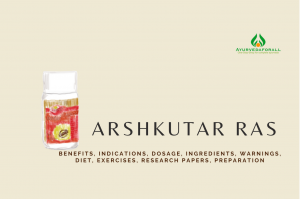
ARSHKUTAR RAS- Benefits, Indications, Dosage, Ingredients, Warnings, Diet, Exercises, Research papers, Preparation

arshkutar-ras

Arshkutar ras is an Ayurvedic medicine used in the treatment of hemorrhoids and associated complaints. This tablet contains mineral ingredients along with herbs. This medicine should only take as per the direction by a physician.

BENEFITS OF ARSHKUTAR RAS

  • This medicine is popularly used in the management of hemorrhoids
  • It is effective in improving digestive power
  • Its anti-inflammatory property is effective in reducing the size of pile mass, pain, and swelling.
  • It is effective in constipation also
  • As per ayurvedic classics, it balances vata and kapha dosha

INDICATIONS OF ARSHKUTAR RAS

  • Hemorrhoids
  • Constipation
  • Digestive problems
  • Varicosity

INGREDIENTS OF ARSHKUTAR RAS

SL NO SANSKRIT NAME ENGLISH LATIN QUANTITY ACTION
1 PARADA Purified mercury   1 part fast relieve from symptoms
2 GANDHAKA Purified sulphur   2 part rejuvenator
3 LOHA BHASMA Bhasma of iron   6 part Tonic and rejuvenator
4 ABHRAK BHASMA Bhasma of biotite mica   6 part balances vata dosha, reduces pain
5 BILVA Bael root Aegle marmelos 5 part Effective for digestion
6 AGNI Lead wort root Plumbago zeylanica 5 part carminative
7 VATSANABHA   Aconitum ferox 5 part Antipyretic action
8 MARICHA Black pepper Piper longum 5 part carminative
9 DANTI   Baliospermum montanum 5 part Action in GIT

Reduce constipation

10 TANKANA Borax   5 part Relieves abdominal colic
11 YAVA KSHARA Kshara of barley Hordeum vulgare 5 part Relieves complications associated with constipation, bloating, abdominal fullness
12 SAINDHAVA Rock salt   5 part Balances tridosha, carminative
13 GOMUTRA Cow’s urine   32 part Possess immunological properties
14 SNUHI KSHEERA   Euphorbia neriifolia 32 part Reduce hemorrhoids

 METHOD OF PREPARATION OF ARSHKUTAR RAS

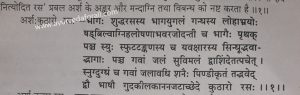
 Purified mercury and sulphur triturated first to prepare a black coloured mixture known as kajjali. Kajjali grounded with the rest of the drugs and grounded with cow’s urine, the latex of snuhi and tablets are made.

  •  Purification of tankana – by heating water losses and become powder form
  • Purification of vatsanabha – by using cow’s urine
  • Detoxification of Parada – Ground with the juice of Aloe vera, Triphala(Terminalia chebula, Terminalia bellerica, Emblica officinalis), the root of chitraka (Plumbago zeylanica) each for 7 days.
  • Detoxification of Gandhaka – fried in ghee and dipped in cow’s milk repeated 7 times.
  • Maricha, tankana promotes an antidote effect on vatsanabha
  • Purification of Abhraka – Heating, and quenching in a decoction of Triphala or cow’s milk for 7 times.
  • Purification of loha – Heated and immersed in sesame oil, buttermilk, cow’s urine, gruel, and decoction of kulatha (Dolichos biflorus) in that order for seven days in each liquid.

DOSHA- DUSHYA PREDOMINANCE AND ROGA MARGA OF ARSHKUTAR RAS

  •  Dosha – This medicine is recommended for the treatment of vata and kapha dosha imbalance.
  • Dushya- useful in diseases affecting rasa , rakta, mamsa dhatu – piles, indigestion
  • Roga marga – This medicine can be administered in diseases affecting Bahya and Abhyanthara roga marga – indigestion, constipation, external and internal piles.

 DOSAGE AND USAGE OF ARSHKUTAR RAS

 125 to 250 mg after food twice daily along with Luke warm water or honey or as directed by an Ayurvedic doctor.

EXERCISES AND YOGA OF ARSHKUTAR RAS

 Yoga and Pranayama are a set of breathing and stretching exercises respectively, widely practiced in the treatment of many diseases.

Nadi Shuddi Pranayam    – for getting calmness to the mind provide overall health

 The patient needs to be seated in a meditative posture with the head and spine erect, with the body relaxed. The patient has to close his one nostril (e.g. left nostril if using the right hand and vice versa) with the thumb and exhale completely through the other nostril. Again, he will have to breathe in deeply through the other nostril while the opposite nostril is still closed with the thumb.

  •          Yoga practice is of great role to prevent and control hemorrhoids . The practice of shatkriya or yogic cleansing techniques purify the body and prevent digestive problems.
  • In hemorrhoids, one may experience constipation or difficultly in passing stool. Basti kriya aid smooth peristalsis movement for quick elimination.
  • ashwini mudra in various seated and inverted postures strengthen and prevent the enlargement or swelling of hemorrhoids. Inverted postures like viparita karani, sarvangasana, and sirsasana are great reliefs from the irritation and pain from the hemorrhoids.

 RECOMMENDED DIET AND BEHAVIOUR FOR ARSHKUTAR RAS

  • Avoid food items that produce dosha imbalance like cold, more acrid, sour and dry food, hard to digest. Because dosha imbalance aggravates the symptoms.
  • Consume easily digestible food items, Lukewarm water, gruel
  • Avoid smoking, carbonated drinks, alcohol
  • Avoid consumption of a heavy diet at bedtime.
  • Avoid food items which produce constipation
  • Drink more water

SIDE EFFECTS AND CONTRAINDICATIONS OF ARSHKUTAR RAS

  •  This medicine should only take as per the direction of the physician.
  • It is better to avoid by children, lactating women and during pregnancy
  • Improper administration and overdosage leads to side effects
  • Can this medicine be used while taking Western medicines?

                     Seek your doctor’s advice if you are taking this medicine along with Allopathic medicines.

  • How long the medicine can be used?

             The duration of medicinal administration is based on your stage of the disease. Before taking medicine consult a physician.

  • Is this medicine habit forming?

    This medicine is not habit-forming. After using for a prescribed period gradually decrease the dose and eventually stop it.

CLASSICAL REFERENCE OF ARSHKUTAR RAS

  • Yogaratnakara – Arsas chikilsa

arshkutar-ras

EQUIVALENT MEDICINES OF ARSHKUTAR RAS

  • Chiravilwadi kashaya
  • Dusparshadi kashaya
  • Kankayana gulika
  • Kalyana kshara

             AVAILABLE BRANDS OF ARSHKUTAR RAS

     RESEARCH PAPERS OF ARSHKUTAR RAS

1.     An experimental study on the antidote effect of maricha (Piper nigrum Linn) kashaya in vatsanabha (Aconitum ferox) induced toxicity


http://www.thepharmajournal.com/archives/?year=2018&vol=7&issue=7&ArticleId=2363

2.      Evaluation of toxicity of ‘Vatsanabha’ (Aconitum ferox, Ranunculaceae) before and After Shodhana

https://www.ncbi.nlm.nih.gov/pmc/articles/PMC3758080/


Share and Enjoy

  • Facebook
  • Twitter
  • Delicious
  • LinkedIn
  • StumbleUpon
  • Add to favorites
  • Email
  • RSS
  • Pinterest
  • Reddit
  • Blogger

Anand Bhairav Ras- Benefits, Indications, Dosage, Ingredients, Warnings, Diet, Exercises, Research papers, Preparation

anand-bhairav-ras1

Anand bhairav ras is an Ayurvedic medicine used in the treatment of fever, digestive disorders, and respiratory disorders. This tablet contains mineral ingredients along with herbs. This medicine should only take as per the direction by a physician.

BENEFITS OF ANAND BHAIRAV RAS

  • This medicine used in the treatment of different kinds of fever
  • It is also effective in fever associated with digestive problems like diarrhoea
  • Its antipyretic action is effective in both acute and chronic fever.
  • Usually, non-infectious and viral fever responds with its use.
  • This medicine is effective in respiratory diseases like cough and breathing difficulty
  • It is also used as a treatment remedy for epilepsy.

INDICATIONS OF ANAND BHAIRAV RAS

  • Jwara – fever
  • Kasa – cough
  • Swasa – breathing difficulty
  • Atisara – diarrhoea
  • Grahani – irritable bowel syndrome, sprue
  • Apasmara – epilepsy
  • Prameha – diabetes
  • Ajeerna, vahnimandyam – indigestion


INGREDIENTS OF ANAND BHAIRAV RAS

SL NO SANSKRIT NAME ENGLISH LATIN QUANTITY ACTION
1 HINGULA  Purified Cinnabar   1 part Fast relief from symptoms
2 VISHAM   Aconitum ferox 1 part Antipyretic action
3 TANKANA borax   1 part The beneficiary effect in the respiratory system
4 PIPPALI Long pepper Piper longum 1 part carminative
5 MARICHA Black pepper Piper nigrum 1 part carminative
6 SUNDI Ginger (dried) Zingiber officinalis 1 part carminative
7 GANDHAKA Purified sulphur   1part Beneficiary effect on respiratory diseases.
8 JAMBEERA Lemon juice   Quantity sufficient  

METHOD OF PREPARATION OF ANAND BHAIRAV RAS

Purified hingula, purified visha, sundi ,maricha, pippali, purified tankana , purified gandhaka are taken in equal quantity and triturated to obtain homogenous mixture. This mixture further grounded with juice of jambeera . Finally tablets are made in the size of 125mg.

  • Purification of hingula – powdered hingula grounded with juice of ardraka (Zingiber officinale)
  • Purification of tankana – by heating water losses and become powder form
  • Purification of vatsanabha – by using cow’s urine
  • Detoxification of Gandhaka – fried in ghee and dipped in cow’s milk repeated 7 times.

DOSHA- DUSHYA PREDOMINANCE AND ROGA MARGA OF ANAND BHAIRAV RAS

 Dosha – This medicine is recommended for the treatment of vata, pitta, kapha predominant diseases.

  • Dushya- useful in diseases affecting rasa dhatu – fever, indigestion
  • Roga marga – Useful in diseases affecting abhyanthara roga marga like diseases affecting the respiratory system and digestive system.

 DOSAGE AND USAGE OF ANAND BHAIRAV RAS

 125 mg (1 gunja) after food once or twice daily along with honey or fresh ginger juice or as directed by an Ayurvedic doctor.

EXERCISES AND YOGA OF ANAND BHAIRAV RAS

 Yoga and Pranayama are a set of breathing and stretching exercises respectively, widely practiced in the treatment of different diseases.

Nadi Shuddi Pranayam    – Effective in respiratory diseases, cleans the respiratory passage, calms the mind


The patient needs to be seated in a meditative posture with the head and spine erect, with the body relaxed. The patient has to close his one nostril (e.g. left nostril if using the right hand and vice versa) with the thumb and exhale completely through the other nostril. Again, he will have to breathe in deeply through the other nostril while the opposite nostril is still closed with the thumb.

   RECOMMENDED DIET AND BEHAVIOUR

  • Avoid food items that produce dosha imbalance like cold, more acrid, sour and dry food, hard to digest. Because dosha imbalance aggravates the symptoms.
  • Consume easily digestible food items, lukewarm water, gruel
  • Avoid exposure to a cold environment.

SIDE EFFECTS AND CONTRAINDICATIONS

  •  This medicine should only take as per the direction of the physician.
  • It is better to avoid by children, lactating women and during pregnancy
  • Improper administration and overdosage leads to side effects


  •  Can this medicine be used while taking Allopathic ( Western Medicine) medicines?

                    Seek your doctor’s advice if you are taking this medicine along with Allopathic medicines.

  • How long the medicine can be used?

             The duration of medicinal administration is based on your stage of the disease. Before taking medicine consult an Ayurvedic physician.

                  CLASSICAL REFERENCE

  • Bhaishajya ratnavali

anand-bhairav-ras

EQUIVALENT MEDICINES

  • Hinguleswara rasa
  • Vettumaran gulika
  • Surya prabha gulika
  • Tribhuvan keerthi ras

             AVAILABLE BRANDS of Anand Bhairav Ras

  • Dabur
  • Divya pharmacy
  • Zandu
  • Baidyanath
  • ShreeDhootapapeshwar Ltd

         RESEARCH PAPERS of Anand Bhairav Ras

  1. Evaluation of Physio-chemical and Antipyretic activity of Ananda Bhairava Rasa

https://www.ukjpb.com/article_details.php?id=420

  1. Antimicrobial properties of anand bhairav ras and its ingredients: an overview

https://www.semanticscholar.org/paper/ANTIMICROBIAL-PROPERTIES-OF-ANAND-BHAIRAV-RAS-AND-Saini-Porte/3f48f08dfe1e1df8165783b2090245c983c8bee8

3.      Evaluation of toxicity of ‘Vatsanabha’ (Aconitum ferox, Ranunculaceae) Before and After Shodhana

https://www.ncbi.nlm.nih.gov/pmc/articles/PMC3758080/

Share and Enjoy

  • Facebook
  • Twitter
  • Delicious
  • LinkedIn
  • StumbleUpon
  • Add to favorites
  • Email
  • RSS
  • Pinterest
  • Reddit
  • Blogger